 Save to Pinterest
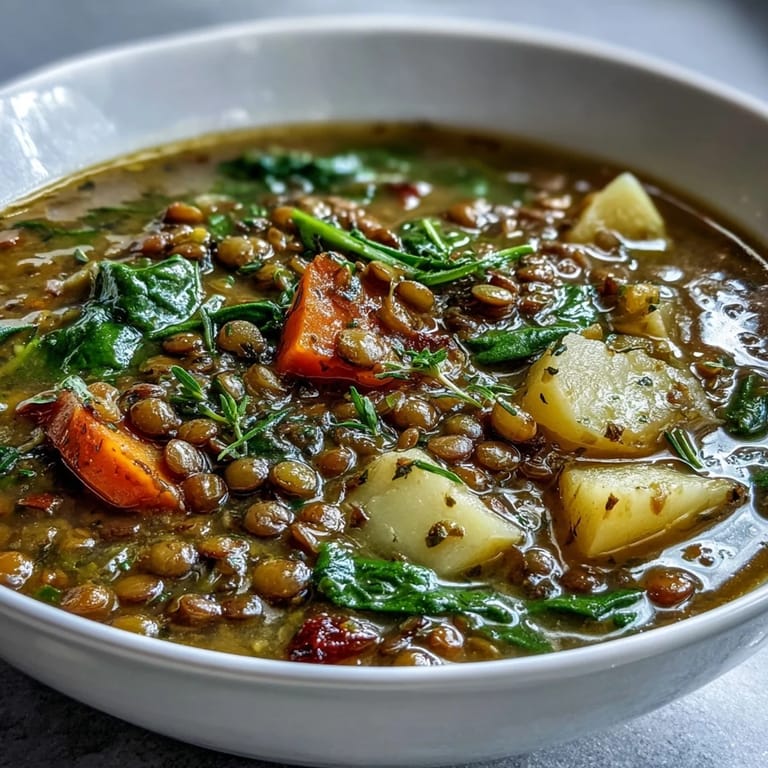
 My neighbor handed me a bowl of this stew on a rainy Tuesday, and I was struck by how the broth had turned this beautiful golden-green from the lentils. She'd mentioned casually that she made it when she wanted something that felt like a hug, and suddenly I understood why—it's the kind of dish that fills your kitchen with warmth before it even fills your bowl. The carrots had softened into sweet pillows, the potatoes were creamy, and the whole thing tasted like someone had figured out the secret to comfort food years ago and just kept it simple.
I made this for my sister's first night in her new apartment, and she ate two bowls while sitting on a cardboard box, laughing at how it was better than any takeout she'd ordered. There's something about a stew that makes people feel welcomed and cared for—it's impossible to make this dish feel rushed or impersonal. She's been texting me for the recipe ever since, which is how I know it landed.
Ingredients
- 1 large onion, finely chopped: The foundation of everything—when you sauté it properly, it becomes sweet and disappears into the broth, adding depth without announcing itself.
- 2 cloves garlic, minced: Don't skip the mincing; it distributes the flavor evenly instead of giving you the occasional surprise bite.
- 3 medium carrots, peeled and diced: They should be cut into half-inch pieces so they cook through at the same rate as everything else and give you something substantial to chew.
- 2 medium potatoes, peeled and diced: Waxy varieties like Yukon Gold hold their shape better than floury ones, which is worth paying attention to.
- 1 celery stalk, diced: This is your secret aromatic layer; it adds a subtle minerality that makes people ask what the mystery flavor is.
- 1 cup baby spinach or little sprout greens (optional), roughly chopped: Add this at the very end so it wilts into bright flecks of green instead of turning to sludge.
- 1 cup dried green lentils, rinsed: Always rinse them first—you'd be surprised what dust settles in the bag.
- 4 cups vegetable broth and 1 cup water: The water thins the broth just enough so the stew doesn't taste too concentrated, letting the individual flavors shine.
- 2 tbsp olive oil: Good enough to taste but not so fancy that you're nervous about heating it.
- 1 tsp dried thyme and 1 tsp dried oregano: These work together to create an herbaceous backbone without overpowering anything.
- 1 bay leaf: It's subtle but noticeable when it's missing—remove it before serving because nobody wants to find a leaf in their spoon.
- ½ tsp ground cumin (optional): This is the ingredient that separates a good stew from one that tastes a little more interesting than you expected.
- Salt and freshly ground black pepper, to taste: Taste as you go; what seems right at the beginning might need adjustment once everything has simmered together.
- Juice of ½ lemon (optional, for brightness): A squeeze of lemon at the end lifts everything and makes the flavors feel more alive.
Tired of Takeout? 🥡
Get 10 meals you can make faster than delivery arrives. Seriously.
One email. No spam. Unsubscribe anytime.
Instructions
- Get your pot ready and build the aromatic base:
- Heat the olive oil over medium heat until it shimmers slightly, then add your chopped onion, garlic, and celery. You'll know they're ready when the onion turns translucent and you can smell the garlic without it burning—this should take about 3 to 4 minutes, and you'll want to stir occasionally so nothing sticks to the bottom.
- Introduce the root vegetables:
- Add your diced carrots and potatoes, stirring everything together so they get coated in the oil and the flavors start to marry. Let them cook for about 5 minutes, stirring occasionally, so they begin to soften around the edges.
- Bring in the lentils and liquids:
- Pour in your rinsed green lentils, vegetable broth, and water, then add the thyme, oregano, bay leaf, cumin if you're using it, and a generous pinch of salt and pepper. Stir well so the seasonings distribute evenly, then bring everything to a boil—you'll see the liquid start to bubble around the edges, then across the whole surface.
- Let it simmer until everything is tender:
- Once it reaches a boil, reduce the heat to low, put the lid on, and let it bubble away gently for 30 to 35 minutes. You're waiting for the lentils to be creamy when you bite them and the potatoes and carrots to yield easily to a fork without falling apart entirely.
- Finish with greens and brightness:
- Remove the bay leaf, stir in your chopped spinach or little sprout greens, and let them wilt for 2 to 3 minutes until they've turned a darker green and lost their raw texture. Taste the whole thing, add lemon juice if you want, and adjust the salt and pepper until it tastes exactly right to you.
- Serve while it's still steaming:
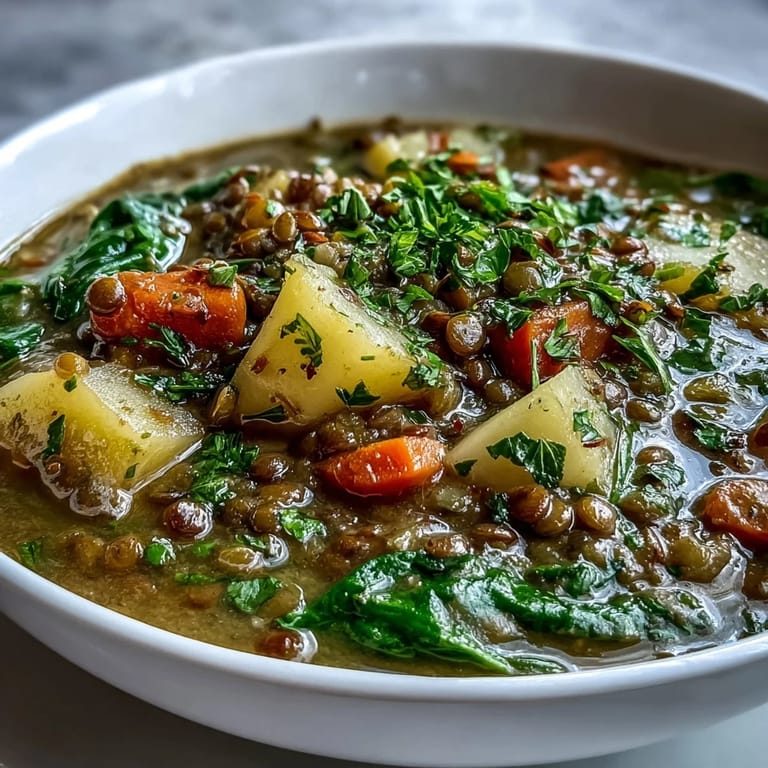
- Ladle it into bowls and serve hot, with fresh herbs sprinkled on top if you have them—even a few torn basil leaves or a pinch of parsley makes it feel more intentional.
 Save to Pinterest
 There's a moment about halfway through cooking when the smell becomes almost overwhelming—all those herbs and vegetables creating something that feels bigger than the sum of its parts. That's when I know I made the right choice, and that's when someone always walks into the kitchen asking what I'm making.
Why This Stew Works as a Weeknight Meal
The beauty of this stew is that you can start it and mostly ignore it, which means you can fold laundry, answer emails, or just stand by the window while it does the heavy lifting. There's no precise timing that requires you to babysit it, no technique that's going to trip you up, and no ingredient that's hard to find. It's honest food that tastes better than it has any right to, given how little stress it causes you to make.
Variations That Still Feel True to the Original
Once you've made this a few times and it feels like your own, you can start playing with it. I've added roasted red peppers, switched the herbs around depending on my mood, thrown in diced mushrooms because I had them on hand, and even made it spicier by adding a pinch of red pepper flakes. The structure is strong enough to handle these experiments, which is the mark of a really good recipe—it can bend without breaking.
Serving Suggestions and Final Thoughts
Serve this stew exactly as it comes if you want, or add crusty bread to soak up the broth, or spoon it over cooked rice to stretch it further and make it feel even more substantial. Some people add a dollop of sour cream or a drizzle of hot sauce, and I've never met a version that didn't work.
- For extra depth and a subtle smokiness, stir in a splash of balsamic vinegar or a pinch of smoked paprika right before serving.
- Sweet potatoes can replace the regular potatoes if you want something with more natural sweetness and a slightly different texture.
- If you're feeding vegans, just double-check that your vegetable broth is plant-based, and you're good to go.
 Save to Pinterest
 This is the kind of recipe that becomes yours the moment you make it, and that's exactly how it should be. It's steady, reliable, and tastes like someone in the kitchen genuinely cares about feeding people well.
Recipe Questions & Answers
- → What lentils work best in this stew?
Green lentils hold their shape well, providing a firm texture that complements the tender vegetables in the stew.
- → Can I substitute other greens for little sprout greens?
Yes, baby spinach or kale can be used alternatively to add a fresh, leafy component near the end of cooking.
- → What herbs enhance the flavor of this stew?
Dried thyme, oregano, and a bay leaf create a fragrant, earthy base that elevates the natural sweetness of the vegetables and lentils.
- → How can I adjust the thickness of the stew?
For a thicker consistency, reduce the broth slightly during simmering or mash some of the potatoes before serving.
- → Is it possible to add extra depth to the flavor?
Adding a splash of balsamic vinegar or smoked paprika introduces complexity and warmth to the stew’s profile.
- → What cooking equipment is recommended?
A large pot or Dutch oven is ideal for sautéing vegetables and simmering the stew evenly.