 Save to Pinterest
 My neighbor brought over a cardamom custard tart one autumn evening, and I watched her slice into it with such care, revealing that pale, trembling custard flecked with the ghost of spice. She'd made it without fanfare, almost apologetically, but that first bite changed something—suddenly I understood why certain flavors stick with you, why you want to recreate them in your own kitchen on a quiet afternoon when the light hits the counters just right.
I made this for my book club last spring, and honestly, I was nervous about the custard—whether it would set properly, whether anyone would actually taste the cardamom or just find it strange. But watching everyone go quiet for a moment after that first bite, then immediately asking if I'd made it myself, that's when I knew this tart deserved a permanent spot in my rotation.
Ingredients
- All-purpose flour: The foundation of any good tart shell; cold hands and cold butter are your only real secrets here.
- Powdered sugar: It dissolves into the dough more readily than granulated, keeping the texture tender and delicate.
- Unsalted butter, cold and cubed: This is non-negotiable—warm butter will betray you, turning your tart dough into a greasy mess instead of a flaky one.
- Egg yolk: This binds everything together while keeping the crust tender and rich.
- Ice water: Use it sparingly, adding just enough to bring the dough together without overworking it.
- Whole milk: Full-fat milk creates a custard with real body and silkiness that skim milk simply cannot match.
- Green cardamom pods, lightly crushed: The entire personality of this tart lives here—crush them gently so the seeds release their oils without turning bitter.
- Egg yolks: They create richness and structure in the custard, and the yolks matter more than the whites here.
- Granulated sugar: Whisked with the yolks, it creates that pale, fluffy base that thickens as the custard cooks.
- Cornstarch: This stabilizer prevents the custard from breaking and keeps it silky even after chilling.
- Vanilla extract: A quiet supporting player that deepens the spice without announcing itself.
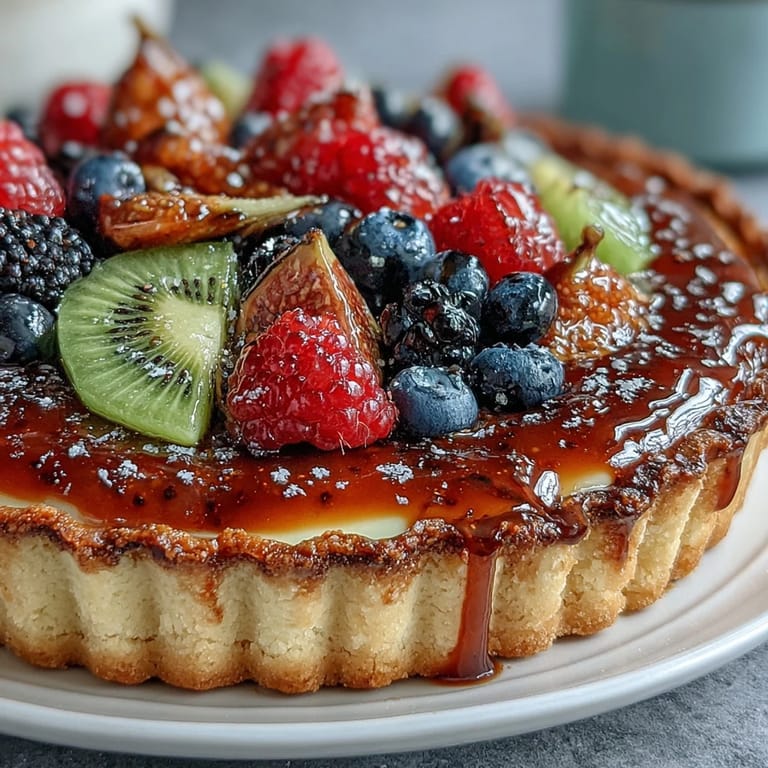
- Assorted fresh fruit: Think beyond berries—figs, stone fruit, and citrus segments each bring their own seasonal conversation to the tart.
- Apricot jam: Optional, but it gives the fruit a jewel-like shine and helps it stay fresh-looking longer.
Tired of Takeout? 🥡
Get 10 meals you can make faster than delivery arrives. Seriously.
One email. No spam. Unsubscribe anytime.
Instructions
- Build your tart shell foundation:
- Pulse flour, powdered sugar, and salt in the food processor until it looks like fine sand, then add cold butter and pulse until it resembles coarse breadcrumbs—this is where patience matters because overworking it will toughen the dough. Add the egg yolk and ice water gradually, pulsing just until the mixture barely comes together.
- Rest the dough properly:
- Form it into a disk, wrap it, and chill for at least 30 minutes; this allows the gluten to relax and the butter to stay cold, which is what gives you that shatter. When you roll it out, work gently and if it starts to warm up, pop it back in the fridge for five minutes.
- Blind bake with intention:
- After lining your tart pan and pricking the base, chill again before baking—this second chill prevents the shell from shrinking during baking. The parchment and weights protect the bottom from browning too fast while the sides catch color.
- Infuse milk with cardamom slowly:
- Heat the milk until it steams, then add your crushed cardamom pods and let them sit covered for at least 15 minutes; the longer they steep, the deeper the flavor becomes. Strain carefully through a fine mesh sieve to remove all pod fragments.
- Whisk your custard base:
- Combine egg yolks, sugar, cornstarch, vanilla, and salt until the mixture is pale and smooth, almost ribbon-like when you lift the whisk. This whisking incorporates air and helps prevent lumps when you add the warm milk.
- Temper gradually and cook with attention:
- Slowly whisk the warm milk into your egg mixture while the bowl is tilted to one side, keeping your whisk moving so the eggs don't scramble. Return everything to the saucepan and stir constantly over medium heat until it thickens and just barely bubbles—this takes about 2 to 3 minutes, and you'll feel the custard resist your whisk more with each pass.
- Cool completely before assembly:
- Covering the custard surface with plastic wrap prevents a skin from forming as it cools, and letting it reach room temperature ensures it won't crack the baked shell. You can also chill it in the refrigerator if you're in a hurry, then spread it just before serving.
- Arrange fruit like you mean it:
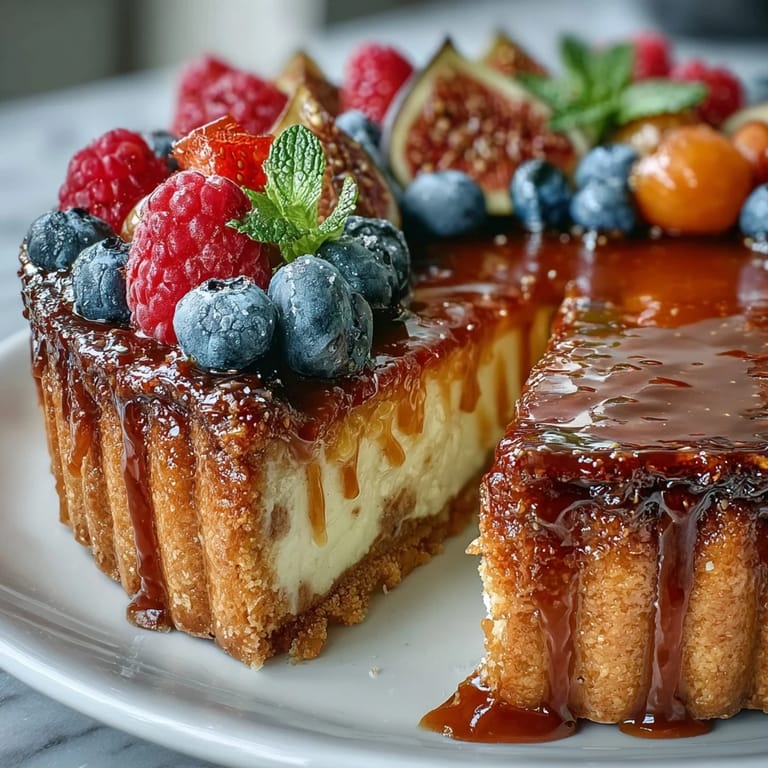
- Spread the cooled custard evenly, then place your fruit thoughtfully rather than randomly—it transforms the tart from dessert into something almost too beautiful to eat. If you're using the apricot glaze, warm it gently and brush it over the fruit just before serving to catch the light.
 Save to Pinterest
 There's something tender about serving this tart to people you care about—the way it sits on the plate looking almost too delicate to touch, how it tastes like someone took time to think about every element. It becomes less about the individual components and more about the generosity of offering something made with your own hands.
Why Cardamom Changes Everything
Before I made this tart, I'd never really understood cardamom as a dessert spice—I associated it mostly with chai and curries. But in a custard, it's completely different; it whispers instead of shouts, adding a floral, slightly citrusy depth that makes people pause and try to identify what makes this taste so interesting. It's the kind of flavor that lingers in the best way, reminding you of the bite even hours later.
Timing and Temperature Matter More Than You Think
I've learned that assembly isn't something to rush—the tart shell must be completely cool or the custard will start to soften it, and the custard must be cool enough that it won't wilt the fruit. The fruit should be added as close to serving time as possible, which means this is actually a forgiving dessert for entertaining because you can prepare everything separately and bring it together just before people arrive.
Seasonal Variations and Simple Swaps
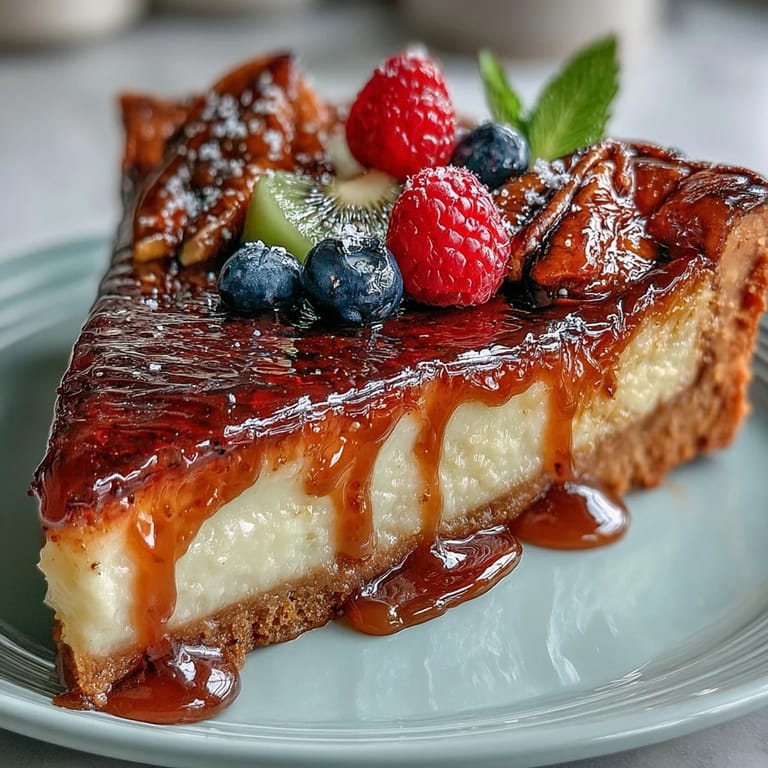
The beauty of this tart is how it adapts to what's available and what you're craving—summer berries feel completely different from autumn figs, and winter citrus segments bring their own brightness. I've added ground almonds to the dough for nuttiness, stirred a touch of rose water into the custard when I wanted something more floral, and even swapped the cardamom for crushed lavender buds when I was feeling adventurous.
- Make this tart in spring with fresh strawberries and rhubarb, in summer with raspberries and peaches, in autumn with figs and blackberries, and in winter with blood oranges and pomegranate.
- If you want to make the dough ahead, it freezes beautifully for up to three weeks, and a frozen shell can go straight into the oven—just add a couple of minutes to the baking time.
- Serve it chilled but not ice-cold, as the custard's cardamom notes come through more clearly when it's not numbed by the refrigerator.
 Save to Pinterest
 This tart has become my answer to the question of what to bring when someone asks for something special but not too fussy. It's elegant enough for a dinner party but straightforward enough that you won't spend all day in the kitchen second-guessing yourself.
Recipe Questions & Answers
- → How do I achieve a crisp tart shell?
Use cold butter cut into flour until crumbly and chill the dough before baking. Baking with weights helps the shell keep its shape and remain crisp.
- → What is the best way to infuse the cardamom flavor?
Simmer crushed green cardamom pods in warm milk and let them steep covered for about 15 minutes before straining to extract maximum aroma.
- → How do I prevent lumps in the custard?
Whisk egg yolks, sugar, cornstarch, and vanilla thoroughly, then gradually temper with warm milk while whisking to ensure a smooth texture.
- → Can I use other fruits on top?
Yes, fresh seasonal fruits like stone fruits or citrus segments work well and add natural sweetness and color.
- → How do I create a glossy fruit topping?
Warm apricot jam with a little water to thin it, then brush gently over the arranged fruit for a shiny finish.