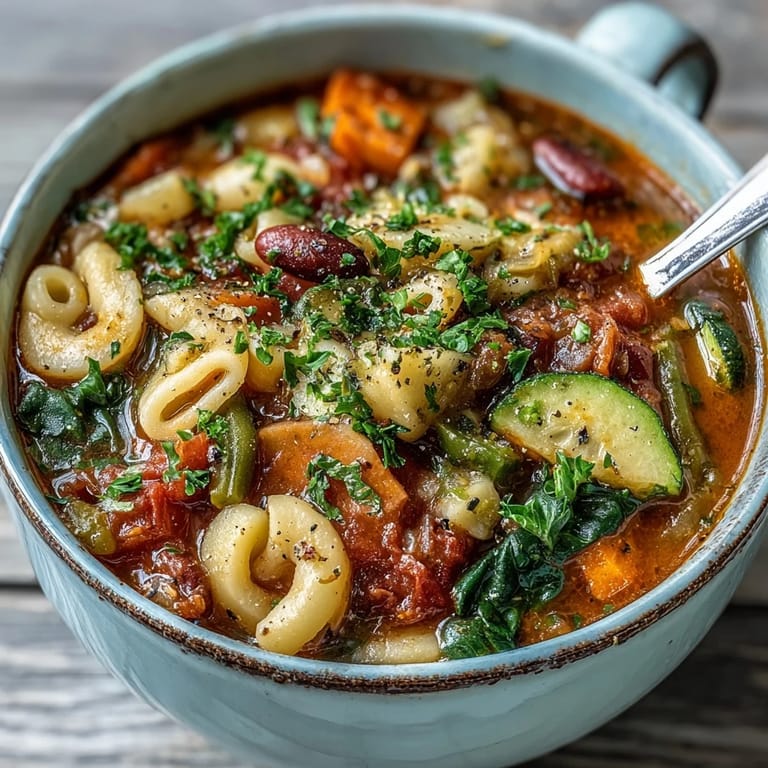
 Save to Pinterest
 My kitchen smelled like garlic and simmering tomatoes before I even realized I'd been stirring for twenty minutes. I was making minestrone on a gray afternoon when I had too many vegetables and no plan, just muscle memory from watching my neighbor chop zucchini into her pot years ago. She never measured anything, just tossed handfuls and hummed. That soup taught me more about cooking than any recipe ever did.
I made this the night my sister came over unannounced, cold and exhausted from a terrible commute. She sat at the table while I ladled soup into mismatched bowls, and she said it tasted like something our grandmother would have made. I'd never met our grandmother, but I took it as the highest compliment. We ate in silence, mopping up broth with bread, and she left an hour later looking lighter.
Ingredients
- Olive oil: The foundation of every good Italian pot, use enough to coat the bottom generously so the vegetables can really soften and release their sweetness.
- Onion, celery, and carrots: This trio is your aromatic base, dice them all roughly the same size so they cook evenly and build a deep, savory backbone.
- Garlic: Don't skimp and don't burn it, just let it bloom in the oil for thirty seconds until your kitchen smells like a trattoria.
- Zucchini and green beans: These add color and a bit of bite, cut them into pieces that fit on a spoon so every bite feels complete.
- Spinach or kale: Stir them in at the end so they wilt but don't turn to mush, they should still taste green and alive.
- Diced tomatoes: Use the canned kind with their juice, it gives body and a slight tang that balances the sweetness of the vegetables.
- Vegetable broth: This is where the soup gets its soul, taste it before you add it and adjust your seasoning later based on how salty it is.
- Tomato paste: Two spoonfuls deepen the color and add a concentrated richness you can't get from diced tomatoes alone.
- Pasta: Small shapes like ditalini or elbows are traditional, they nestle into the spoon and soak up the broth beautifully.
- Cannellini or kidney beans: Rinse them well to wash off the starchy canning liquid, they add creaminess and make the soup filling enough to be a meal.
- Dried oregano, basil, thyme, and bay leaf: These herbs smell like summer in a jar, the bay leaf especially adds a mysterious herbal note you'll miss if you forget it.
- Salt, pepper, and fresh parsley: Season at the end so you don't overdo it, and chop the parsley right before stirring it in for a bright, grassy finish.
Tired of Takeout? 🥡
Get 10 meals you can make faster than delivery arrives. Seriously.
One email. No spam. Unsubscribe anytime.
Instructions
- Start with the aromatics:
- Heat the olive oil in your largest pot and add the onion, celery, and carrots, stirring occasionally until they soften and the onion turns translucent. This takes about five minutes and fills the kitchen with a warm, savory smell.
- Add the next layer:
- Toss in the garlic, zucchini, and green beans, cooking for just a few minutes until the garlic is fragrant and the vegetables start to brighten. Don't rush this step, it builds flavor.
- Pour in the base:
- Add the diced tomatoes, tomato paste, vegetable broth, oregano, basil, thyme, and bay leaf, then bring everything to a boil before lowering the heat to a gentle simmer. Let it bubble quietly for fifteen minutes so all the flavors marry.
- Cook the pasta and beans:
- Stir in the pasta and beans, simmering for about ten minutes until the pasta is al dente and tender but still has a little bite. Watch it closely so the pasta doesn't overcook and turn mushy.
- Finish with greens:
- Add the spinach or kale and the fresh parsley, letting them wilt into the soup for just two or three minutes. Remove the bay leaf, taste, and adjust the salt and pepper.
- Serve hot:
- Ladle the soup into bowls, garnish with extra parsley, and serve immediately while it's steaming. Crusty bread on the side is not optional.
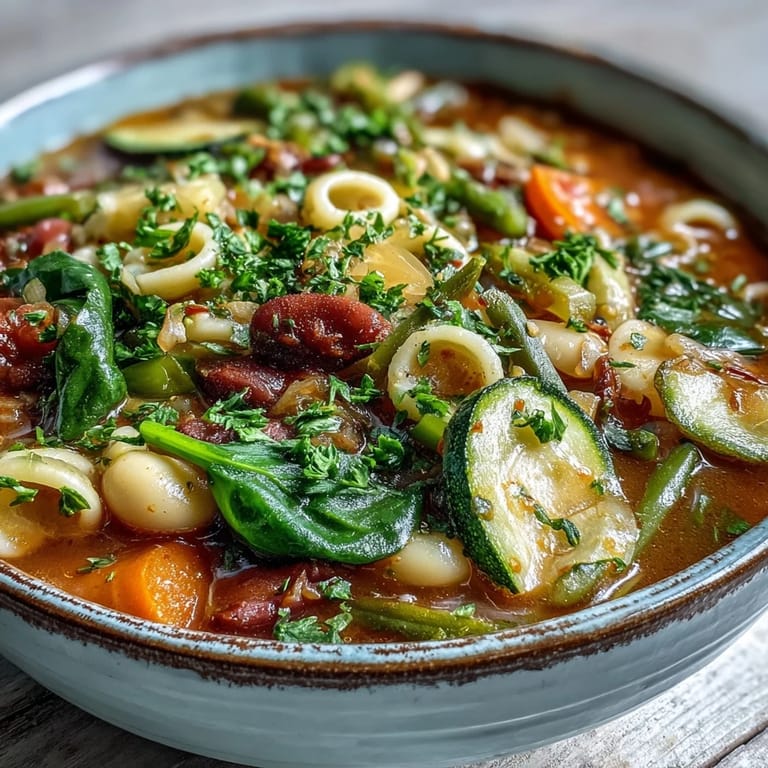 Save to Pinterest
 This soup became my go to when I didn't know what else to offer people. It's forgiving, adaptable, and it makes the house smell like you've been cooking all day even if you haven't. I've served it to friends who don't eat meat, kids who claim to hate vegetables, and dinner guests I was trying to impress, and it's never let me down.
Customize Your Bowl
Once you've made this a few times, you'll start swapping things in and out based on what's in your fridge. I've used frozen peas instead of green beans, white beans instead of kidney, and even orzo when I ran out of ditalini. The soup doesn't care, it just keeps tasting good. If you want it richer, grate Parmesan over the top or stir in a drizzle of good olive oil right before serving.
Make It Ahead
Minestrone is one of those rare soups that actually improves overnight. The pasta soaks up flavor and the vegetables soften into the broth, creating a thicker, more cohesive bowl. Just add a splash of broth or water when you reheat it because the pasta will have absorbed a lot of liquid. I like to make a big batch on Sunday and eat it through the week, each bowl better than the last.
Storing and Freezing
This soup keeps in the fridge for up to five days in an airtight container, and it freezes beautifully for up to three months. If you plan to freeze it, consider cooking the pasta separately and adding it fresh when you reheat, otherwise it can get a little mushy. I learned that the hard way after thawing a batch that turned into porridge.
- Let the soup cool completely before transferring it to freezer safe containers.
- Label everything with the date so you don't discover mystery soup six months later.
- Reheat gently on the stove, adding extra broth to loosen it up.
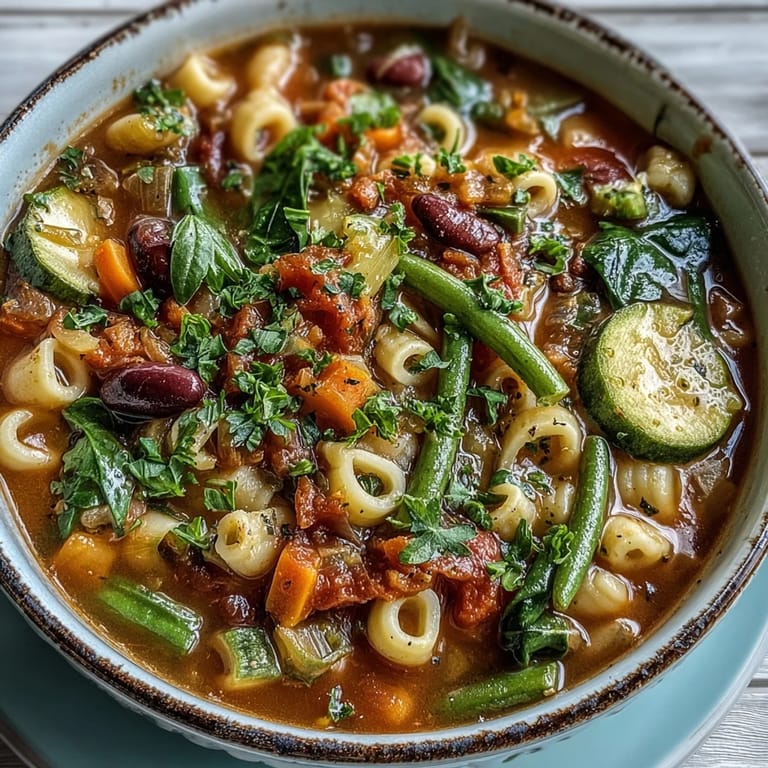 Save to Pinterest
 Minestrone is the kind of soup that never gets old because it changes every time you make it. Keep a pot on the stove, share it freely, and don't overthink it.
Recipe Questions & Answers
- → Can I use different types of pasta for this soup?
Yes, you can use any small pasta shape such as ditalini, elbow macaroni, orzo, or small shells. For a gluten-free version, substitute with gluten-free pasta. Just adjust cooking time according to package directions to achieve al dente texture.
- → What vegetables can I substitute or add?
Feel free to use seasonal vegetables like bell peppers, potatoes, cabbage, or Swiss chard. You can also add or substitute cauliflower, peas, or leeks. The beauty of this soup is its flexibility to accommodate whatever fresh produce you have on hand.
- → How can I make this soup heartier?
For a more substantial meal, add diced potatoes, increase the amount of beans, or stir in cooked Italian sausage. You can also top each serving with freshly grated Parmesan cheese and serve alongside crusty Italian bread for dipping.
- → Can I make this soup ahead of time?
Absolutely! This soup tastes even better the next day as flavors meld together. Store in an airtight container in the refrigerator for up to 4 days. Note that pasta will absorb liquid over time, so you may need to add extra broth when reheating.
- → How do I store and reheat leftovers?
Store cooled soup in airtight containers in the refrigerator for up to 4 days or freeze for up to 3 months. Reheat gently on the stovetop over medium heat, adding extra vegetable broth or water to reach desired consistency. Stir occasionally to prevent sticking.
- → Is this soup suitable for vegan diets?
Yes, this soup is naturally vegan when you omit the Parmesan cheese topping. Ensure your vegetable broth and pasta are vegan-certified, as some brands may contain animal-derived ingredients. The soup remains delicious and nutritious without any animal products.