 Save to Pinterest
 My neighbor showed up with a melon baller one summer afternoon and casually mentioned she'd been making fruit platters that way for years. I watched her create perfect little spheres from a watermelon like she was sculpting, and something clicked—this wasn't just about throwing fruit on a plate. The honey-lime dip she whisked together while chatting changed everything for me. Now when I make this, that moment of discovery sits right there in the kitchen with me.
I made this for a July Fourth gathering when my sister arrived with three kids and zero warning, all hungry immediately. The platter sat in the center of the table like a jeweled centerpiece, and somehow it quieted the chaos—everyone gathered around picking at colors, talking slower, enjoying the moment. My nephew asked if the dip was magic because the lime made everything taste brighter, and honestly, I haven't found better words for it since.
Ingredients
- Watermelon: The foundation of your platter—choose one that feels heavy for its size and has a creamy yellow spot where it sat on the ground, that's how you know it's ripe and sweet.
- Cantaloupe: Its peachy-orange color brings warmth to the arrangement, and the melon baller creates these perfect little orbs that feel almost too pretty to eat.
- Honeydew melon: The pale green adds contrast and a subtle, delicate sweetness that balances the stronger flavors around it.
- Strawberries: Fresh and hulled, they're your reds—slice them in half to show off that gorgeous interior and let them nestle between the balls.
- Blueberries: These tiny jewels roll into crevices and add pops of deep color that catch the light beautifully.
- Seedless grapes: Pick a mix of red and green if you can find them, they add visual rhythm and give people something to grab quickly.
- Fresh mint leaves: Don't skip this—the green lifts everything visually and releases its fragrance when people brush past the platter.
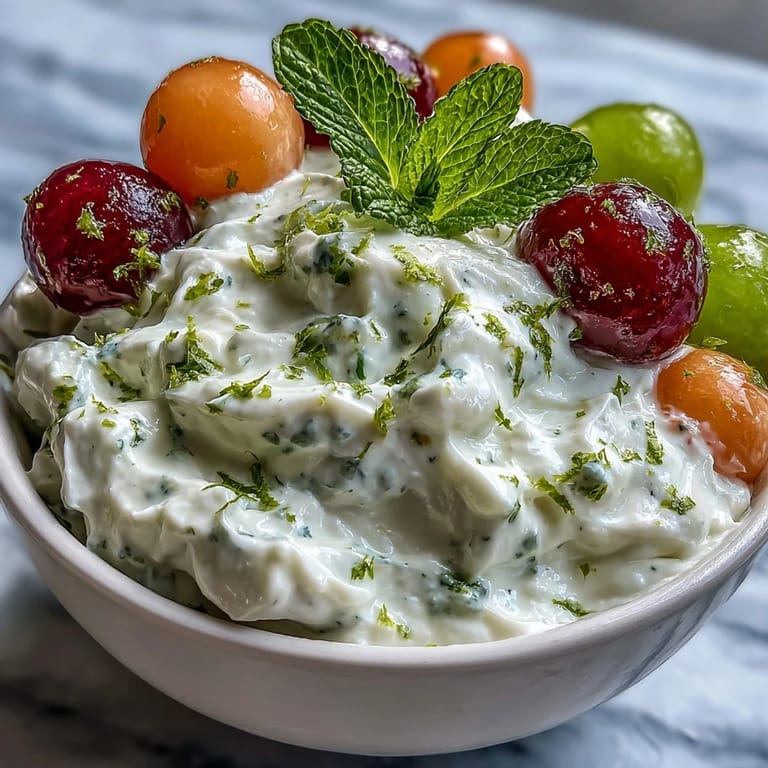
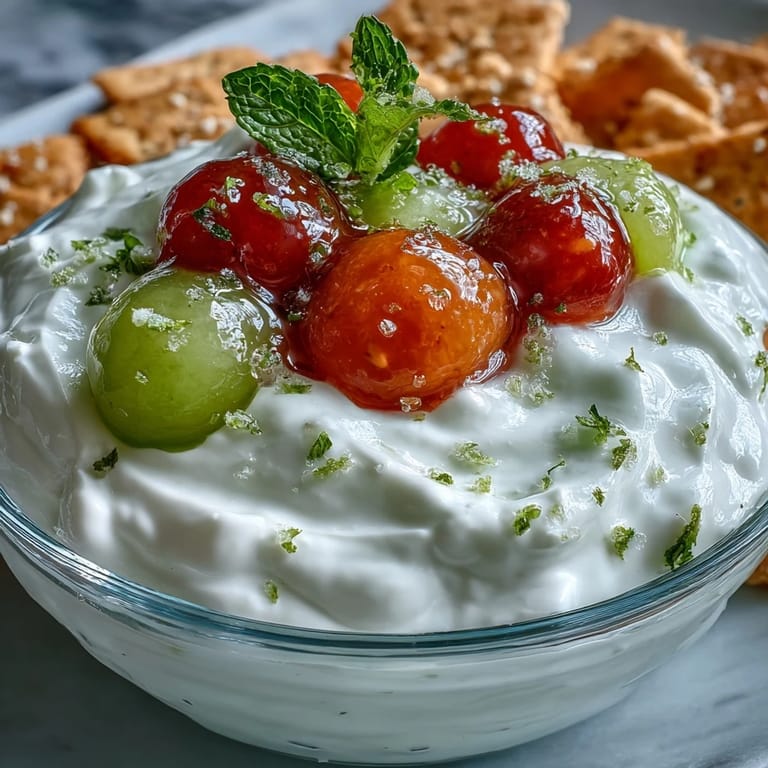
- Plain Greek yogurt: Thicker and tangier than regular yogurt, it holds the dip together and gives it a luxurious texture that feels substantial.
- Honey: Use the real thing here, it dissolves better and tastes like summer itself when mixed with lime.
- Fresh lime juice: Squeeze it yourself if you have time—bottled works but fresh lime brings a brightness that makes the whole dip sing.
- Lime zest: Those tiny bright flecks do more than look pretty, they release oils that deepen the lime flavor throughout the dip.
- Salt: Just a pinch, but it's the secret ingredient that makes everything taste more like itself.
Tired of Takeout? 🥡
Get 10 meals you can make faster than delivery arrives. Seriously.
One email. No spam. Unsubscribe anytime.
Instructions
- Gather and prep your fruit:
- Start by washing everything thoroughly—I run my melons under cold water and rub them with my hands to remove any dust. If using a melon baller, press it firmly into the flesh and twist to create those perfect spheres, which honestly feels satisfying every single time.
- Create your colorful foundation:
- Place the melon balls on your serving platter first, arranging them in patterns or simply grouping colors together—whatever makes you happy. Scatter the berries and grapes among them, filling gaps and creating visual depth as you go.
- Whisk your magic dip:
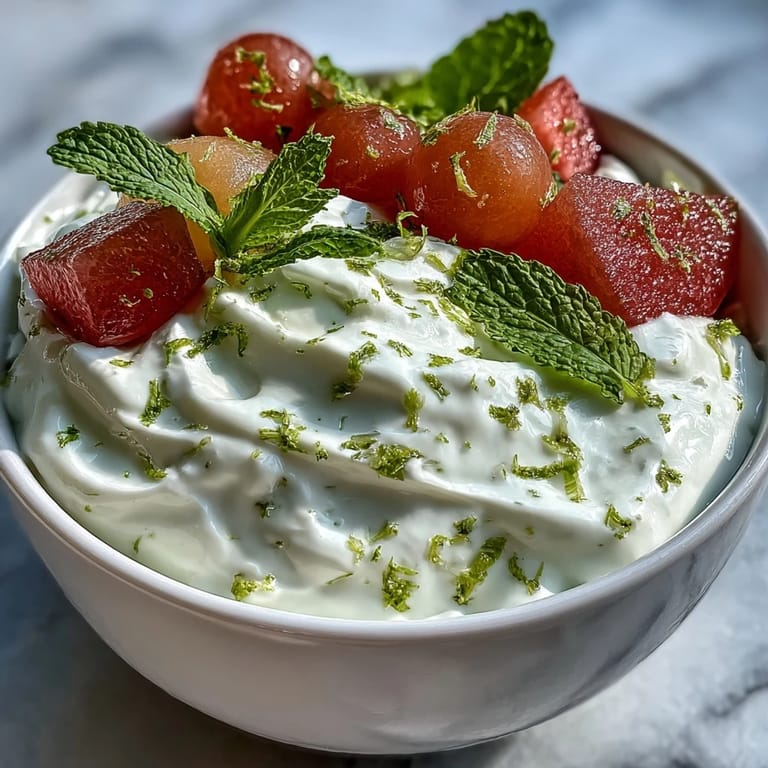
- In a small bowl, pour in the yogurt and drizzle the honey over it, then squeeze in the lime juice and add the zest. Whisk everything together until it's completely smooth and creamy, tasting as you go to adjust the balance of sweet and tart.
- Finish with greenery:
- Tear or scatter fresh mint leaves across the platter—this is the final touch that makes everything feel intentional and alive. Transfer your dip to a small serving bowl and nestle it right into the center or alongside your arrangement.
- Serve at your moment:
- This is best enjoyed within a few hours of assembly, but you can refrigerate components separately and assemble right before guests arrive if you're planning ahead.
 Save to Pinterest
 A coworker once told me that her grandmother always said fruit platters were edible art, and you couldn't just throw them together. I finally understood what she meant when my own mother paused before eating, just looking at the arrangement and smiling—it wasn't the fruit itself, it was the care that made it mean something. That moment of someone recognizing the effort, even though it was effortless, that's when I knew this recipe was about more than hunger.
Why the Melon Baller Changes Everything
There's something about those perfectly round melon spheres that transforms the entire presentation from casual to considered. A knife works fine if you don't have a melon baller, but those uniform balls catch light differently and stack in ways that feel intentional. I've noticed people gravitate toward platters with balled melons first, maybe because the shapes are almost too perfect to be natural, which somehow makes them more appealing.
The Lime Dip is Your Secret Weapon
While everyone's attention is on the colorful fruit, the honey-lime dip is quietly doing the real work of making this special. Most people expect fruit platters to be one-dimensional, just grab and eat, but this dip adds a dimension of richness and complexity that elevates the whole experience. The lime zest especially—those tiny bright specks remind you that this isn't throwaway food, someone actually thought about every detail.
Making it Work for Your Crowd
The beauty of this platter is that it's naturally forgiving and flexible depending on what you have on hand or what's in season when you make it. Summer strawberries are stunning, but autumn could call for dried apricots tucked between the melon balls, or winter could feature pomegranate seeds adding jewel-toned pops. You can also add thin slices of fresh ginger to the dip for a subtle kick, or swap in coconut yogurt if someone at your gathering doesn't do dairy.
- Always taste your dip before serving and adjust the honey or lime to match your personal preference—some people want sweeter, others want brighter.
- If you're making this for a large group, consider prepping components in separate containers and assembling the platter just before serving to keep everything fresh.
- Keep the platter cool by placing it on a larger bowl filled with ice underneath, especially if you're serving outside in summer heat.
 Save to Pinterest
 This platter has become my go-to move for any summer gathering because it feels thoughtful without demanding much from me. The fact that people always comment on how beautiful it looks, even though it's genuinely simple, reminds me that sometimes the best recipes aren't about complexity—they're about arrangement and intention.
Recipe Questions & Answers
- → What fruits are best for a melon fruit platter?
Watermelon, cantaloupe, and honeydew form the base, complemented by strawberries, blueberries, and grapes for color and flavor variety.
- → How should the fruit be prepared for the platter?
Use a melon baller or sharp knife to cut melons into bite-sized balls or cubes. Hull and halve strawberries, and keep blueberries and grapes whole for easy eating.
- → What ingredients make up the honey lime dip?
The dip combines plain Greek yogurt with honey, fresh lime juice, lime zest, and a pinch of salt for a creamy and tangy complement.
- → Can I make this dish vegan?
Yes, substitute dairy yogurt with a plant-based version to accommodate vegan diets without sacrificing creaminess.
- → How can I add extra flavor to the platter?
Lightly sprinkle additional lime zest or a dash of chili powder over the fruit for an extra burst of flavor and a subtle kick.
- → What tools are helpful for assembling this platter?
A melon baller or sharp knife, mixing bowl, whisk, and serving platters are key for preparing and presenting the fruit and dip attractively.