 Save to Pinterest
 There's something wonderfully honest about a one-pot meal—no pretense, just good food happening all at once. I discovered this taco pasta on a Tuesday night when I had hungry kids, a mountain of dishes already piling up, and exactly zero motivation to stand at the stove juggling multiple pans. Dumping everything into one pot and letting it simmer felt like discovering a loophole in cooking, the kind of shortcut that somehow tastes even better than the complicated version.
My friend Sarah watched me make this while we were catching up over wine, and halfway through she said, "Wait, you're not draining the tomatoes?" I wasn't, and that's the whole magic of it—those tomato juices become part of the sauce, adding brightness to the beefiness. By the time we sat down to eat, she was already asking if I'd write it down for her, which is always the best sign a recipe has actually landed.
Ingredients
- Ground beef (1 lb): Use lean beef if you can—it browns better and the fat that renders is exactly what you need for flavor without a greasy finish.
- Onion and garlic (1 small onion, 2 cloves): Dice the onion small and mince the garlic fine so they soften quickly and disappear into the sauce.
- Taco seasoning (2 tbsp): Store-bought works perfectly, or use homemade if you have chili powder, cumin, and paprika on hand.
- Beef or chicken broth (2 cups): This is your cooking liquid for the pasta, so don't skip it or substitute water—the broth adds savory depth.
- Diced tomatoes (1 can, 14.5 oz): Keep the juice in the can; it thickens into a sauce as the pasta cooks.
- Dry pasta (2 cups): Penne, rotini, or shells all work equally well—choose whatever you have or enjoy.
- Cheddar cheese (1½ cups shredded): Don't buy the pre-shredded stuff in the bag if you can help it; block cheese melts smoother and tastes richer.
Tired of Takeout? 🥡
Get 10 meals you can make faster than delivery arrives. Seriously.
One email. No spam. Unsubscribe anytime.
Instructions
- Brown the beef:
- Heat a large deep skillet or Dutch oven over medium-high heat and add the ground beef, breaking it apart with a spoon as it cooks. You'll hear it sizzle, then see it turn from pink to brown—this takes about 5 minutes. If there's a pool of fat at the bottom when you're done, tilt the pan and spoon some out, but don't drain it completely.
- Soften the aromatics:
- Add the diced onion and minced garlic to the browned beef and let them cook for about 3 minutes, stirring often. You'll smell them opening up, and the raw edge of the garlic will soften into something sweet and mellow.
- Bloom the spices:
- Sprinkle the taco seasoning, salt, and pepper over the beef mixture and stir for about 30 seconds. You want the spices to coat everything evenly and wake up a little in the residual heat.
- Add the wet ingredients:
- Pour in the broth and the diced tomatoes with all their juice, then add the dry pasta and stir so nothing sticks to the bottom. The pasta will be submerged or close to it, and that's exactly right.
- Simmer until tender:
- Bring everything to a boil, then lower the heat to a simmer and cover the pot. Cook for 12 to 15 minutes, stirring every few minutes so the pasta cooks evenly and doesn't clump. The liquid will gradually be absorbed, and you'll see the pasta turn from hard to tender.
- Melt in the cheese:
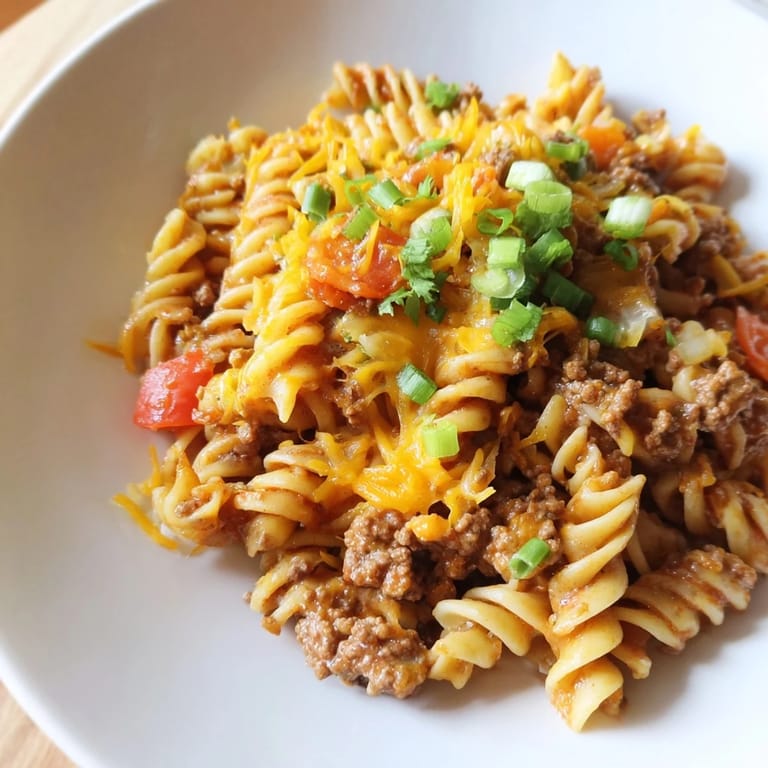
- When the pasta is cooked through and most of the liquid has been absorbed, remove the pot from heat and stir in the shredded cheese until it's completely melted and creamy. The residual heat will do this without you needing to cook it further.
- Serve and garnish:
- Spoon everything into bowls and top with green onions, a dollop of sour cream, and fresh cilantro if you have it. These toppings add brightness and a little coolness against the warm, cheesy pasta.
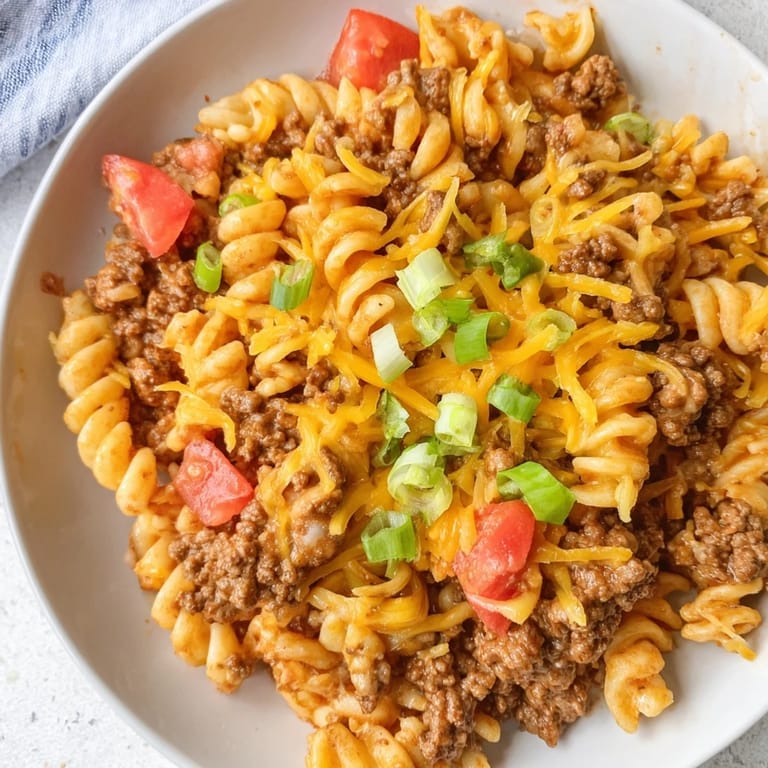 Save to Pinterest
 The moment that made me really love this dish came when my youngest, who usually picks around anything he deems "too mixed together," asked for seconds without complaining. There's something about the way the taco spices and cheese work together that feels less like a casserole and more like comfort, pure and simple.
Making It Your Own
This recipe is flexible by design, so don't feel locked into the version I've described. Add a diced jalapeño with the onion if you want heat, or stir in a can of black beans or corn for texture and color. Ground turkey or chicken swaps in beautifully for beef, and you can use gluten-free pasta without any fuss—the cooking time and method stay exactly the same.
Timing and Make-Ahead Notes
This is not a dish that improves with sitting, so it's best served fresh and hot, right after the cheese melts. You can prep your ingredients earlier in the day—dice the onion, mince the garlic, shred the cheese—and then the actual cooking is just assembling and letting the pot do the work.
Serving and Storage
Serve this straight from the pot into bowls, and let everyone build their own plate with toppings. Leftovers do reheat okay, though the pasta will have absorbed more liquid; just add a splash of broth or milk to loosen it up.
- Fresh cilantro and a lime wedge brighten everything at the end.
- A cold beer or lime-flavored sparkling water balances the richness beautifully.
- Leftovers can go straight into lunch the next day if you store them in an airtight container.
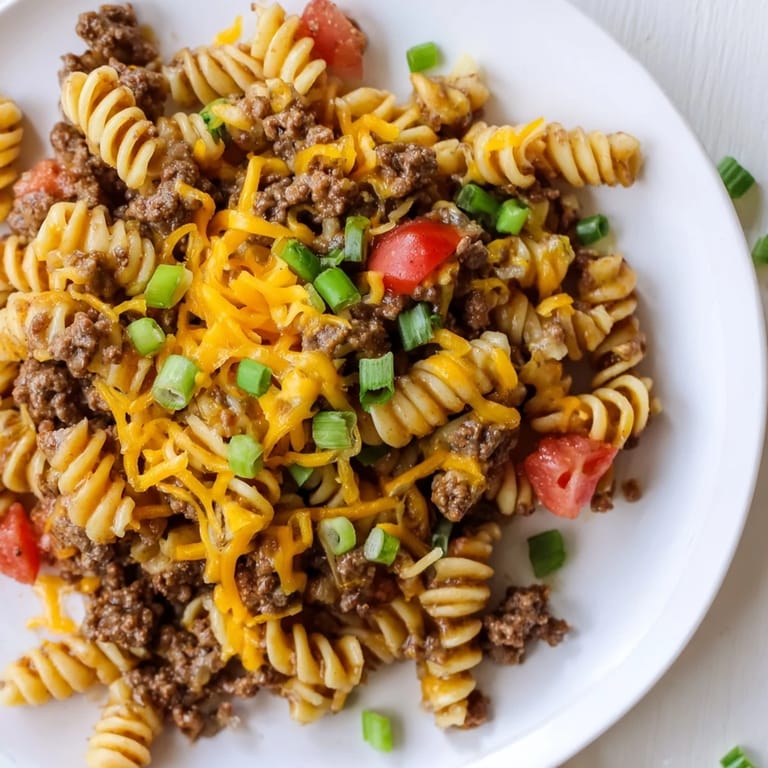 Save to Pinterest
 This one-pot meal has become my go-to when I want something hearty and satisfying without the post-dinner cleanup headache. It's the kind of recipe that proves you don't need complexity to make something truly delicious.
Recipe Questions & Answers
- → Can I substitute ground beef with other meats?
Yes, ground turkey or chicken work well as substitutes while maintaining a similar texture and flavor balance.
- → What types of pasta are best for this dish?
Short pasta shapes like penne, rotini, or shells hold up nicely and cook evenly in the pot.
- → How can I make this dish spicier?
Add a chopped jalapeño when sautéing the onions and garlic to boost the heat naturally.
- → Is it possible to make this gluten-free?
Yes, swap out regular pasta for a gluten-free variety without affecting the cooking method.
- → What toppings complement this meal?
Green onions, sour cream, and fresh cilantro add freshness and texture when served on top.