 Save to Pinterest
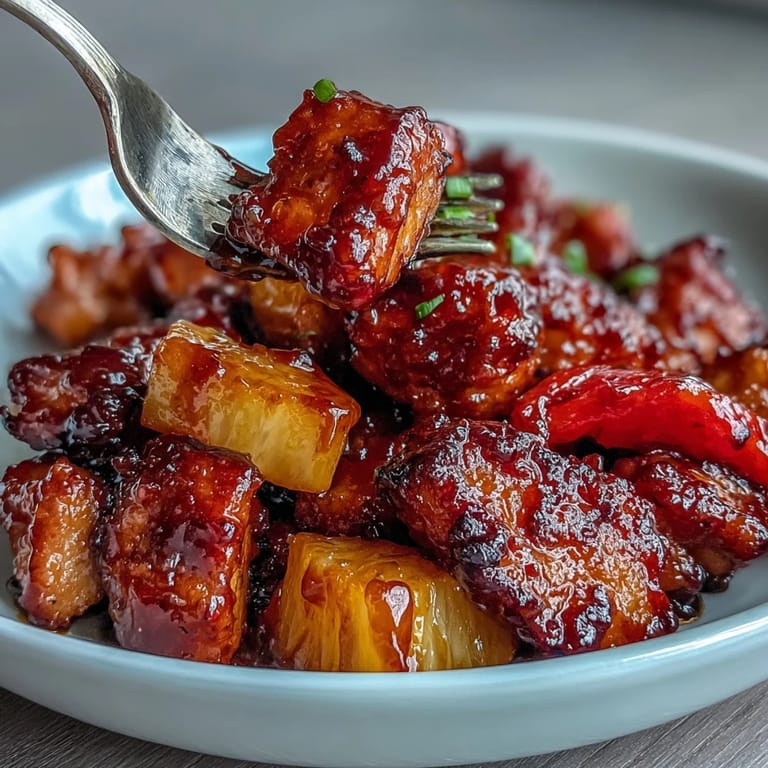
 My neighbor knocked on my door one evening with a steaming skillet in hand, insisting I taste what she'd just thrown together. One bite of that glossy, caramelized chicken with the bright burst of pineapple and I was hooked, asking for her method before she'd even set it down. What struck me most wasn't the complexity but how the sweet-tart sauce seemed to pull everything together effortlessly, making that single skillet feel like magic. She laughed and said it was her weeknight lifesaver, the kind of meal that tastes like you've been cooking all day when really you've barely touched the stove. That's when I knew this recipe was something special.
I made this for my family on a rainy Tuesday, and watching my youngest pause mid-chew to ask what the sweet flavor was made everything feel worthwhile. She'd been skeptical about the pineapple at first, one of those kids who likes her food groups separated, but the way it melded with the sauce won her over completely. That meal turned into a monthly request, eventually becoming the one dish my usually picky eater would actually volunteer to help cook.
Ingredients
- Boneless, skinless chicken breast, cubed: The lean protein base that soaks up every drop of that tangy-sweet sauce, and cutting it into uniform pieces means everything cooks at the same rate, no overcooked edges.
- Cornstarch coating: This creates a light, tender exterior that helps the sauce cling beautifully instead of sliding right off, the secret to getting that restaurant finish at home.
- Vegetable oil: Use something neutral like canola or grapeseed so the sauce flavors truly shine without any competing tastes.
- Red and green bell peppers: The color contrast makes the dish look alive on the plate, plus they soften just enough to be tender without becoming mushy.
- Fresh ginger and garlic: These two create an aromatic base that lifts the entire dish from ordinary to genuinely craveable, don't skip them even if you're tempted.
- Rice vinegar: The backbone of the sauce, providing that clean acidity without the harshness you'd get from white vinegar.
- Brown sugar: It dissolves smoothly into the sauce and adds a molasses-like depth that granulated sugar simply doesn't provide.
- Pineapple chunks: Fresh is lovely, but canned drained pineapple works perfectly well and sometimes tastes sweeter because it's been processed at peak ripeness.
- Cornstarch slurry: This is what turns the sauce from thin to glossy and clinging, the finishing touch that makes the dish feel complete.
Tired of Takeout? 🥡
Get 10 meals you can make faster than delivery arrives. Seriously.
One email. No spam. Unsubscribe anytime.
Instructions
- Coat the chicken:
- Toss your cubed chicken with cornstarch, salt, and pepper in a bowl, making sure every piece gets an even coating. This creates a subtle crust that will help the sauce grip and gives you that tender interior.
- Sear in batches:
- Heat oil in your skillet over medium-high heat and work with half the chicken at a time, giving each piece room to develop some color without crowding. This takes about 3 to 4 minutes per batch, and you'll know it's ready when the edges turn golden.
- Build the aromatics:
- Once chicken is out, add your minced garlic and ginger to the same skillet where all those browned bits are clinging, letting them toast for just a moment until fragrant. Then in go your onion and peppers, cooking together until they start to soften but still have some life to them.
- Reunite everything:
- Return the chicken to the skillet along with the pineapple chunks, then whisk together your sauce ingredients separately and pour everything over top. The aromas at this moment are almost as satisfying as the taste.
- Thicken and finish:
- Pour in your cornstarch slurry while the sauce simmers, stirring constantly until it shifts from thin to silky and coats the back of a spoon. Everything should come together in those final 2 to 3 minutes, the chicken finishing its cook while the sauce gels up into something absolutely glossy.
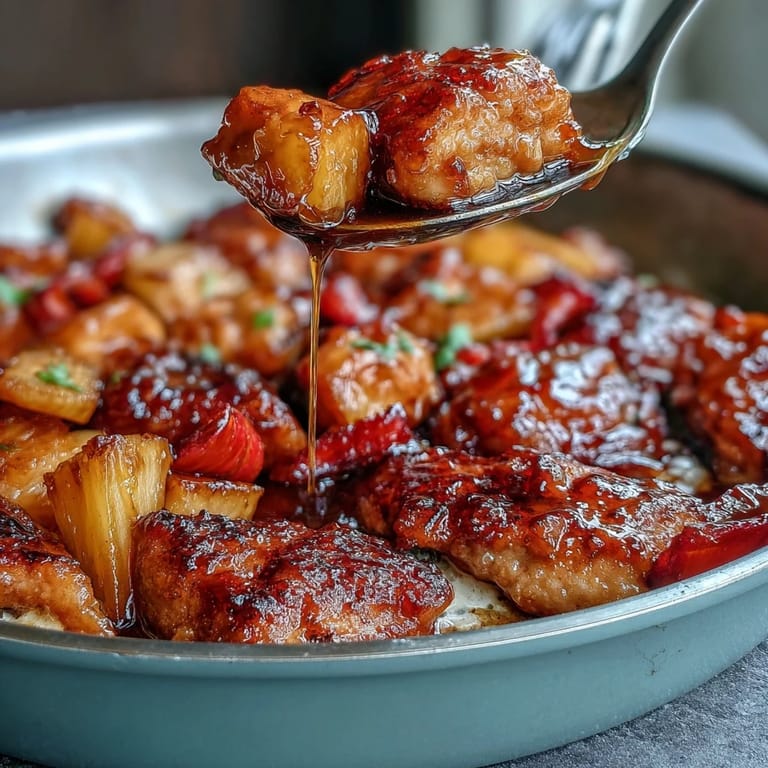 Save to Pinterest
 What surprised me most about mastering this dish is how a few simple principles, layered properly, create something that feels genuinely special. It's the kind of cooking that rewards you for paying attention without punishing you if you're a little casual about timing.
Making It Your Own
Once you've made this a few times and feel comfortable with the rhythm, you start seeing possibilities everywhere. Some nights I'll swap the chicken for shrimp, which cooks even faster and absorbs that sauce like a dream, while other times I'll use chicken thighs instead of breasts because they're more forgiving and stay juicier. I've experimented with adding cashews for crunch, or a teaspoon of sesame oil drizzled in at the end for extra richness.
Serving Suggestions That Work
The most common way I serve this is over jasmine rice, where those fluffy grains catch all the sauce and make you want seconds. But I've also piled it on cauliflower rice for a lower-carb version, served it in lettuce wraps for something lighter, or even ladled it over brown rice with a crack of black pepper and green onions scattered on top. Each version feels like a different meal, which means this single recipe keeps surprising you.
Storage and Leftovers
This dish actually gets better in the refrigerator after a day or two, as the flavors meld together and deepen. You can store it in an airtight container for up to three days, and when you reheat it gently on the stovetop, the sauce stays silky instead of breaking apart.
- If you're meal prepping, keep the sauce and chicken separate from the rice until you're ready to eat so the grain doesn't get soggy.
- Freeze the finished dish in individual portions for up to two months, though the peppers will lose some of their firmness, making it better for nights when you just need something warm and comforting.
- A splash of water or pineapple juice when reheating will restore the sauce to its original silky consistency if it's thickened too much.
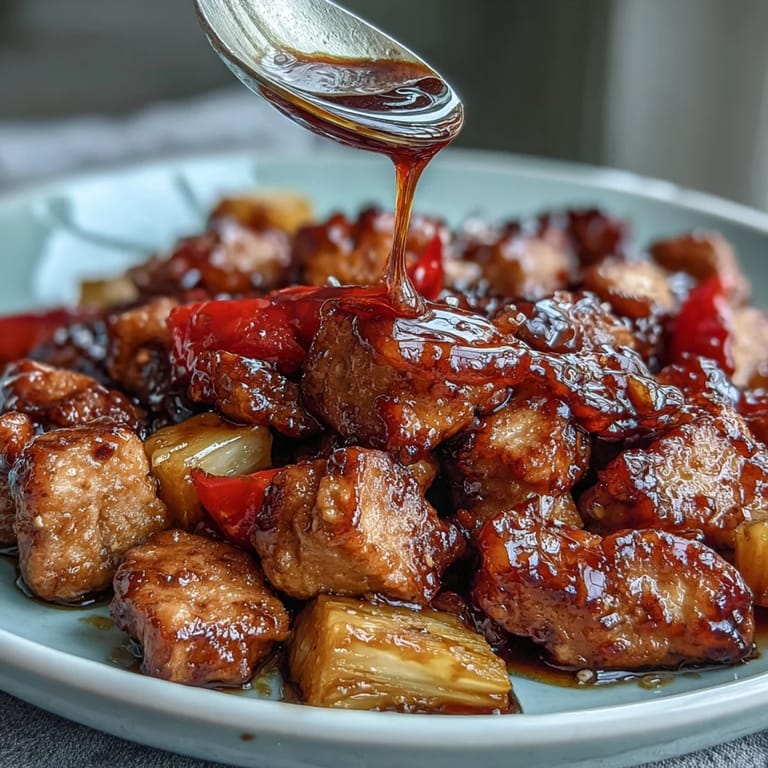 Save to Pinterest
 This is the kind of meal that reminds you why home cooking matters, proving that simple ingredients treated with care can taste like you've spent your entire day in the kitchen. Make it once and I guarantee it'll become part of your regular rotation.
Recipe Questions & Answers
- → What cuts of chicken work best?
Boneless, skinless chicken breast cubes are ideal for quick cooking and tender texture, but thighs can be used for juicier results.
- → Can I substitute the pineapple?
Fresh or canned pineapple chunks both work well; just drain canned pineapple to avoid excess liquid.
- → How can I thicken the sauce properly?
Mix cornstarch with water to create a slurry and stir it in while simmering until the sauce thickens to your liking.
- → Are there alternatives to soy sauce for gluten-free options?
Use tamari or coconut aminos as gluten-free substitutes that maintain the savory depth of the sauce.
- → What side dishes pair well with this skillet?
Steamed white rice or cauliflower rice complements the flavors and balances the sweet and sour elements beautifully.