 Save to Pinterest
 The first time I tasted mango sticky rice, I was sitting on a plastic stool outside a Bangkok night market at midnight, the mango's sweetness cutting through the humid air like a revelation. My friend handed me a banana leaf packet and said nothing—just watched as I took that first bite and understood why this simple combination had survived centuries of Thai kitchens. Years later, I'd stand in my own kitchen at dusk, the smell of coconut milk warming on the stove, and it would transport me back to that exact moment of quiet joy.
I made this for my sister's book club once, right when everyone was stressed about something or other, and watching them slow down with a spoon in hand, eyes closed for a moment—that's when I realized this dessert does something that transcends taste. It's comfort dressed up as elegance, and it works every single time.
Ingredients
- Glutinous (sweet) rice, 1 cup: This isn't regular rice—it's sticky and absorbs coconut milk like a dream, creating that signature creamy texture that makes the whole dish work.
- Coconut milk, 1 cup full fat: Use the real stuff, the kind that separates slightly in the can; it's richer and tastes like you actually know what you're doing.
- Granulated sugar, 1/4 cup: Sweetens the coconut sauce to balance the tart mango; don't skip this or the whole harmony falls apart.
- Salt, 1/4 tsp: The secret ingredient nobody talks about—it brightens everything and makes the coconut flavor pop.
- Ripe mangoes, 2 large ones: This is where quality matters; choose ones that yield slightly to pressure and smell like summer, not the ones that feel like tennis balls.
- Coconut cream, 2 tbsp optional: A drizzle on top adds richness that makes people lean back and sigh.
- Toasted sesame seeds or mung beans, 1 tbsp optional: The garnish adds a subtle nuttiness and texture that keeps your palate interested to the last bite.
Tired of Takeout? 🥡
Get 10 meals you can make faster than delivery arrives. Seriously.
One email. No spam. Unsubscribe anytime.
Instructions
- Rinse and soak the rice:
- Run cold water over the glutinous rice, stirring with your fingers until the water runs nearly clear—this removes the excess starch that would otherwise make the rice gluey in a bad way. Soak it for at least four hours (or overnight if you're thinking ahead), which lets the grains soften and cook evenly.
- Steam the rice until tender:
- Drain well, line your steamer basket with cheesecloth to prevent sticking, and steam for about 25 to 30 minutes until the grains are translucent and soft. You'll know it's ready when you press a grain and it breaks without resistance.
- Warm the coconut sauce gently:
- While the rice steams, pour coconut milk into a small saucepan with sugar and salt, then heat slowly over medium, stirring until the sugar dissolves. Never let it bubble—low and slow keeps the coconut flavor delicate and prevents separation.
- Coat the rice with sauce:
- As soon as the rice is done, transfer it to a bowl and pour in three-quarters of that warm coconut sauce, stirring gently so every grain gets coated without breaking. Cover and let it sit for 10 to 15 minutes so the rice drinks up all that coconutty flavor.
- Slice the mangoes:
- Peel your mangoes and slice them into thin, graceful pieces—aim for even thickness so they look intentional on the plate. If your mango is too soft to slice cleanly, chill it slightly first.
- Plate and drizzle:
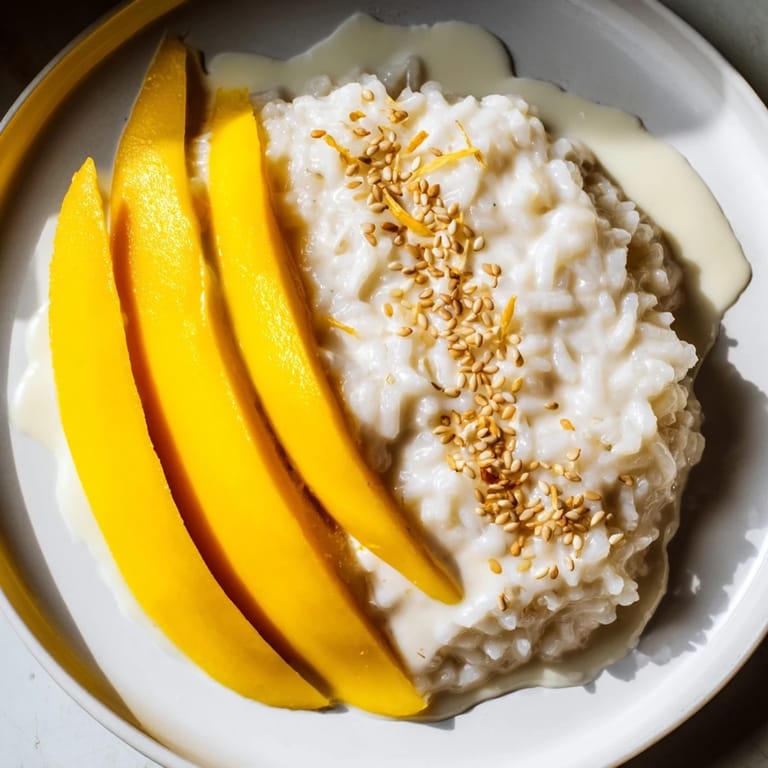
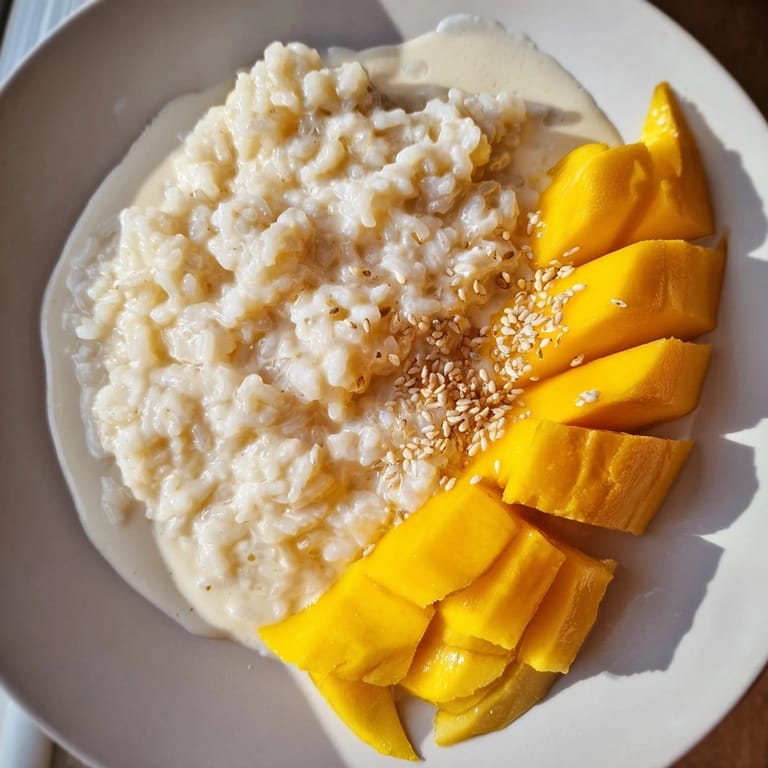
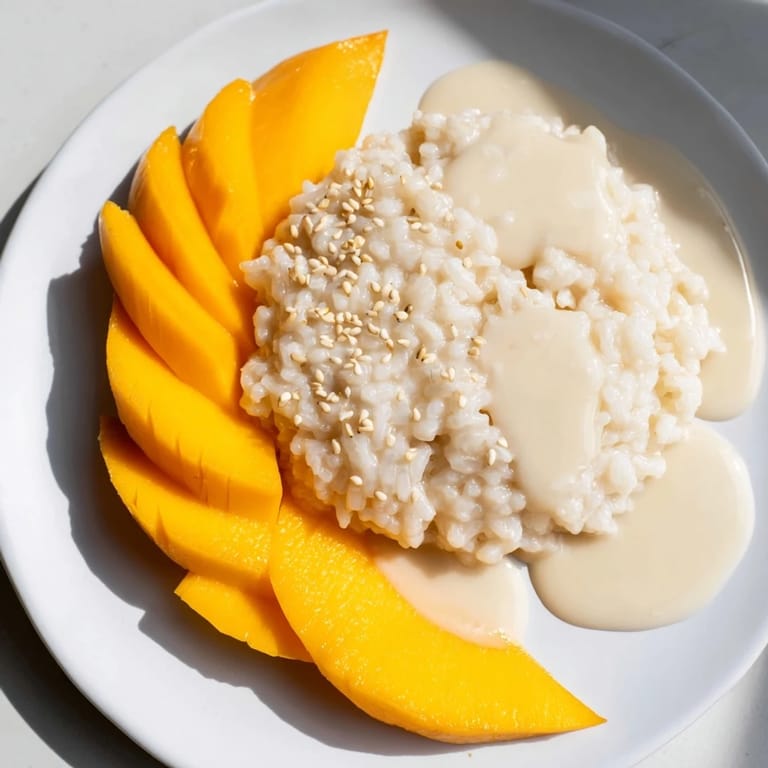
- Mound the rice on each plate, arrange mango slices beside it in a little fan, then drizzle the remaining sauce over everything. Top with a small pool of coconut cream and a scatter of sesame seeds if you've got them.
 Save to Pinterest
 There's a moment, usually around the tenth time making this, where you stop following the recipe and start cooking from muscle memory, and that's when you realize you've made something truly yours. The sweetness of the mango, the warmth of the coconut, the slight salt that ties it all together—it becomes a language you speak without thinking.
Choosing Your Mango Matters
The mango is the star here, so pick ones that smell fragrant and yield slightly when you press the cheek gently—not hard like an apple, and not soft like it's already starting to ferment. I've learned the hard way that a perfectly ripe mango makes the difference between a good dessert and one that stops people mid-conversation. If you can't find good ones, honestly, wait for another week rather than settling.
The Coconut Milk Question
Full-fat coconut milk is non-negotiable here; it's the only kind that gives you that silky coating the rice needs. The thin stuff in regular groceries is mostly water and will leave your rice disappointingly dry no matter how much you stir. I buy mine from Asian markets where the coconut flavor is actually present, and yes, it costs a bit more, but this is not the dish to economize on.
Variations and Small Experiments
Once you nail the classic version, there's room to play—I've stirred pandan leaves into the steaming water for a subtle floral hint, and swapped palm sugar for granulated sugar when I wanted deeper, warmer notes. Some people add a whisper of vanilla or a cardamom pod to the sauce, and while that's not traditional, it's not wrong either if you like where it takes you.
- For extra fragrance, toss a pandan leaf into the steamer basket with the rice—it adds a gentle, almost floral note that makes people ask what you changed.
- Palm sugar instead of granulated gives you a richer, more complex sweetness that feels a bit more authentic if you can find it.
- Serve slightly warm rather than room temperature; the rice is creamier and the flavors speak clearer.
 Save to Pinterest
 This dessert reminds me why I cook—not for complexity, but for moments where simple ingredients come together and make something feel a little bit like magic. Once you've made it, you'll understand why it's survived on Thai tables for so long.
Recipe Questions & Answers
- → How do you soak and cook sticky rice properly?
Rinse the glutinous rice until the water runs clear, then soak it for at least 4 hours or overnight. Steam the rice in a cheesecloth-lined basket for 25–30 minutes until tender.
- → What is the best way to prepare the coconut sauce?
Combine full-fat coconut milk, sugar, and salt, then heat gently without boiling, stirring until the sugar dissolves to create a smooth sauce.
- → Can I substitute any ingredients for a different flavor?
You can replace granulated sugar with palm sugar for a richer, caramel-like taste, enhancing the depth of the coconut sauce.
- → Are there optional garnishes to enhance the dish?
Adding coconut cream and toasted sesame seeds or mung beans gives an extra layer of creaminess and texture when sprinkled on top.
- → How should this dish be stored?
It’s best enjoyed fresh, as refrigerating the assembled dish can cause the sticky rice to harden and lose its texture.