 Save to Pinterest
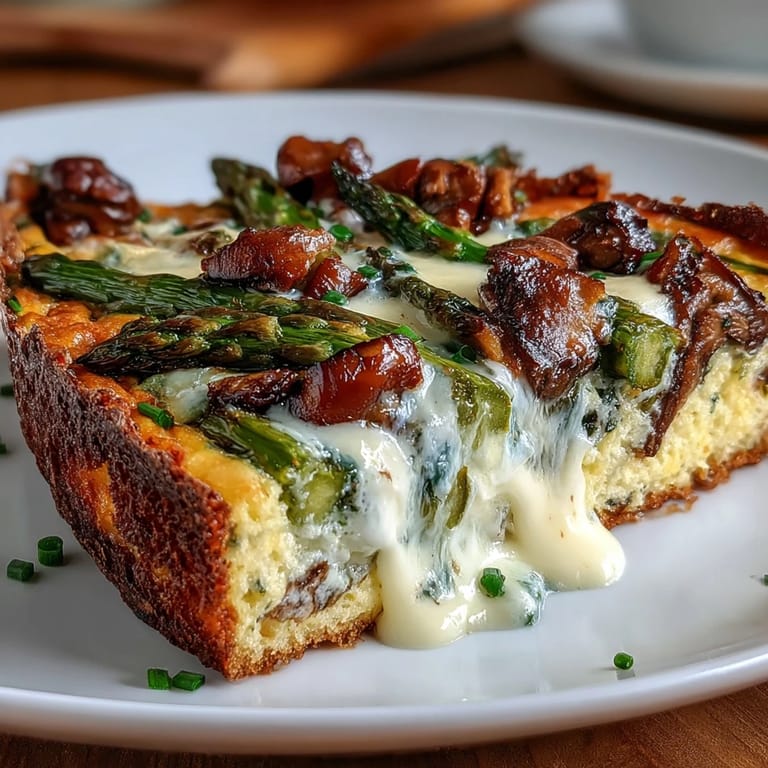
 There's something about spring that makes me crave eggs baked in unexpected ways, and this frittata emerged one Sunday when I had half a loaf of sourdough going stale on my counter. My neighbor stopped by with a bundle of fresh asparagus from her garden, and suddenly I was thinking about crispy bread, creamy eggs, and those earthy mushrooms that always seem to make everything taste better. What started as a way to use up ingredients became the kind of dish that makes people ask for seconds before they even finish their first bite.
I made this for a small gathering last April when friends came over on a Saturday morning, and the moment I pulled it from the oven, golden and puffed up like it had something to prove, I saw their faces light up. Nobody expected something this elegant from a home kitchen, and there was this quiet satisfaction in watching people enjoy food that tasted like care. That's when I knew this recipe had staying power.
Ingredients
- Sourdough bread: Use a sturdy loaf with good structure so the slices hold together as a crust without falling apart in the pan.
- Unsalted butter: This brushing step creates that essential crispness on the bread layer, so don't skip it or go light-handed.
- Asparagus: Spring asparagus is tender and sweet, but if you're cooking in winter, thicker stalks work fine—just give them an extra minute in the pan.
- Cremini or button mushrooms: The earthiness here is non-negotiable, and cooking them until they're deeply golden brings out their savory character.
- Shallot: This adds subtle sweetness and depth that regular onion can't quite match, and it mellows beautifully during cooking.
- Eggs: Large eggs matter for the proportions to work, and fresher eggs create a better custard texture.
- Whole milk and heavy cream: Together they create that silky, custard-like interior that keeps the frittata tender rather than rubbery.
- Gruyère and Parmesan cheeses: Gruyère melts into nutty richness while Parmesan adds sharp complexity—using both is the secret.
- Fresh chives: They brighten everything at the last moment with oniony freshness, so add them to the egg mixture raw rather than cooking them.
Tired of Takeout? 🥡
Get 10 meals you can make faster than delivery arrives. Seriously.
One email. No spam. Unsubscribe anytime.
Instructions
- Set Your Stage:
- Preheat your oven to 375°F and grease your pan thoroughly—sourdough has a tendency to stick if you're not careful. This is also when you want to get your mise en place organized because once you start cooking, things move quickly.
- Build the Bread Crust:
- Arrange the sourdough slices overlapping slightly like you're creating a edible puzzle, pushing them gently into the corners so they form a real crust. Brush generously with melted butter and bake for 8 to 10 minutes—you want it golden and crisp but not brown, because it's going back in the oven.
- Sauté Your Vegetables:
- Heat olive oil in a skillet and start with the shallot, letting it soften and release its sweetness for a minute or two. Add mushrooms next and be patient here—let them cook until they've released their moisture and taken on a deeper color, then add the asparagus for just a couple minutes so it stays bright and slightly tender-crisp.
- Make the Egg Custard:
- Whisk your eggs, milk, and cream together in a large bowl until they're completely uniform, then fold in both cheeses, the chives, salt, and pepper. The mixture should be smooth and pale, and slightly thick from the cheese.
- Combine Everything:
- Spread your cooked vegetables evenly over the sourdough crust, then pour the egg mixture over top, making sure it flows into all the spaces. Don't overfill—the frittata will puff as it bakes, and you want room for that magic to happen.
- Bake Until Golden:
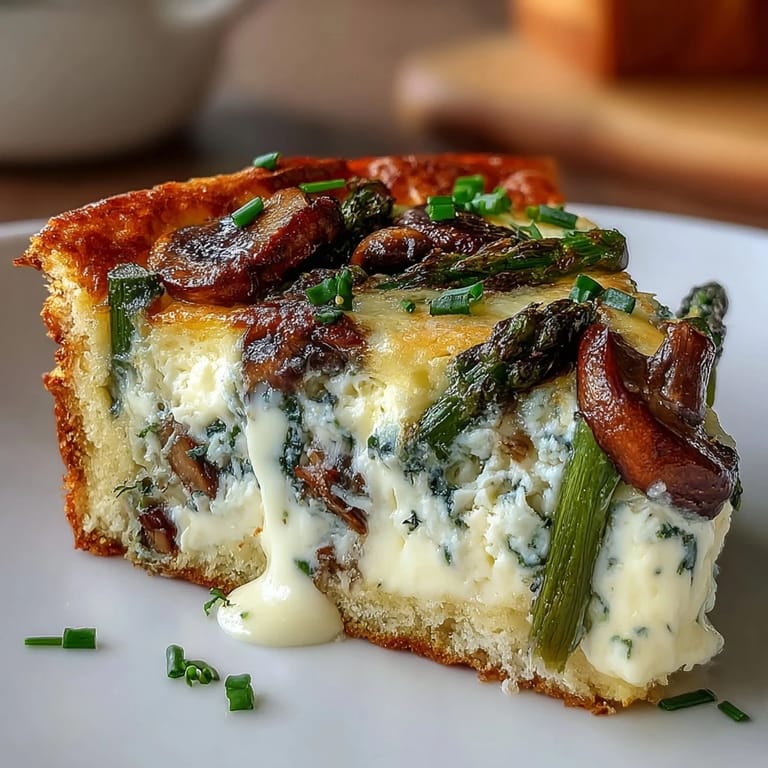
- Bake for 25 to 30 minutes, watching around the 25-minute mark for that moment when the edges are set but the center still has the slightest jiggle when you shake the pan—that's your signal it's perfectly cooked. It'll continue to set slightly as it cools, so resist the urge to overbake or you'll end up with something dry.
- Cool and Serve:
- Let it rest for 5 minutes before you try to slice it, which gives the structure time to firm up just enough to hold together cleanly. Serve it warm while it's still fluffy, or let it cool completely and serve at room temperature, which honestly tastes incredible.
 Save to Pinterest
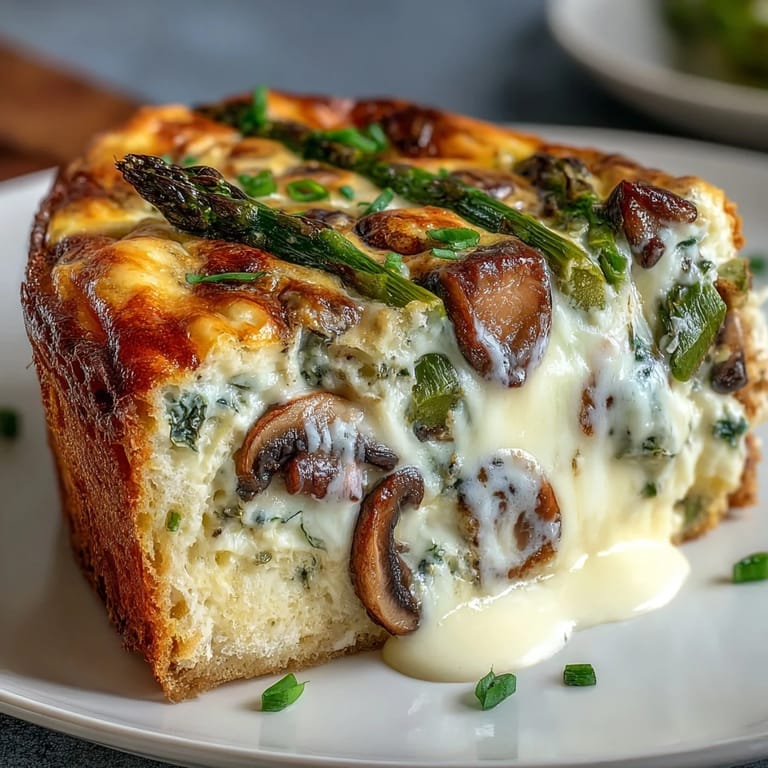
 My kid actually asked me to make this again for their birthday brunch, which felt like the ultimate compliment since they're usually skeptical about vegetables. There's something about the way the sourdough soaks up the eggy custard while staying crispy that converts even the reluctant eaters.
Flavor Building Secrets
The magic in this frittata lives in letting each element shine without overwhelming the others. The asparagus stays slightly crisp because you add it last in the vegetable cooking process, the mushrooms get deep and savory, and the shallot disappears into sweetness. When you pour the egg mixture over top, everything suspends in this creamy custard that somehow manages to be elegant and comforting at the same time.
Timing and Temperature Wisdom
This is not a recipe that rewards rushing—each step builds on the last, and cutting corners usually shows up as either a soggy bottom or rubbery eggs. That said, the actual hands-on time is genuinely short, maybe 20 minutes of work before you can hand things off to the oven. The oven does the heavy lifting, which means you can set the table, pour yourself coffee, and take a breath before people arrive.
Variations and Flexibility
This frittata is forgiving enough to adapt to what's in your kitchen and what sounds good that day. I've made it with roasted bell peppers in summer, caramelized onions when I'm feeling ambitious, and once with leftover roasted broccoli that somehow worked beautifully. The cheese combination is where you can have fun too—use what makes you happy, though I'd stick with something flavorful since you're relying on cheese for depth here.
- Swap the vegetables for roasted zucchini, spinach, or sun-dried tomatoes depending on the season.
- Try smoked gouda instead of Gruyère for a different flavor direction, or add crispy pancetta if you want to make it meaty.
- For dairy-free versions, use plant-based cream and nutritional yeast mixed with almond flour to approximate the richness you'd normally get from cheese.
 Save to Pinterest
 This is the kind of recipe that becomes part of your regular rotation without you quite planning for it to happen, and before you know it, people are asking when you'll make it again. There's quiet power in food this simple and this good.
Recipe Questions & Answers
- → How do I prepare the sourdough crust?
Slice sourdough bread, remove crusts, and layer them in a pan brushed with melted butter. Bake until just crisp to form a sturdy base.
- → What’s the best way to cook asparagus for this dish?
Trim and cut asparagus into 1-inch pieces, then sauté briefly until tender but still crisp, preserving vibrant color and texture.
- → Can I substitute the cheeses used in this dish?
Gruyère and Parmesan offer a rich flavor, but similar hard cheeses like aged cheddar or pecorino can be used for variation.
- → How do I ensure the frittata sets properly?
Bake at a moderate temperature until the edges are golden and center is just set but still moist — avoid overbaking to keep tenderness.
- → What are good accompaniments for the frittata?
A fresh green salad and a crisp white wine such as Sauvignon Blanc complement the flavors and lighten the meal.