 Save to Pinterest
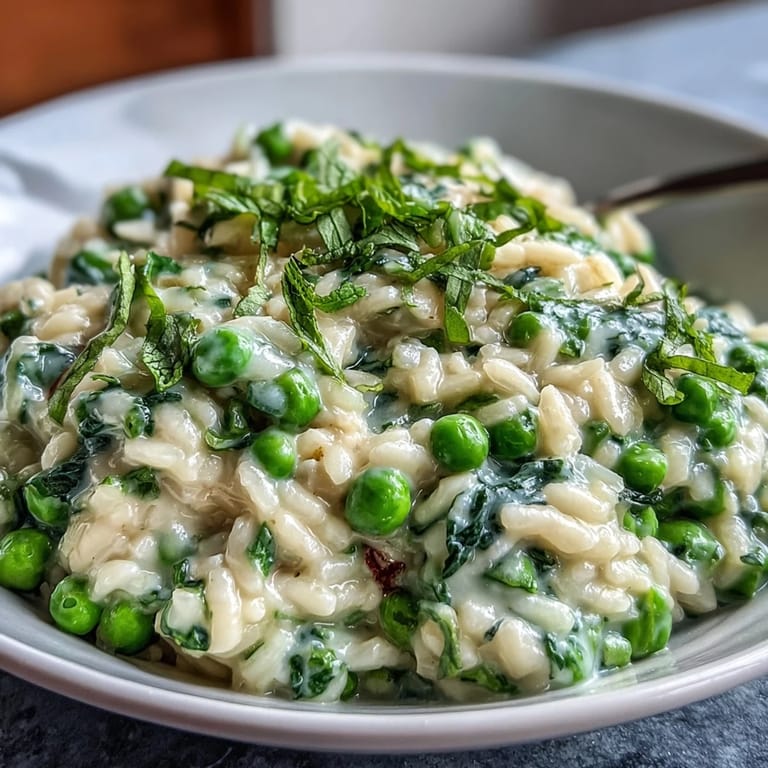
 There's something about the first warm afternoon of spring that makes you crave something bright and creamy at the same time, and that's exactly when this risotto landed on my table. My neighbor stopped by with a basket of the earliest peas from her garden, still in their pods, and I spent an hour shelling them while she told me about her year. Those sweet little spheres inspired me to build an entire dish around them, layering in mint from my windowsill and enough butter and Parmesan to make it feel indulgent without weighing you down.
I made this for a small dinner party on an unexpectedly nice evening, and honestly, I was nervous about getting the timing right with four of us at the table. But risotto has this magical way of forgiving small mistakes, and when everyone tasted it, they went completely quiet for a moment—that second of silence that tells you something landed exactly right. One friend asked if I'd been holding out on my cooking skills, and I had to admit I'd only made it once before.
Ingredients
- Fresh or frozen spring peas, 1 cup: Fresh ones have a tender sweetness that frozen can't quite match, but frozen peas work beautifully if that's what you have; add them right at the end so they don't break down into mush.
- Arborio rice, 1 1/2 cups: This short-grain rice releases starch as it cooks, creating that signature creamy texture without any cream if you don't want it.
- Unsalted butter, 3 tablespoons divided: Two tablespoons go in early to soften the onions, then the final tablespoon stirs in at the end for glossy richness.
- Parmesan cheese, 1/2 cup grated: Freshly grated tastes infinitely better than pre-shredded, and it melts more smoothly into the hot rice.
- Vegetable broth, 4 cups kept warm: Keeping it warm means each ladle adds temperature rather than cooling the rice, which helps it cook evenly.
- Dry white wine, 1/2 cup: The acidity cuts through the richness and adds a subtle complexity that makes people wonder what your secret ingredient is.
- Fresh mint leaves, 2 tablespoons finely chopped: Tear these by hand just before stirring them in so they stay bright and fragrant.
- Small onion, 1 finely chopped: This should be so fine it nearly disappears into the rice, creating a subtle sweetness rather than onion texture.
- Garlic cloves, 2 minced: Don't skip the garlic, but watch it closely so it softens without turning bitter.
- Extra-virgin olive oil, 2 tablespoons: This goes in first to toast the rice and prevent it from sticking to the pan.
- Lemon zest, from 1 lemon optional: If you add it, use a microplane so you get just the yellow part; the white pith underneath tastes harsh.
- Heavy cream, 1/4 cup optional: This is your luxury move if you want an extra silky finish, but honestly the risotto is creamy enough without it.
- Salt and freshly ground black pepper, to taste: Taste as you go, especially at the very end when the Parmesan is stirred in, since it's already quite salty.
Tired of Takeout? 🥡
Get 10 meals you can make faster than delivery arrives. Seriously.
One email. No spam. Unsubscribe anytime.
Instructions
- Warm your broth first:
- Pour your vegetable broth into a medium saucepan and set it over low heat where it will stay at a gentle simmer the entire time you're cooking the risotto. This sounds like a small thing, but cold broth will interrupt the cooking and mess with your timing, so really commit to keeping it warm.
- Build your flavor base:
- Heat the olive oil and 2 tablespoons of butter in your large, heavy-bottomed skillet over medium heat, then add your finely chopped onion. Cook it for about 4 minutes, stirring occasionally, until it's soft and translucent—you're not looking for color here, just softness.
- Toast the garlic and rice:
- Once the onion is ready, add your minced garlic and let it become fragrant, which takes about 1 minute. Then stir in the Arborio rice, moving it constantly for 2 minutes so every grain gets coated in butter and oil and starts to look slightly translucent at the edges.
- Deglaze with wine:
- Pour in the white wine and stir constantly, scraping up anything stuck to the bottom of the pan, until the liquid is mostly absorbed. This takes about 2 to 3 minutes and smells absolutely wonderful.
- Add broth gradually and stir:
- Now comes the part that requires your attention: ladle in one cup of warm broth and stir frequently, letting it absorb into the rice before adding the next ladle. Continue this process for 18 to 20 minutes, tasting the rice occasionally to check for that tender-but-still-slightly-firm texture.
- Introduce the peas:
- When you have about 5 minutes of cooking time left, stir in your peas so they warm through and stay bright green. If you add them too early, they'll lose their sweetness and turn muddy.
- Finish with butter, cheese, and herbs:
- Remove the pan from heat, then stir in the remaining tablespoon of butter, the grated Parmesan, the cream if you're using it, the chopped mint, and the lemon zest. Taste and adjust the salt and pepper, then let everything rest for 2 minutes so the cheese fully melts and the flavors settle.
- Serve right away:
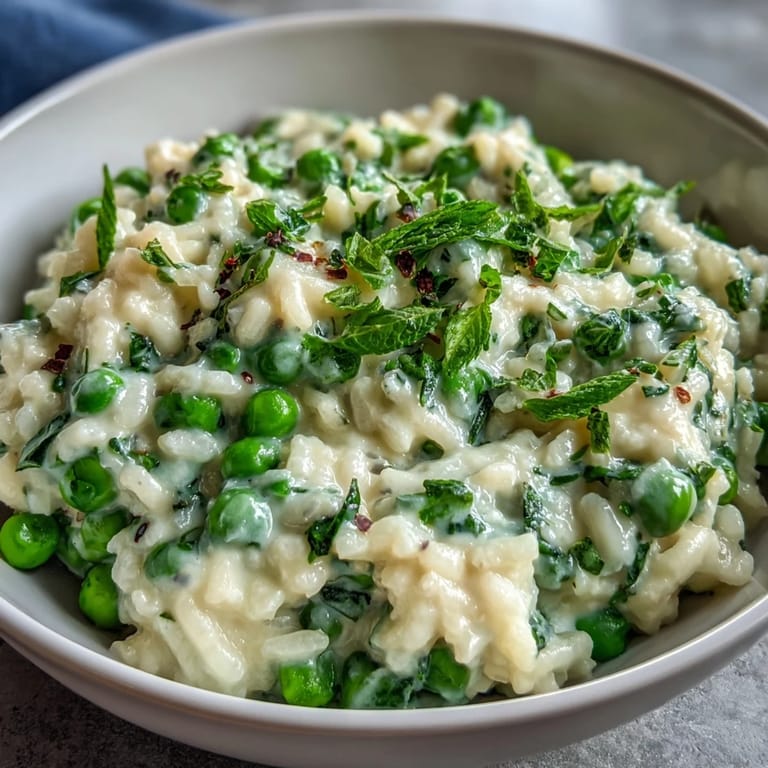
- Transfer to bowls immediately and top with extra mint and Parmesan if you'd like, because risotto waits for no one.
 Save to Pinterest
 What I love about risotto is that it forces you to stay present in the kitchen for those 20 minutes, moving your wooden spoon through warm rice while the kitchen fills with steam and butter smells. There's something meditative about it, and by the time you're done, you've created something that feels special without having spent hours.
The Magic of Spring Ingredients
Fresh peas are only around for a brief window each spring, and when you find them, it's worth building a meal around them. They taste completely different from what you get frozen or canned—sweeter, more delicate—and that sweetness is what makes this risotto feel seasonal and alive. If you're shopping in the off-season, frozen peas are absolutely fine; they're picked at peak ripeness and frozen immediately, so they're often fresher than what's been sitting in a bin.
Risotto Technique Matters
Risotto gets a reputation for being finicky, but it's really just about understanding what's happening as you cook. The rice is releasing starch, which combines with the liquid to create creaminess, and constant stirring helps this process happen evenly throughout the pot. If you stir occasionally instead of frequently, you'll end up with pockets of undercooked rice and mushy spots.
Wine and Pairings
The wine you stir in doesn't just add flavor; the acidity helps break down the rice's starches and keeps the final dish from tasting one-note or too rich. If you're planning to drink wine with dinner, a crisp Sauvignon Blanc or light Pinot Grigio mirrors what's already in the pot and won't overpower the fresh mint and peas.
- Add a handful of baby spinach when you stir in the peas for extra color and nutrition.
- Toast a handful of pine nuts separately and scatter them on top for a contrast in texture.
- If you're making this for someone avoiding dairy, use good quality vegan butter and a cashew or nutritional yeast-based Parmesan substitute.
 Save to Pinterest
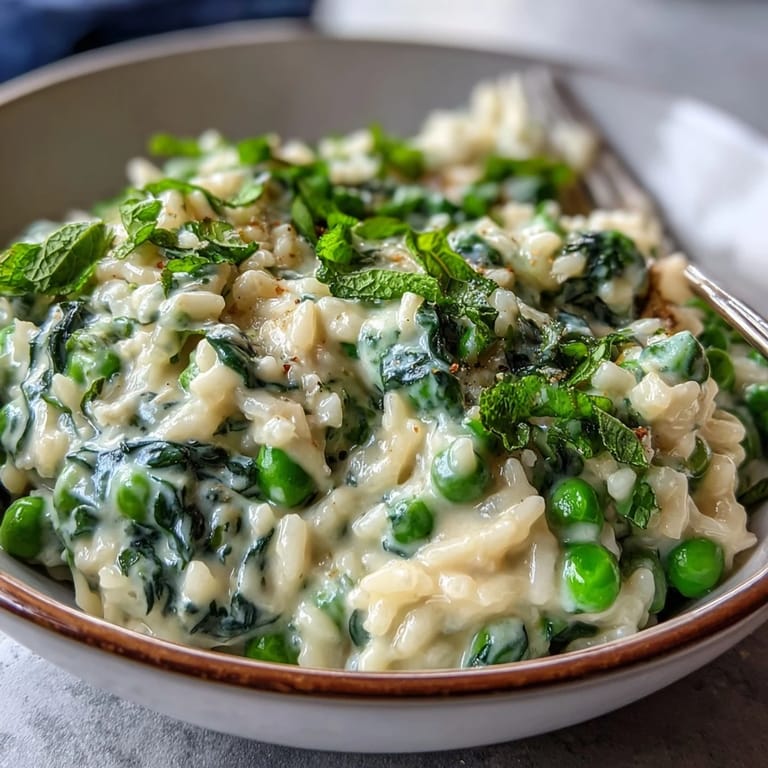
 This risotto taught me that some of the best meals come from saying yes when someone shows up with garden peas, and from being willing to stand at the stove and stir. It's simple enough for a weeknight but feels special enough for company.
Recipe Questions & Answers
- → What type of rice is ideal for this dish?
Arborio rice is ideal because its high starch content creates the creamy texture that defines this dish.
- → When should peas be added during cooking?
Peas are added in the final 5 minutes of cooking to maintain their bright color and fresh flavor.
- → Can I use fresh mint or dried mint?
Fresh mint leaves are preferred for their vibrant flavor and aroma, enhancing the dish's freshness.
- → Is white wine necessary in the cooking process?
White wine adds acidity and depth; however, it can be substituted with additional broth if needed.
- → How is the creamy texture achieved without cream?
The creamy texture comes mainly from the slow absorption of broth by Arborio rice, releasing starch to create natural creaminess.