 Save to Pinterest
 My tía taught me chicken adobo on a humid afternoon when I was barely tall enough to see over the kitchen counter. She moved through the kitchen with such ease, combining vinegar and soy sauce like she was mixing memory itself, and the smell that rose from that pot—tangy, garlicky, deeply savory—felt like home before I even tasted it. Now, decades later, I make this dish when I want to feel that same presence in my kitchen, when I need the kind of comfort that only comes from something authentic and true.
I cooked this for my friend Marcus once when he was going through a rough patch, and watching his whole face change when he took that first bite reminded me why food matters so much. He asked for the recipe immediately, and now it's his go-to dinner when he needs to feel grounded again—that's when you know a dish has real power.
Ingredients
- Chicken thighs and drumsticks: Bone-in, skin-on pieces are non-negotiable here; they stay moist and develop incredible flavor where boneless breasts would dry out.
- Soy sauce: Use good quality if you can—it's half the backbone of this sauce and makes a real difference.
- Cane vinegar: If you can find it, it's worth seeking out, but white vinegar works fine when you're in a pinch.
- Garlic: Smash it rather than mince it so you get those soft, sweet cloves that practically melt into the sauce.
- Bay leaves: Don't skip these; they add an herbal whisper that ties everything together.
- Black peppercorns: Whole ones stay in the dish and release flavor slowly, but ground pepper is your friend if that's what you have.
- Brown sugar: Optional, but it softens the vinegar's sharp edge in the most subtle, elegant way.
- Water: This dilutes the sauce just enough so the chicken braises evenly instead of getting too salty.
- Cooking oil: Any neutral oil works; you're just looking for a good sear here.
Tired of Takeout? 🥡
Get 10 meals you can make faster than delivery arrives. Seriously.
One email. No spam. Unsubscribe anytime.
Instructions
- Combine everything in a bowl:
- Throw the chicken, soy sauce, vinegar, smashed garlic, bay leaves, peppercorns, and brown sugar together and let them get acquainted. The longer they hang out together—at least 30 minutes, ideally overnight—the deeper the flavor gets.
- Pat the chicken dry:
- This seems small, but it's the difference between a golden crust and sad, steamed skin. Use paper towels and don't be shy about it.
- Get that golden crust:
- Heat oil until it's shimmering, then lay the chicken skin-side down without moving it around. Let it sit there for 3 to 4 minutes—you want that skin to turn golden and crispy, which is where half the flavor lives.
- Add the marinade back in:
- Pour everything back into the pot, add water, and bring it to a boil. The aroma at this point will make you understand why people get so emotional about adobo.
- Braise low and slow:
- Cover and let it simmer gently for 25 minutes, turning the chicken halfway through. You're not rushing this; good things need time.
- Let the sauce reduce:
- Uncover the pot and simmer for another 10 to 15 minutes until the sauce thickens and clings to the chicken. You can skim fat off the top if you want, though I often leave it for flavor.
- Taste and adjust:
- This is your moment to decide if it needs more salt, more vinegar, or a pinch more pepper. Trust your palate.
 Save to Pinterest
 There's a moment toward the end of cooking when the kitchen fills with this exact smell—savory, complex, a little bit funky in the best way—and you realize why this dish has survived centuries and countless versions. That's when I know it's going to be good.
The Vinegar Question
Vinegar is the soul of adobo, and different vinegars create subtly different moods. Cane vinegar is mellower and slightly sweet, white vinegar is sharper and more acidic, and rice vinegar adds a gentle roundness. I've made this with all three, and they're all honest and true—it just depends on what you're drawn to. The beauty of adobo is that it's forgiving enough to let you explore.
Making It Your Own
Some people add a splash of coconut milk in the last few minutes for richness, which transforms it into something slightly creamy and luxurious. Others throw in dried chilies for heat, or a splash of fish sauce for umami depth. I've even seen versions with pineapple juice sneaking in there, and honestly, they all work because the foundation is so solid. This is a dish that welcomes your instincts.
Serving and Storage
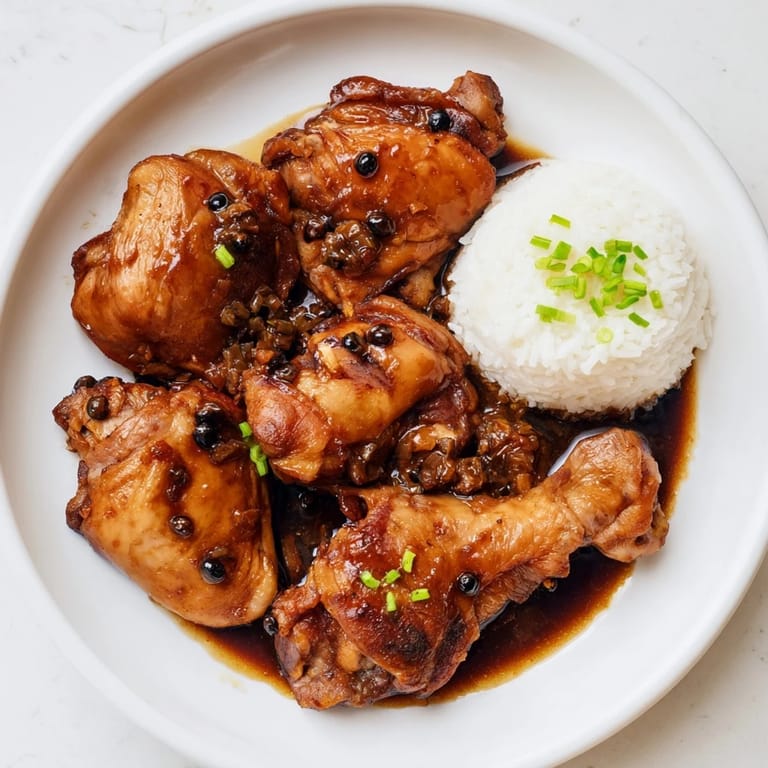
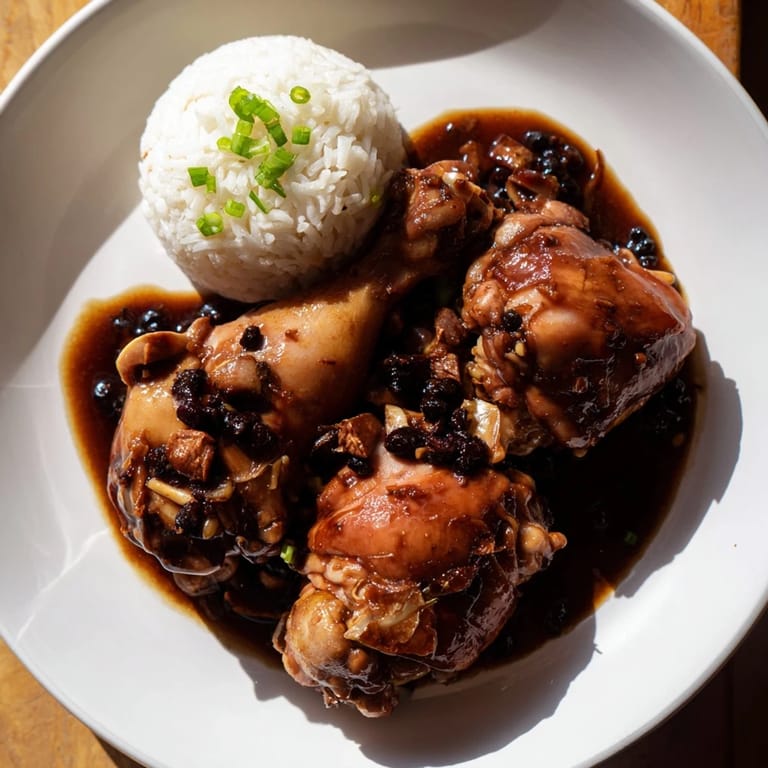
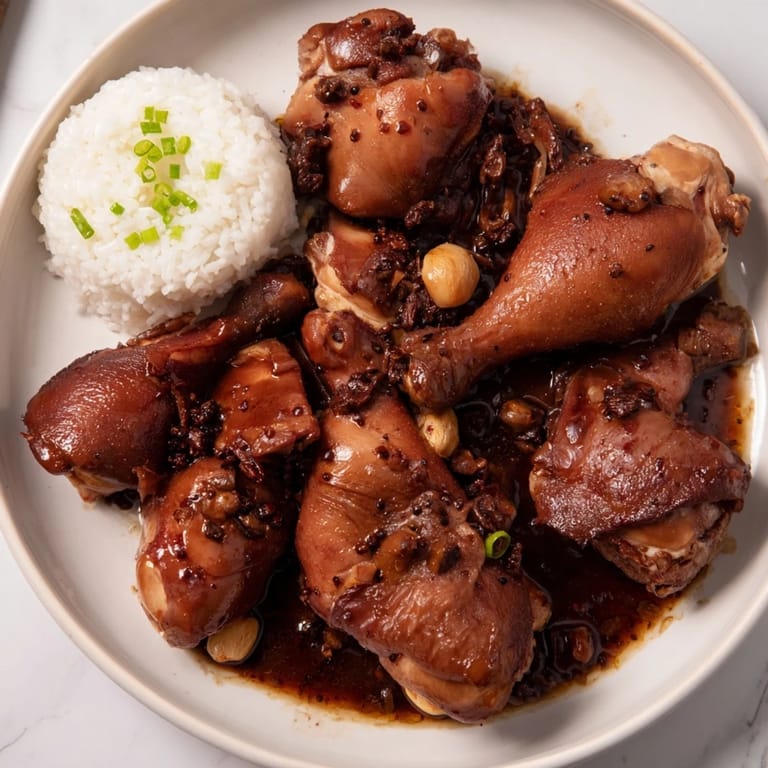
Serve this over steamed white rice, letting the sauce pool around the grains so every bite has that savory-tangy element. Fresh scallions on top add a bright green note that cuts through the richness beautifully. This dish keeps in the fridge for up to four days and actually tastes better the next day as the flavors deepen and marry—make extra if you can.
- Reheat gently on the stovetop with a splash of water if the sauce has thickened too much.
- Leftover adobo makes incredible fried rice or sandwich filling if you shred the chicken.
- Serve with a cold drink; the richness and tang balance beautifully with something crisp and refreshing.
 Save to Pinterest
 Adobo is one of those dishes that teaches you something new every time you make it, even after you've cooked it a hundred times. Trust the process, trust your instincts, and always cook with the understanding that you're continuing something that matters.
Recipe Questions & Answers
- → What cut of chicken works best?
Bone-in, skin-on thighs and drumsticks offer ideal tenderness and flavor depth.
- → Can I marinate overnight?
Yes, marinating up to 8 hours enhances the savory and tangy notes throughout the meat.
- → How do I achieve the sauce’s thick consistency?
Simmer uncovered after braising to let the sauce reduce and concentrate flavors.
- → Is brown sugar necessary?
It’s optional but adds a subtle sweetness that balances the tangy vinegar and salty soy.
- → What can I serve alongside this dish?
Steamed white rice is traditional and complements the rich, flavorful sauce perfectly.
- → Are substitutions possible?
Pork can replace chicken for a classic variant; coconut milk or chilies can deepen flavor complexity.