 Save to Pinterest
 The first time I made satay sauce, I was trying to recreate that addictive dip from a tiny restaurant tucked between a flower market and a bookshop in Jakarta. I'd been chasing that exact balance of creamy, spiced, and bright for weeks, and one Sunday afternoon, while the rain drummed against the kitchen window, it finally clicked. The smell of toasted spices hitting warm peanut butter was so familiar it felt like a memory I didn't know I had.
I served this at a potluck where someone brought satay skewers from the frozen section, and when they dipped them in my sauce, they actually closed their eyes. That moment reminded me why homemade matters—not because store-bought is bad, but because you can taste the intention in every spoonful.
Ingredients
- Creamy peanut butter: Use unsweetened and unsalted if you can find it—you're building flavor here, not starting with salt already baked in. Natural peanut butter works but can separate, so give it a stir first.
- Full-fat coconut milk: This is what transforms peanut butter into something elegant. Shake the can gently; you want to use the whole thing, cream and liquid together.
- Soy sauce: The salt carrier and umami base. If you need gluten-free, tamari or coconut aminos work beautifully and taste almost identical.
- Fresh lime juice: Bottled won't have the same snap, and you'll find yourself adding more and more trying to capture that brightness. Squeeze it fresh—it takes 30 seconds.
- Brown sugar or palm sugar: Brown sugar is accessible and reliable; palm sugar is more traditionally Indonesian and slightly deeper in flavor. Both work.
- Garlic clove, minced: One clove is right—any more and you'll taste garlic instead of sauce, any less and you lose that savory anchor.
- Ground coriander and cumin: These two are the soul of satay. Buy them whole if you can and toast them in a dry pan for 30 seconds before grinding; the difference is worth it.
- Chili flakes: Start with a quarter teaspoon and taste before adding more. Heat spreads as the sauce sits, so you can always add more but you can't take it back.
- Fish sauce (optional): If you use it, add just a teaspoon—it's there to whisper, not shout. It deepens the savory notes in a way nothing else can, but the sauce is complete without it.
Tired of Takeout? 🥡
Get 10 meals you can make faster than delivery arrives. Seriously.
One email. No spam. Unsubscribe anytime.
Instructions
- Marry the base:
- Pour peanut butter and coconut milk into a small saucepan and whisk over medium heat until completely smooth. There will be a moment where it looks like it might break, but keep whisking gently—it always comes together.
- Build the flavor:
- Add everything else: soy sauce, lime juice, brown sugar, minced garlic, coriander, cumin, chili flakes, and salt. Stir slowly and deliberately, making sure the minced garlic doesn't clump. You're not rushing this part.
- Gentle heat:
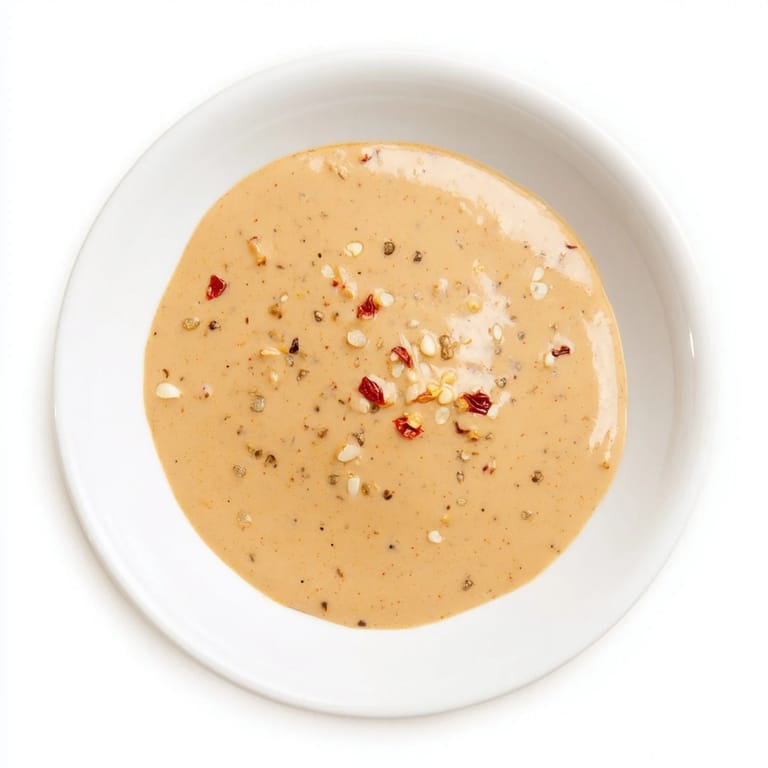
- Bring the mixture to a soft simmer, stirring frequently. You'll see it begin to glossy up after about 3 to 5 minutes—that's your cue that the flavors have started finding each other.
- Taste and adjust:
- This is the most important step. Is it too muted? Add lime juice. Too sharp? Add sugar. Too mild? Add chili flakes. Trust your mouth—recipes are blueprints, not prison sentences.
- Thin if needed:
- If the sauce is thicker than you'd like, whisk in water one tablespoon at a time until it reaches that drizzle-able consistency.
- Final touch:
- Remove from heat and stir in fish sauce if you're using it. Let it cool for five minutes before serving.
 Save to Pinterest
 There's a moment when you're cooking satay sauce, usually right after the first taste, when you realize you've made something that tastes like somewhere else—like you've traveled in your kitchen for 20 minutes and arrived somewhere delicious and familiar all at once.
Texture and Consistency
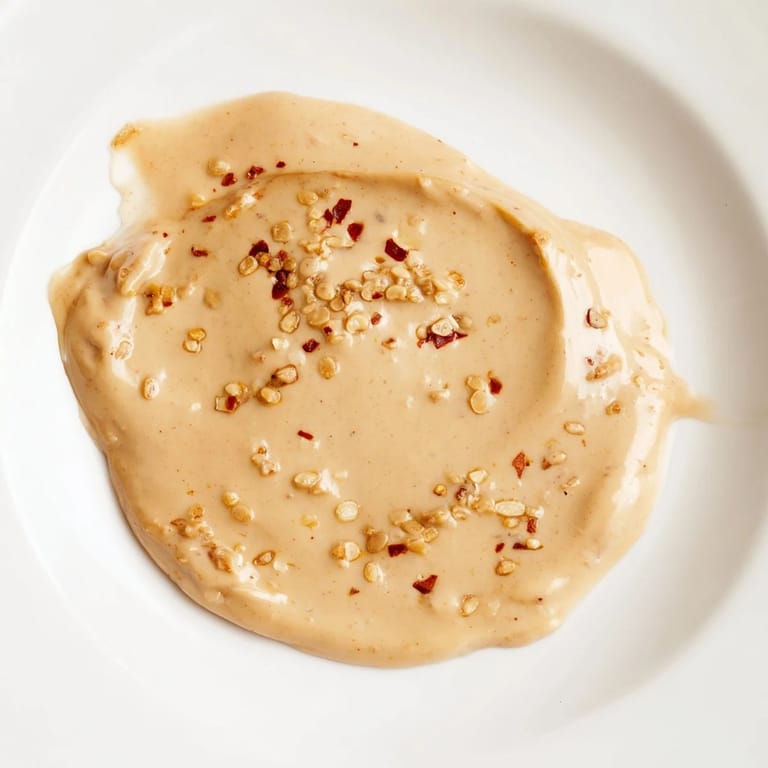
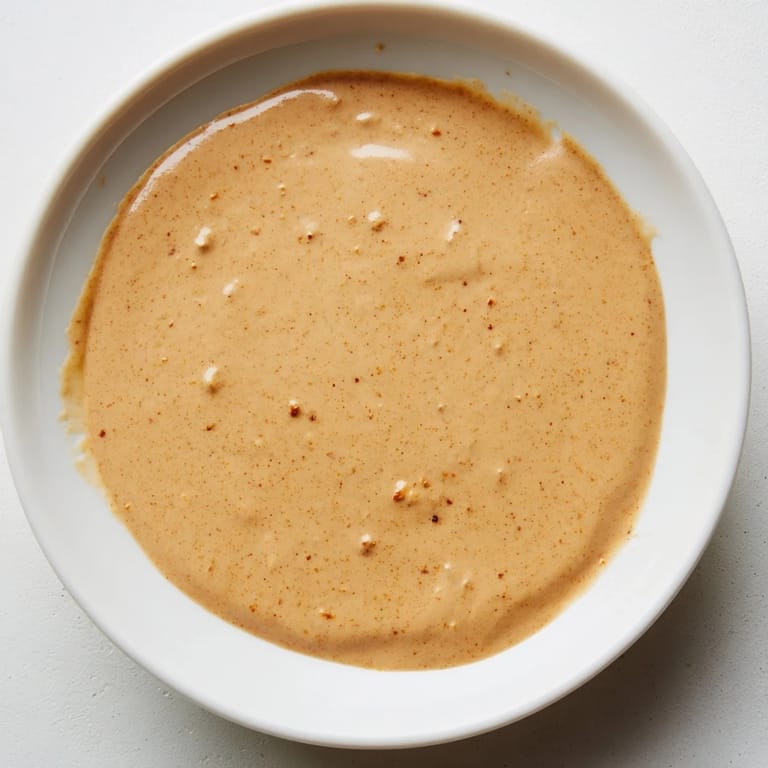
The sauce should be pourable but never watery—think of it as thick enough to cling to whatever it's dipping but loose enough to drizzle. If you've made it ahead and it's thickened up in the fridge, warm it gently over low heat with a splash of water and it'll return to its silky self. I learned this the hard way, once heating it too aggressively and watching the coconut milk separate, which taught me that patience with reheating matters as much as patience with cooking.
Customization and Variations
This sauce is genuinely flexible. If you like crunch, stir in crushed roasted peanuts at the end. If you want depth, a touch of fish sauce changes everything. If you're looking for warmth beyond heat, a pinch of turmeric works beautifully. I've served it thickened and used it as a spread, thinned it and turned it into a salad dressing, and once even warmed it slightly and used it as a dip for ripe mango on a warm evening—it works in all those moments.
Storage and Pairing Ideas
Keep leftover sauce in a glass container in the refrigerator for up to five days. When you're ready to use it again, warm it gently—a few seconds in the microwave or a low simmer on the stove—and it'll taste like you just made it. This sauce has lived a wonderful life on grilled chicken satay, but it's equally at home with charred tofu, roasted vegetables, or spooned over rice as a simple flavor bump.
- Pair it with grilled meats, tofu, or skewers for the most traditional application.
- Use it as a salad dressing base by thinning with a bit more lime juice and water.
- Serve it alongside fresh vegetables as a dip for a vegetable plate that feels restaurant-worthy.
 Save to Pinterest
 The beauty of satay sauce is that it makes ordinary grilled things feel intentional, like you've thought about the whole experience and not just cooked dinner. Once you've made it once, you'll find reasons to make it again.
Recipe Questions & Answers
- → What ingredients give this sauce its creaminess?
Creamy peanut butter combined with full-fat coconut milk creates the rich, smooth texture characteristic of this sauce.
- → How can I adjust the spice level?
To increase heat, add more chili flakes; reduce them or omit to keep it mild. You can also balance spiciness with additional brown sugar or lime juice.
- → Is this sauce suitable for a gluten-free diet?
Yes, use gluten-free soy sauce such as tamari or coconut aminos to keep the sauce gluten-free.
- → Can I make the sauce thinner or thicker?
For a thinner consistency, whisk in water a tablespoon at a time until desired texture is reached. Simmering longer will thicken the sauce.
- → How should I store leftovers?
Refrigerate in a sealed container for up to 5 days. Rewarm gently before serving to restore its smooth texture.
- → Can I add texture to the sauce?
Yes, stir in crushed roasted peanuts at the end for a chunky texture and added crunch.