 Save to Pinterest
 I first encountered okonomiyaki at a tiny stall tucked between vending machines in Osaka, watching a chef work with practiced precision—flour and cabbage meeting hot oil with a sound like rainfall. Years later, I found myself in my own kitchen trying to recreate that magic, discovering that the real secret wasn't in the technique but in how the bonito flakes danced on the warm surface, alive from the residual heat. What started as a curious experiment became something I crave on lazy weekends when I want restaurant-quality food without leaving home. The beauty of this dish is its forgiving nature; the batter comes together in minutes, and the vegetables do most of the work.
I made these for friends who'd never had okonomiyaki, and the moment those flakes started moving on their own, everyone stopped talking and just watched. There's something almost magical about showing someone food that reacts to its own warmth, and suddenly they understood why I kept coming back to this recipe. That single moment of wonder made every minute of prep worth it.
Ingredients
- All-purpose flour: The foundation of your batter; whisking it smooth with the dashi prevents lumps and keeps your pancakes light rather than dense.
- Dashi stock: Use the real thing if you can find it—the umami depth transforms this from good to unforgettable, though water works in a pinch.
- Eggs: They bind everything together and add richness; room-temperature eggs incorporate more smoothly.
- Finely shredded green cabbage: The volume looks intimidating until it hits the hot pan and releases its sweet moisture; this is where the magic happens.
- Green onions: A hit of fresh bite that cuts through the richness and adds a subtle sharpness that balances everything.
- Okonomiyaki sauce: Slightly sweet and deeply savory, it's worth seeking out in an Asian market, but a homemade blend works beautifully too.
- Japanese mayonnaise: Creamier and richer than Western mayo, Kewpie makes a noticeable difference in flavor and texture.
- Bonito flakes: These paper-thin shavings are the showstopper; they literally dance from the heat, and that's not just theatrics—it means they're releasing flavor compounds.
- Aonori: A subtle seaweed powder that adds color, mineral notes, and umami depth without overwhelming the palate.
Tired of Takeout? 🥡
Get 10 meals you can make faster than delivery arrives. Seriously.
One email. No spam. Unsubscribe anytime.
Instructions
- Whisk your batter foundation:
- Combine flour, dashi, eggs, salt, and baking powder in a large bowl, whisking until completely smooth with no lumps hiding in the corners. This takes about a minute of real attention—lumpiness later becomes regret when you bite into dense patches.
- Fold in the vegetables gently:
- Add your shredded cabbage, green onions, carrot, and protein of choice, stirring until everything is distributed evenly but not overmixed. The batter should look shaggy and alive, not homogeneous.
- Heat your skillet properly:
- Warm a nonstick skillet over medium heat with about 1/2 tablespoon of oil until it shimmers slightly when you tilt the pan. This temperature is crucial—too hot and your bottoms burn before the inside cooks; too cool and you'll get pale, sad pancakes.
- Shape and cook the first side:
- Scoop about 1 cup of batter onto the skillet and immediately use the back of a spatula or spoon to gently shape it into a thick round (about 6 inches wide), being careful not to compress it. Listen for a gentle sizzle at the edges; cook for 4–5 minutes until the bottom develops a golden-brown crust that slides easily when nudged with a spatula.
- Flip with confidence:
- Use your spatula to slide under the pancake in one smooth motion, flip it, and cook the other side for another 4–5 minutes until golden and cooked through. The second side always cooks slightly faster since the pan is already hot.
- Finish the remaining pancakes:
- Transfer the first pancake to a plate and repeat with the remaining batter, adding a bit more oil to the skillet as needed to prevent sticking.
- Top with intention:
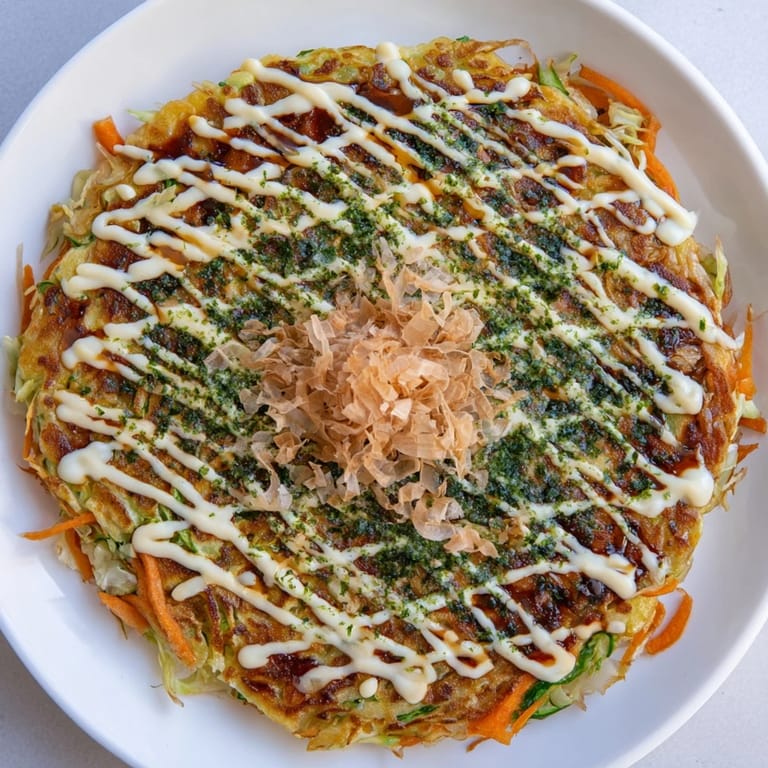
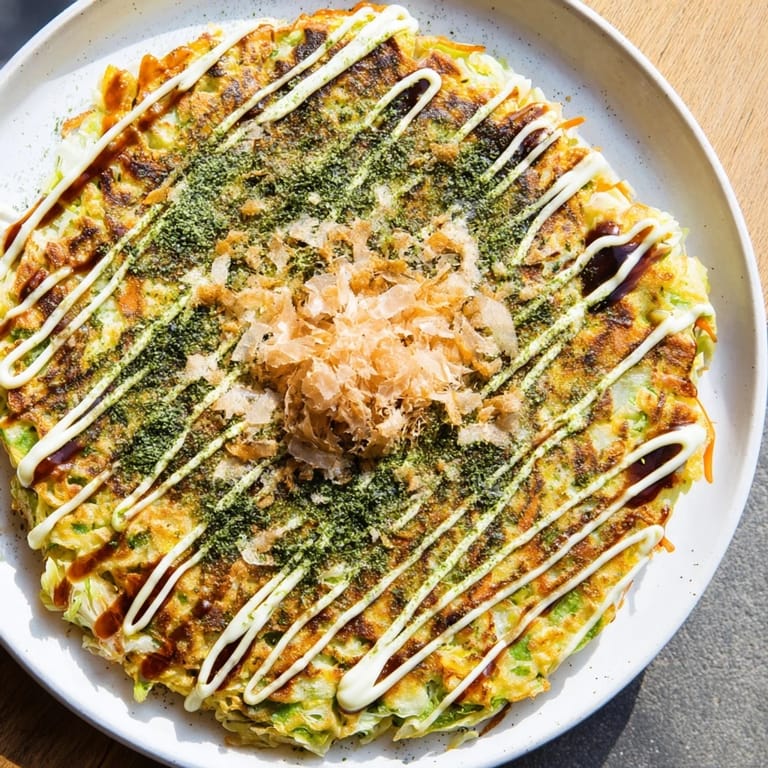
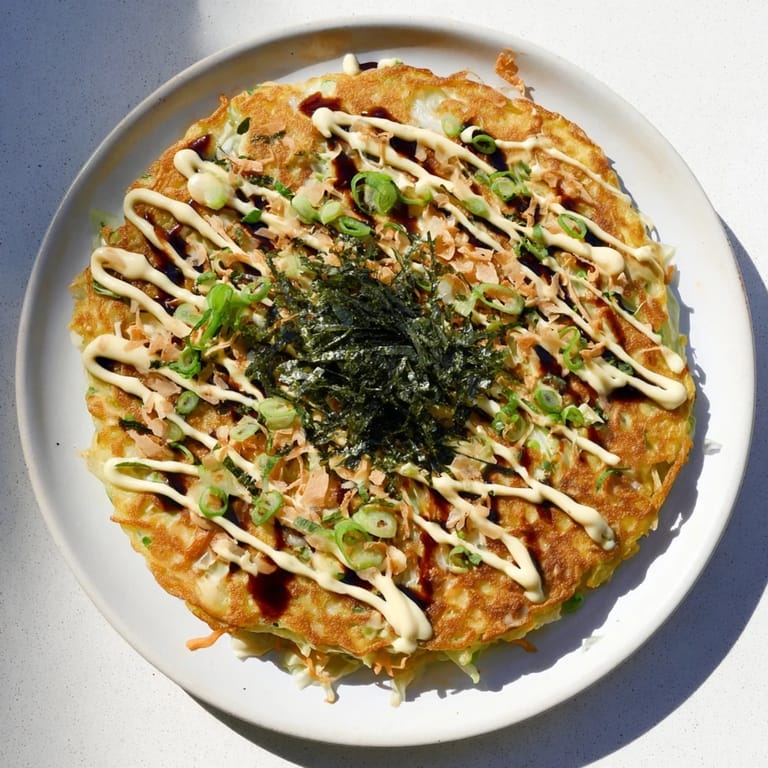
- Drizzle okonomiyaki sauce and mayonnaise in zigzag patterns across the warm pancake—the heat will slightly loosen the sauces and help them meld into the crevices. Top immediately with bonito flakes, aonori, and pickled ginger if using.
 Save to Pinterest
 I'll never forget my neighbor tasting one of these for the first time and asking if the flakes were actually alive—her confusion was so genuine that we both laughed while I explained the science. But honestly, her instinct wasn't wrong; there's something almost living about the way this dish moves and breathes on the plate.
The Technique Behind the Temperature
Getting the heat right is everything here, and it took me three batches to really understand it. Medium heat on a nonstick skillet creates enough energy to develop a golden crust without scorching the exterior while the insides stay tender. I used to crank it higher thinking speed would help, but all I got was burnt bottoms and raw centers—the opposite of what we want.
Building Flavor Layers
What makes okonomiyaki sing is the layering of contrasting flavors and textures: sweet sauce, creamy mayo, savory bonito, briny aonori, and the brightness of pickled ginger all meeting tender cabbage and a crispy exterior. Each component does its job without stepping on the others' toes. I started appreciating this more after tasting a poorly topped version at a casual restaurant—the pancake itself was fine, but without thoughtful topping it felt one-dimensional.
Making It Your Own
The vegetable mix is genuinely flexible; I've made these with mushrooms, bell peppers, even thinly sliced kimchi when I was feeling adventurous. The protein is optional too—some versions skip it entirely, while others use bacon, shrimp, or squid depending on what's available. One thing I've learned is that freshness matters more than perfection, so use what you have and trust the process.
- Try stirring a tablespoon of dashi powder into the flour before whisking if you can't find liquid dashi—it concentrates the umami without adding moisture.
- Squeeze excess moisture from shredded cabbage if it seems especially wet, so your batter doesn't become soupy.
- Okonomiyaki sauce can be made at home by mixing equal parts ketchup and Worcestershire sauce with a splash of soy sauce and a touch of sugar if you're ever caught without the store-bought version.
 Save to Pinterest
 This dish reminds me why cooking at home matters—not because restaurant food is bad, but because sharing something you made with your own hands carries a weight that's impossible to replicate. Every time I make okonomiyaki, someone asks for the recipe.
Recipe Questions & Answers
- → What are the main ingredients in Japanese okonomiyaki pancakes?
Core ingredients include flour, dashi or water, eggs, shredded cabbage, green onions, and toppings like okonomiyaki sauce, Japanese mayonnaise, bonito flakes, and seaweed flakes.
- → Can I make these pancakes vegetarian?
Yes, omit shrimp or bacon and substitute bonito flakes with extra vegetables or vegetarian toppings to keep a similar texture and flavor.
- → What is the best way to cook okonomiyaki pancakes?
Heat a nonstick skillet over medium heat with a bit of oil, then cook the pancake batter in rounds until golden brown on both sides, about 4-5 minutes each side.
- → How do the toppings enhance the pancakes?
The tangy okonomiyaki sauce, creamy mayonnaise, smoky bonito flakes, and seaweed flakes add a rich umami depth and vibrant texture contrast.
- → Can I prepare the batter in advance?
Yes, you can mix the batter shortly before cooking but adding vegetables right before cooking preserves their crispness and freshness.