 Save to Pinterest
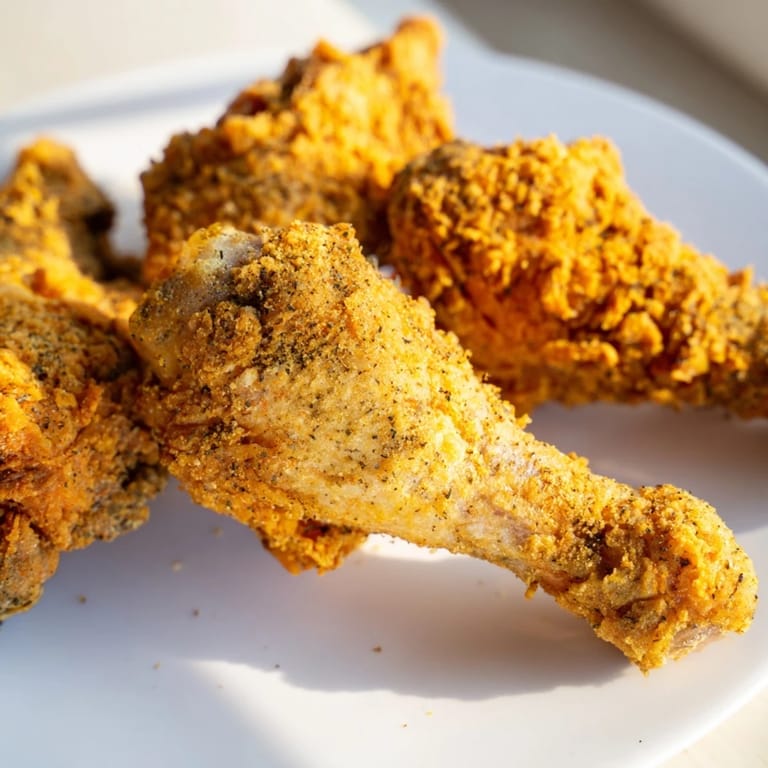
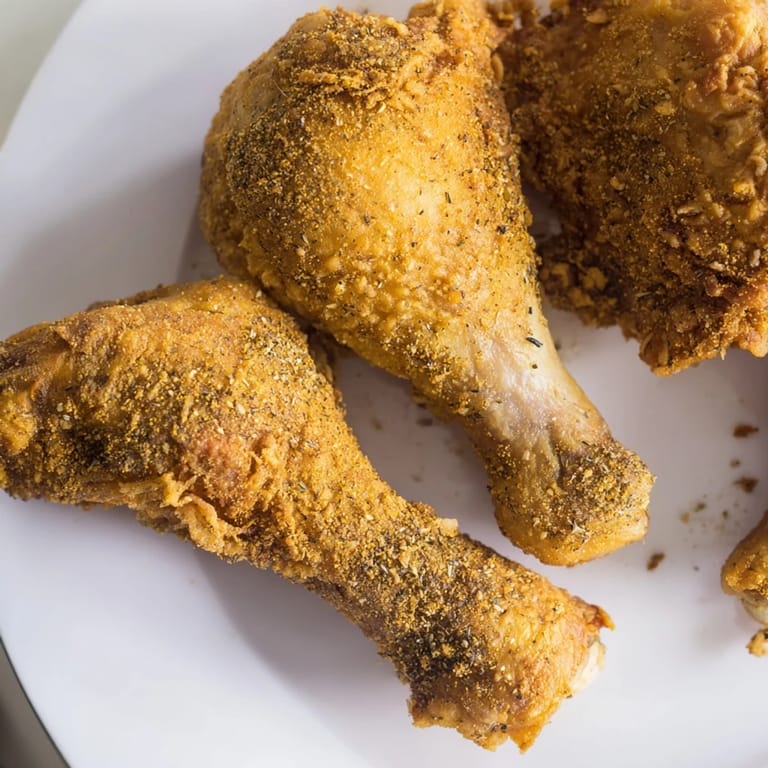
 I discovered this KFC chicken hack on a rainy Tuesday when my son came home craving that distinctive golden-brown fried chicken he'd gotten at a school fundraiser. Rather than drive back out, I decided to crack the code myself. That first batch, with its layered spice blend and buttermilk-tender meat, tasted so close to the real thing that he actually paused mid-bite, confused. Now whenever I make it, the whole house smells like that famous fast-food promise—except it's homemade and infinitely better.
I remember my neighbor peering over the fence while I was frying these, drawn by the unmistakable aroma. She came back three times that week asking for the recipe, and now her teenagers swear by this method for game-day parties. There's something about sharing food that tastes like a beloved favorite but with your own hands in it that makes people feel like you've let them in on something special.
Ingredients
- Chicken (8 pieces, skin-on and bone-in): The skin crisps beautifully and the bones keep the meat impossibly tender, though boneless thighs work in a pinch if that's what you have.
- Buttermilk: This is your secret weapon—the acidity tenderizes the meat while the dairy creates that incredibly moist interior.
- All-purpose flour: Use a good-quality flour and don't skip whisking it with the spices, as lumps will show up as bare spots in your coating.
- Paprika, garlic powder, onion powder, thyme, basil, oregano, celery salt, white and black pepper: These layers build that complex savory depth that makes people ask what restaurant you secretly bought this from.
- Mustard powder, ground ginger, cayenne, sage: The supporting cast that ties everything together; mustard powder especially adds a subtle tang that lingers.
- Vegetable oil: Keep it neutral and at exactly 170°C (340°F)—too hot and the coating burns before the meat cooks, too cool and you'll get greasy chicken.
Tired of Takeout? 🥡
Get 10 meals you can make faster than delivery arrives. Seriously.
One email. No spam. Unsubscribe anytime.
Instructions
- Prepare the marinade and coat the chicken:
- Whisk buttermilk, salt, and pepper in a large bowl, then submerge your chicken pieces and let them sit covered in the fridge for at least an hour. If you have overnight, take it—the longer they soak, the more tender they become.
- Mix your spice blend:
- Combine all the flour and spices in a separate bowl, whisking thoroughly so no clumps hide at the bottom. This is where precision pays off; you want every piece of chicken to get the full flavor spectrum.
- Dredge and rest:
- Pull chicken from the buttermilk, let excess drip off (but don't be shy—that coating is your friend), then press each piece firmly into the spiced flour. Set them on a rack for 10 minutes so the flour really adheres.
- Heat your oil:
- Get your thermometer out and bring the oil to exactly 170°C (340°F). If you don't have a thermometer, a bread cube should sizzle and turn golden in about 60 seconds.
- Fry in batches:
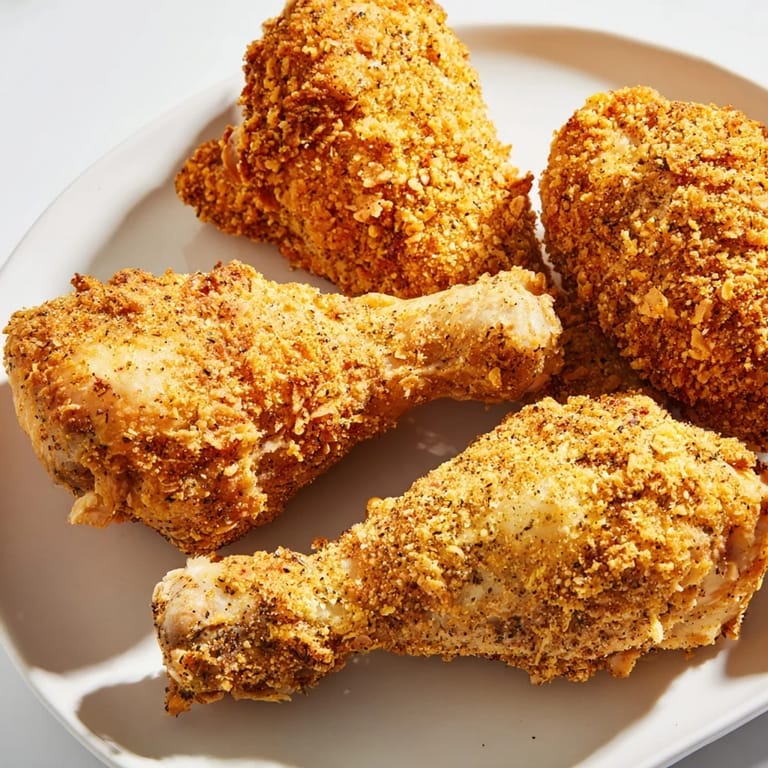
- Work in groups so pieces don't crowd the pan—they need space to brown evenly. Fry for 12–15 minutes, turning occasionally, until the coating is deep golden and an instant-read thermometer shows 75°C (165°F) at the thickest part of the thigh.
- Drain and rest:
- Transfer to a wire rack (not paper towels, which trap steam) and let sit for 5 minutes so the exterior stays crispy rather than turning soggy.
 Save to Pinterest
 The real magic happened when my sister came home from a long shift and sat down to eat this without realizing I'd made it myself. She actually closed her eyes on the first bite, and for a second I thought something was wrong. Then she just said, "This tastes like a memory," and that's when I knew the recipe had crossed from technique into something more—it had become comfort.
The Double-Dip Secret
If you want that KFC-level crunch that survives car rides and lukewarm lunches, the double-dip method is non-negotiable. After your first flour coating sits for those 10 minutes, dip the pieces back into buttermilk (quickly, so the first coating doesn't dissolve completely) and then straight into fresh spiced flour. It sounds excessive, but that extra layer creates a shell so satisfying you'll hear the crunch across a quiet room.
Temperature and Timing
Oil temperature is the difference between showstopping crispy and disappointingly greasy, so don't skip the thermometer. I learned this the expensive way by trying to eyeball it and ending up with soggy, oil-logged chicken that nobody wanted to eat. Now I give the oil a full minute after it hits 170°C before I start frying, and I check the temp between batches because it naturally dips when you add cold chicken.
Serving and Storage
Serve this hot with coleslaw and biscuits for the full experience, though honestly it's equally good cold from the fridge the next day. Store leftovers in an airtight container for up to three days, and you can reheat in a 180°C oven for 10 minutes to restore some of that crispiness.
- For extra heat, bump the cayenne up to 1 teaspoon, but taste as you go because it builds fast.
- If air-frying, coat lightly with cooking spray and fry at 200°C for 18–20 minutes, shaking the basket halfway through.
- This recipe doubles easily if you're feeding a crowd, just give yourself two separate batches so the oil doesn't cool down.
 Save to Pinterest
 Every time I make this, I'm reminded that the best recipes aren't about complexity—they're about patience and the right ingredients working in harmony. This one tastes like someone cared enough to get it right.
Recipe Questions & Answers
- → How does marinating in buttermilk affect the chicken?
Buttermilk tenderizes the chicken by breaking down proteins, while adding moisture and enhancing overall flavor before coating.
- → What is the purpose of the seasoned flour blend?
The seasoned flour imparts a complex flavor and forms a crispy coating when fried, combining herbs, spices, and salt for balance.
- → Can the crispiness be improved further?
Yes, double-dipping by repeating the buttermilk soak and flour coating adds extra crunch to the final crust.
- → What is the ideal frying temperature and why?
Frying at 170°C (340°F) ensures the chicken cooks evenly, achieving a golden crust without burning or undercooking inside.
- → Are there adjustments to suit different heat preferences?
The cayenne pepper amount can be modified to control spicy heat, making the coating milder or more piquant as desired.