 Save to Pinterest
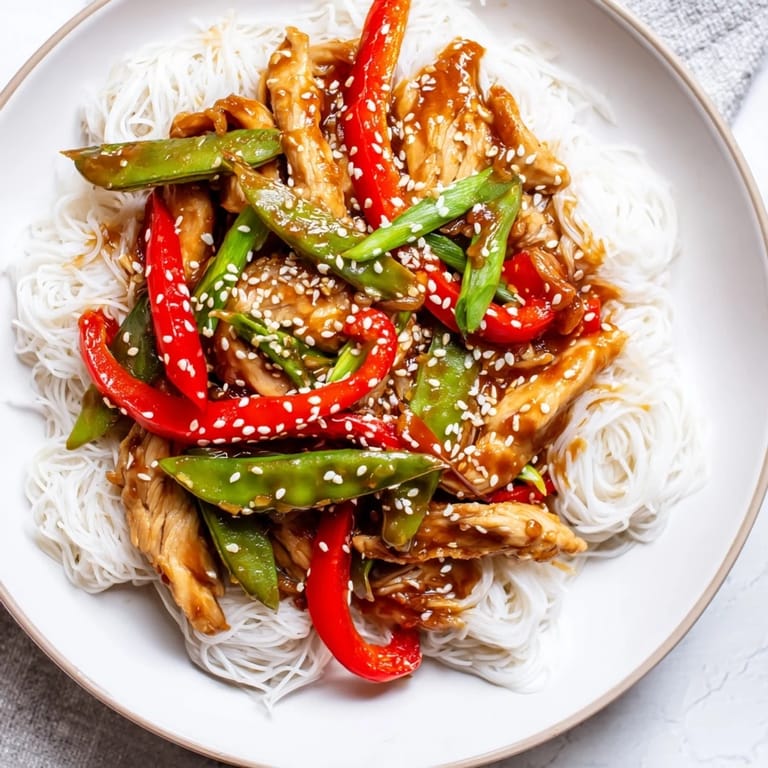
 I stumbled on this recipe one Wednesday night when I had leftover rice noodles sitting in the fridge and chicken thighs I'd forgotten to use. The idea of Mongolian-style flavors over noodles instead of rice felt like a risk, but the smell of garlic and ginger hitting hot oil convinced me I was onto something. My kitchen filled with that sticky-sweet sesame aroma, and by the time I tossed everything together, I knew this would become a weeknight staple. It's bold, satisfying, and comes together faster than ordering takeout. Sometimes the best recipes are born from leftovers and a little hunger-driven creativity.
The first time I made this for friends, I doubled the batch and still ran out. Everyone kept going back for seconds, scraping the pan for those caramelized bits of sauce. One friend asked if I'd ordered it secretly, which I took as the highest compliment. Now it's my go-to when I want to impress without spending hours in the kitchen. There's something about the way the noodles soak up that glossy sauce that makes every bite feel indulgent.
Ingredients
- Boneless, skinless chicken thighs or breasts: Thighs stay juicier and more tender during high-heat stir-frying, but breasts work if sliced thin and not overcooked.
- Cornstarch: This coats the chicken and helps the sauce cling beautifully instead of pooling at the bottom of the pan.
- Soy sauce: The salty backbone of the sauce, use low-sodium if you want more control over the salt level.
- Hoisin sauce: Adds a sweet, fermented depth that makes the sauce taste complex and restaurant-worthy.
- Brown sugar: Balances the salty elements and helps the sauce caramelize slightly when it hits the heat.
- Rice vinegar: A splash of acidity cuts through the richness and brightens every bite.
- Oyster sauce: Optional but worth it for an extra layer of umami and silky texture.
- Sesame oil: Just a teaspoon perfumes the whole dish with that nutty, toasted aroma.
- Garlic and ginger: Freshly minced, these two are non-negotiable for authentic flavor and fragrance.
- Crushed red pepper flakes: A little heat wakes up the sweetness without overwhelming the dish.
- Red bell pepper: Adds color, crunch, and a slight sweetness that complements the sauce.
- Snap peas or snow peas: They stay crisp and green, giving the dish texture and freshness.
- Spring onions: Stirred in at the end, they add a mild bite and a pop of color.
- Rice noodles or leftover pasta: Rice noodles are traditional, but any cooked pasta works in a pinch and tastes surprisingly good.
- Neutral oil: Canola or sunflower oil withstands high heat without smoking or adding unwanted flavor.
- Toasted sesame seeds: The final touch that adds crunch and makes the dish look finished.
Tired of Takeout? 🥡
Get 10 meals you can make faster than delivery arrives. Seriously.
One email. No spam. Unsubscribe anytime.
Instructions
- Prepare the noodles:
- If using dried rice noodles, cook them according to the package directions, then drain and rinse under cold water to stop the cooking. This keeps them from turning mushy when you toss them in the hot pan later.
- Coat the chicken:
- Toss the sliced chicken with cornstarch, salt, and pepper in a bowl until every piece is lightly dusted. This creates a barrier that locks in moisture and helps the sauce stick.
- Mix the sauce:
- Whisk together soy sauce, hoisin, brown sugar, water, rice vinegar, oyster sauce, sesame oil, garlic, ginger, and red pepper flakes in a small bowl. Set it nearby so you can pour it in quickly once the chicken is done.
- Stir-fry the chicken:
- Heat 1 tablespoon of oil in a large wok or skillet over medium-high heat, then add the chicken in a single layer. Let it sear without moving it for a minute, then stir-fry until golden and just cooked through, about 4 to 5 minutes total, then remove and set aside.
- Cook the vegetables:
- Add the remaining oil to the pan and toss in the bell pepper and snap peas. Stir-fry for 2 to 3 minutes until they're tender but still have a crisp bite.
- Combine and glaze:
- Return the chicken to the pan, add the sliced spring onions, and pour in the sauce. Stir everything together and let it simmer for 1 to 2 minutes until the sauce thickens and coats the chicken and vegetables like a glaze.
- Toss with noodles:
- Add the cooked rice noodles or leftover pasta to the pan and toss well to combine, making sure every strand is coated. Heat through for another minute or so.
- Garnish and serve:
- Transfer to a serving dish or individual bowls, then sprinkle with extra spring onions and toasted sesame seeds. Serve immediately while it's hot and glossy.
 Save to Pinterest
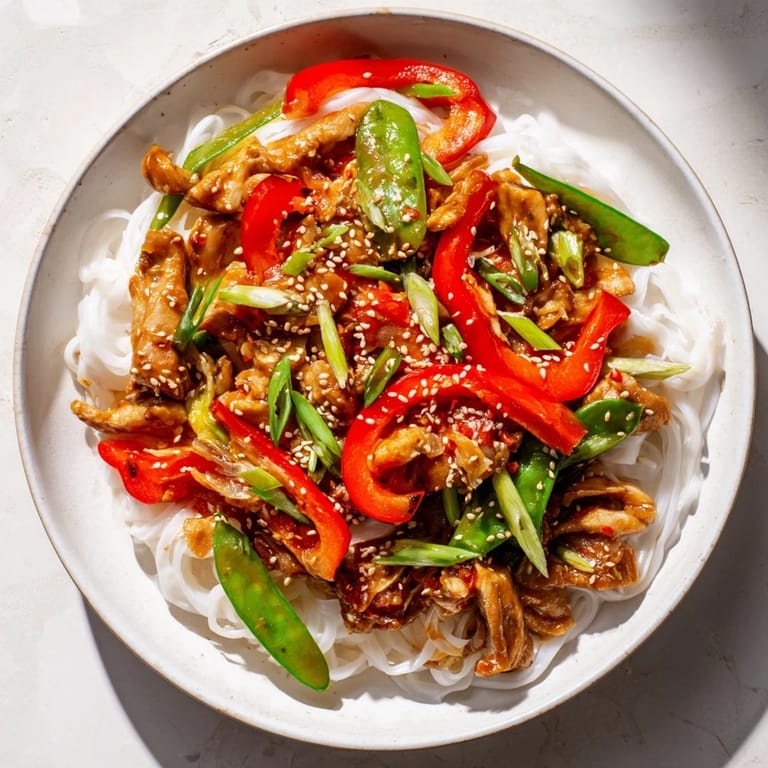
 One evening, I made this dish after a long day and sat down with a bowl in front of the window. The noodles were perfectly glossy, the chicken tender, and the sauce had just enough heat to make me reach for water between bites. It wasn't fancy, but it felt like exactly what I needed. That's when I realized this recipe wasn't just about dinner, it was about comfort, speed, and the kind of flavor that makes you forget you cooked it yourself.
Swaps and Substitutions
If you don't have chicken, try thinly sliced beef, shrimp, or firm tofu pressed and cubed. For a vegetarian version, double the vegetables and add mushrooms or baby corn for extra texture. You can also use whatever noodles you have on hand, even spaghetti or fettuccine work surprisingly well. If hoisin sauce isn't in your pantry, a mix of peanut butter and a little extra soy sauce can mimic that sweet, savory depth.
Storing and Reheating
Leftovers keep well in an airtight container in the fridge for up to three days. The noodles will soak up more sauce as they sit, so they might taste even richer the next day. Reheat gently in a skillet over medium heat with a splash of water or broth to loosen things up. Microwaving works in a pinch, but the stovetop keeps the vegetables from getting too soft.
Serving Suggestions
This dish stands on its own, but if you want to round out the meal, serve it with a simple cucumber salad dressed in rice vinegar and sesame oil. A bowl of miso soup or a side of steamed edamame also pairs beautifully. For drinks, try a crisp Riesling or a light lager to cut through the richness.
- Top with extra sesame seeds and a drizzle of chili oil for more heat.
- Add a squeeze of lime juice just before serving for a bright, citrusy finish.
- Serve with chopsticks and let everyone dig in family-style from a big platter.
 Save to Pinterest
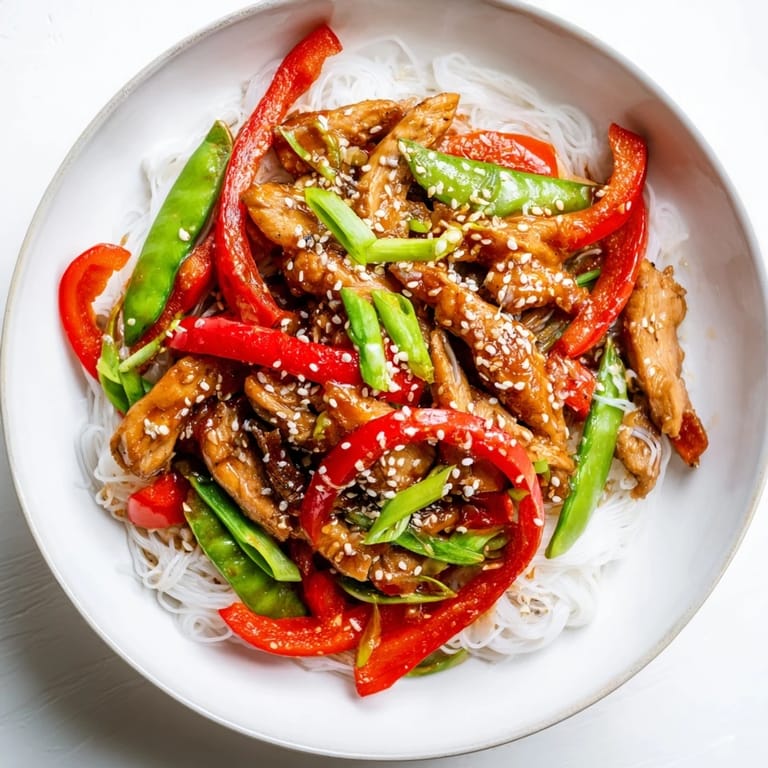
 This Mongolian chicken has earned its spot in my regular rotation, and I hope it does the same for you. It's proof that bold flavor and weeknight ease can absolutely coexist.
Recipe Questions & Answers
- → Can I substitute chicken with other proteins?
Yes, shrimp or tofu can be used instead of chicken, adjusting cooking times accordingly.
- → What type of noodles works best in this dish?
Rice noodles are ideal for their texture and ability to absorb the sauce, but leftover pasta is a great alternative.
- → How do I make the sauce thicker?
Simmer the sauce with the chicken and vegetables until it reduces and gently thickens, coating all ingredients evenly.
- → Can I make this dish spicier?
Yes, add crushed red pepper flakes or fresh chili to increase heat according to taste.
- → What vegetables complement this dish well?
Bell peppers, snap peas, and spring onions provide vibrant color and crispness that pair beautifully with the rich sauce.