 Save to Pinterest
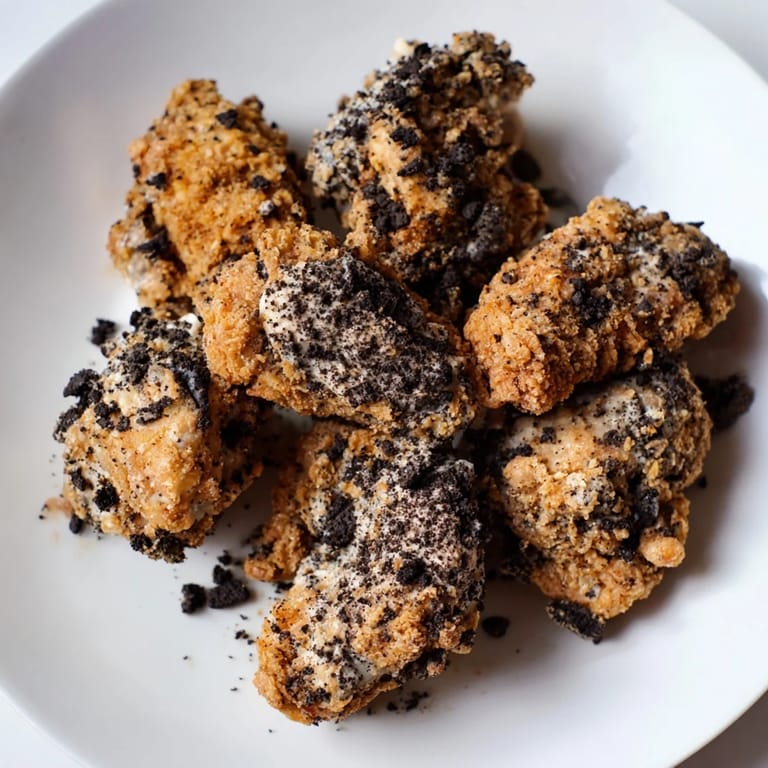
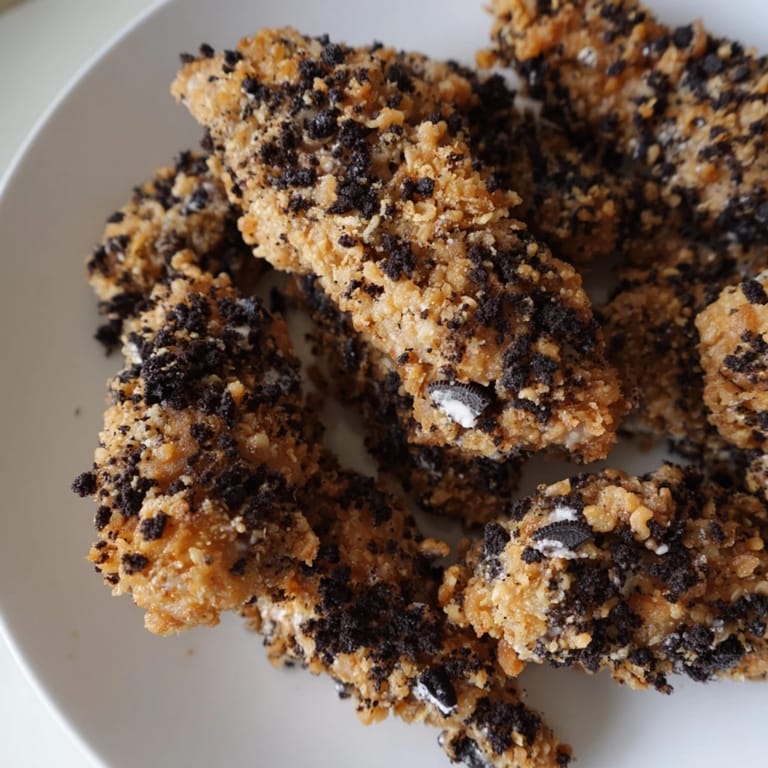
 My roommate came home with a box of takeout one Friday night, and I caught a whiff of something I couldn't place—sweet and savory all at once. Turns out, she'd discovered an Oreo-crusted chicken tender at a local restaurant, and it completely rewired my understanding of what fried chicken could be. That night, I decided right then that I was going to crack the code on this in my own kitchen, no fancy equipment needed.
I made these for a potluck once, slightly nervous about whether sweet and savory would register as weird to everyone else. The platter was empty in ten minutes, and someone asked if I could make them every week. That's when I knew I'd stumbled onto something special.
Ingredients
- Chicken tenders (500 g): The thinner cut matters here—they cook through faster while staying juicy inside, and they're easier to double-coat without falling apart.
- Salt, black pepper, garlic powder: This simple seasoning base keeps the focus on the textural play between the coatings.
- All-purpose flour (120 g): The first coating layer creates the structural foundation that holds everything together during both fries.
- Eggs and milk: This mixture acts as your glue between each layer, so don't skip whisking it together properly.
- Oreo cookies (18, finely crushed): Including the cream filling is non-negotiable—it's where the magic flavor lives and it helps the coating crisp up beautifully.
- Vegetable oil (1 L): You need enough oil to submerge the tenders completely, and it must reach 175°C for that golden exterior.
Tired of Takeout? 🥡
Get 10 meals you can make faster than delivery arrives. Seriously.
One email. No spam. Unsubscribe anytime.
Instructions
- Prep your chicken with intention:
- Pat the tenders dry with paper towels—moisture is the enemy of crispiness. Scatter salt, pepper, and garlic powder over them evenly, letting the seasonings settle into the meat.
- Build your dredging station:
- Line up three stations: flour in a shallow bowl, egg mixture in another, and a clean plate for the coated tenders. This setup prevents double-dipping and keeps things moving smoothly.
- Execute the first coating:
- Dredge each tender in flour, shaking off excess, then dip into the egg mixture, then back into flour for a thicker layer. The double-dip here is what gives you structure for step two.
- Heat your oil to the right temperature:
- Use a kitchen thermometer if you have one—175°C is where the magic happens. If it's too cool, the coating absorbs oil instead of crisping up.
- Fry the first time:
- Work in batches so you don't crowd the pot and lower the oil temperature. Each tender needs about 5-6 minutes, turning once, until the outside is golden and the inside registers cooked through.
- Let them rest briefly:
- Drain on fresh paper towels for a minute or two—this moment lets any excess oil drip away and prevents the coating from becoming greasy.
- Apply the Oreo magic:
- While the tenders are still warm, dip them back into that egg mixture, then press them gently into crushed Oreos, making sure the pieces stick. This is where you decide how generously coated you want them.
- Finish with the second fry:
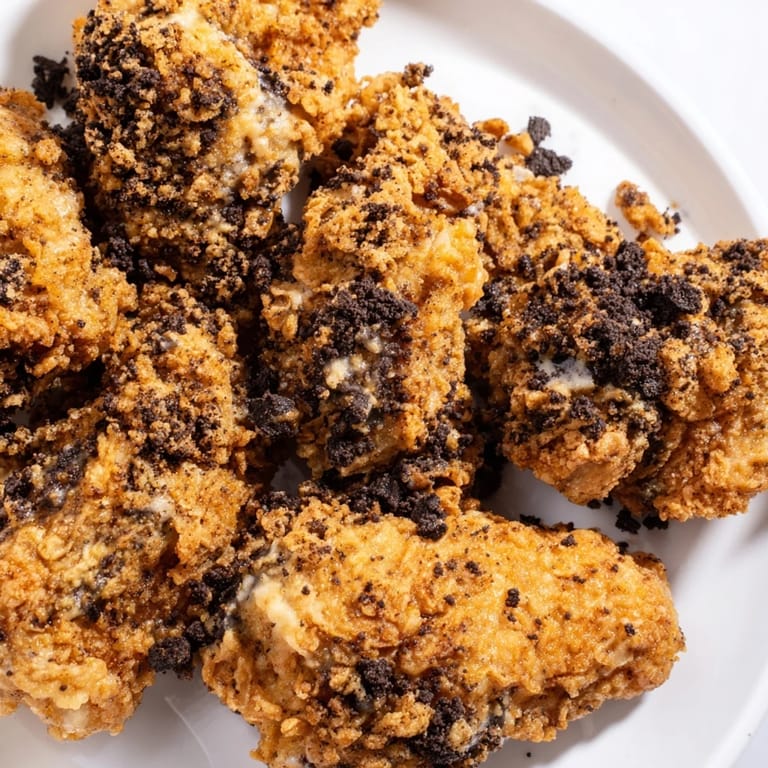
- Return them to the hot oil for just 1-2 minutes until the Oreo coating turns crispy and dark brown but stops short of burnt. You're looking for a fragrant, crackling exterior.
- Serve at peak crispiness:
- Get them onto a plate and into people's mouths while they're still hot. Waiting diminishes everything good about this dish.
 Save to Pinterest
 A friend once told me, after trying these, that she never expected fried chicken to taste like a happy memory. I think that's what happens when you combine comfort food with a little playful audacity—the result becomes something people want to hold onto.
The Science of the Second Fry
The reason this method works at all comes down to the egg mixture acting as an adhesive. When you fry chicken the first time, you're developing the meat's interior while creating a sealed exterior. The second dip and fry isn't just showmanship—it's a calculated layer that keeps the sweet Oreo coating from absorbing moisture from the chicken underneath, which would make everything soggy. That's the difference between a gimmick and something actually worth making.
Flavor Pairings That Elevate the Experience
These tenders exist in this interesting space between sweet and savory, and picking the right dip matters more than you might think. Vanilla cream sauce sounds unconventional until you taste how it whispers rather than shouts, letting the Oreo-chicken conversation happen on your palate. Sweet chili sauce is bolder—it leans into the sweetness and adds heat, which creates this perfect push-pull dynamic.
Making This Your Own
Once you've nailed the basic version, you have room to play. Some people add cayenne to the flour coating for heat, others have experimented with different cookie bases—though I haven't found anything that quite matches Oreos. The fundamental technique holds up, which means you can be creative without losing the thread of what makes this special.
- A tiny pinch of smoked paprika in the flour adds depth without changing the sweet-savory balance.
- If you're avoiding gluten, the entire method works with gluten-free flour and those gluten-free chocolate sandwich cookies that taste surprisingly close to the real thing.
- Trust your instincts about oil temperature—if the coating is browning too fast, the oil is too hot, and the chicken won't cook through.
 Save to Pinterest
 This recipe is proof that sometimes the best kitchen discoveries come from curiosity and a willingness to push tradition a little sideways. Make these when you want to surprise someone or when you want to remind yourself why cooking is genuinely fun.
Recipe Questions & Answers
- → What type of chicken is best for this dish?
Chicken tenders or strips work best as they cook quickly and absorb the coating well.
- → How should I prepare the coating for the chicken?
First, coat the chicken in a seasoned flour mixture, then dip into an egg-milk wash, and coat again with flour before frying.
- → How do I achieve the Oreo crust?
After the initial fry, dip the tenders in the egg wash again, roll them in finely crushed Oreos, and fry briefly to crisp the coating.
- → Can I substitute the Oreos for dietary restrictions?
Yes, gluten-free chocolate sandwich cookies can be used for gluten sensitivities, ensuring a similar texture and flavor.
- → What frying temperature is recommended?
Maintain the oil at around 175°C (350°F) for frying to ensure even cooking and crispiness.
- → How can I add a spicy kick to this dish?
Adding cayenne pepper to the flour coating gives the tenders a subtle spicy heat that complements the sweet Oreo crust.