 Save to Pinterest
 The first time I assembled a spread like this, I wasn't thinking of it as a recipe at all—just a way to feed a crowd without fussing over plated courses. I'd grabbed three rectangular flatbreads from the bakery section, tossed them with garlic oil, and the moment they came out of the oven smelling toasty and warm, I realized I had the foundation for something special. Within minutes, I was layering prosciutto and brie across the bread, tucking olives into the gaps, and my friends kept reaching for pieces before I'd even finished arranging everything. That's when it clicked: this wasn't complicated, it was just generous.
I made this for a dinner party on a Tuesday that almost didn't happen, and a friend who was nervous about attending because of a new job said watching me throw this together so casually made her feel better somehow. She said it looked like something you'd eat in a Tuscan villa, except easier and more fun because people were laughing around my kitchen island instead of sitting formally at a table.
Ingredients
- Large rectangular flatbreads: Lavash, naan, or ciabatta work beautifully—I've learned thicker ones hold toppings better and stay crispy longer than thinner versions.
- Olive oil: Don't skip brushing it on; it's what transforms bread into something worthy of this treatment.
- Garlic clove, minced: Just one small one scattered across the oil prevents it from tasting overwhelming.
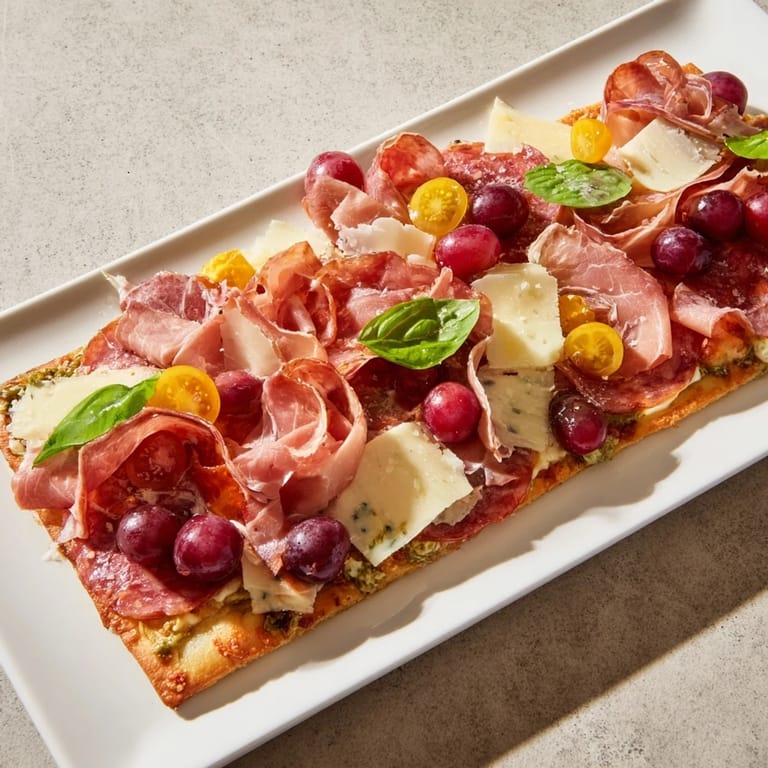
- Prosciutto, salami, smoked turkey, soppressata or chorizo: Buy these sliced thin so they drape naturally; the variety in texture and saltiness is what makes eating these rafts interesting.
- Brie, aged cheddar, manchego, blue cheese: The combination of soft, sharp, nutty, and pungent means every bite feels different—that's intentional.
- Grapes, cherry tomatoes, olives, roasted red peppers: These aren't just color; the acidity and sweetness balance the richness of the meats and cheese.
- Fresh basil and honey or fig jam: Basil adds a whisper of freshness at the end, while honey melts into the warm bread and becomes almost syrupy.
Tired of Takeout? 🥡
Get 10 meals you can make faster than delivery arrives. Seriously.
One email. No spam. Unsubscribe anytime.
Instructions
- Heat your oven and prep the flatbreads:
- Preheat to 200°C (400°F). Brush each flatbread generously with olive oil, scatter the minced garlic across them, and slide them onto a baking sheet. Watch them in the oven for 5–7 minutes until they're lightly crisped at the edges and smell like toasted bread—this happens faster than you'd expect, so stay nearby.
- Arrange your canvas:
- Pull the warm flatbreads from the oven and lay them on a large wooden board or platter with space between each one, as if they're floating on water. The heat will help the cheese soften slightly when you layer it on.
- Build with intention:
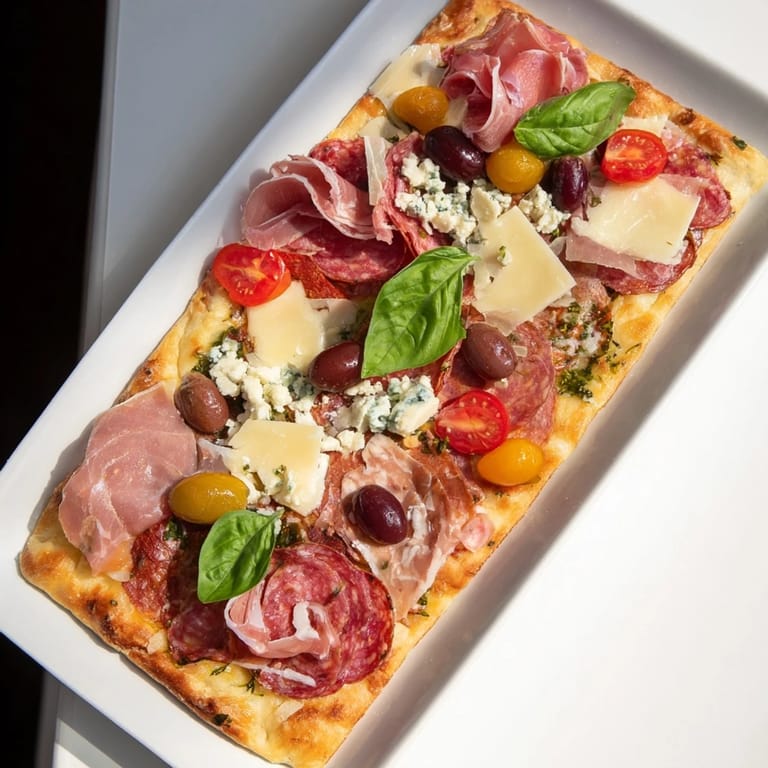
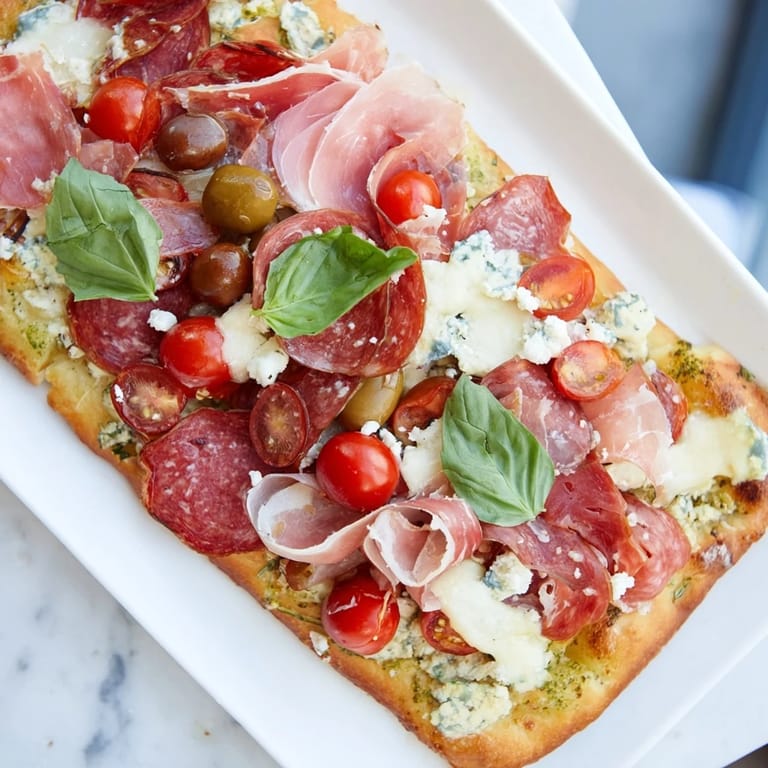
- Start layering meats and cheeses directly onto each warm flatbread, alternating types so the eye travels across different colors and textures. Don't be timid—this is meant to look abundant and inviting.
- Fill the spaces:
- Tuck halved grapes, cherry tomatoes, olives, and roasted red peppers into any gaps, creating a landscape of flavors and colors that feel balanced. Step back and look at it; if it looks like something you'd want to eat, you're done building.
- Finish with flourish:
- Scatter fresh basil leaves across everything just before serving, and set the honey or fig jam nearby for guests to drizzle or dip into. Let people break off their own pieces—that's the whole point, and it's where the joy happens.
 Save to Pinterest
 The real magic happened when someone cut into the soft center of a piece of brie and it was still warm, then dipped it in the fig jam, and the whole table went quiet for a moment before someone said 'oh my god' in the best way. That's when I understood this isn't really about the ingredients—it's about the moment when something simple becomes memorable because everyone's actually paying attention.
Why Contrast Matters
I learned early on that mixing soft and firm, salty and sweet, peppery and mild is what keeps people reaching back for more. The prosciutto's saltiness plays against the grapes' sweetness, the sharp blue cheese makes the brie taste buttery by comparison, and the basil at the end acts like a reset button for your palate. It's not random; it's the rhythm of a good board.
Building for Your Crowd
I've made this for vegetarians by swapping in roasted mushrooms, sun-dried tomatoes, and extra cheeses, and for people avoiding certain meats by just loading one raft differently. The flexibility is genuinely part of why I come back to this format—it respects what people want to eat without requiring you to make two entirely different dishes.
The Board is Your Stage
Presentation matters more than you think with something like this, not because it needs to be fancy, but because people eat with their eyes first. When the board looks generous and intentional, guests feel more welcome and less hesitant to dig in. The wooden platter, the way things are layered, the colors resting next to each other—these small choices say 'I'm glad you're here' louder than words.
- Taste one bite yourself before serving so you know if the balance feels right.
- Set out small plates nearby so people can actually enjoy the pieces they build without juggling everything.
- Keep the honey or jam warm if you can; it spreads so much better and tastes richer that way.
 Save to Pinterest
 This recipe taught me that feeding people doesn't always mean hours at the stove—sometimes it means knowing how to assemble what's good into something that feels generous. Your guests will remember how easy you made it look and how welcome they felt, long after the last piece of flatbread is gone.
Recipe Questions & Answers
- → What types of flatbreads work best for this dish?
Large rectangular flatbreads like lavash, naan, or ciabatta provide a sturdy base and crisp nicely when warmed.
- → Can I substitute the meats for other options?
Absolutely; feel free to use your preferred cured meats or smoked poultry to suit taste or availability.
- → How should the flatbreads be prepared before adding toppings?
Brush them with olive oil and minced garlic, then warm in the oven until lightly crisp to enhance flavor and texture.
- → What accompaniments complement the meats and cheeses?
Fresh grapes, cherry tomatoes, marinated olives, and roasted red peppers add bright, refreshing contrasts to the rich toppings.
- → Is there a recommended way to serve the flatbreads?
Arrange the topped flatbreads spaced apart on a large board, garnish with fresh basil, and provide honey or fig jam for drizzling or dipping.
- → Are there suggested beverage pairings?
A crisp white wine or a light-bodied red pairs wonderfully with the variety of flavors and textures.