 Save to Pinterest
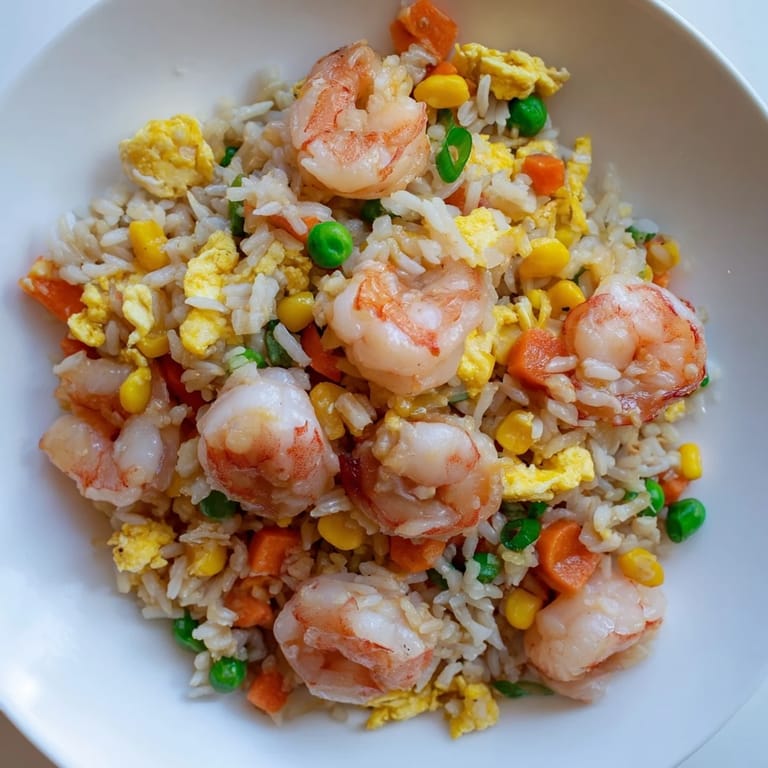
 Last Tuesday, I was staring at my fridge at 6:47 p.m., watching the clock, knowing dinner had to be on the table in twenty minutes. I grabbed a container of day-old rice, some frozen shrimp, and a handful of vegetables, and something just clicked—this wasn't going to be a slow, meditative stir-fry night. This was going to be fast, loud, and honestly delicious. That night, shrimp fried rice stopped being a weekend project and became my secret weapon for staying sane on chaotic weekdays.
I made this for my neighbor who was stressed about meal prepping, and watching her face light up when she realized she could actually pull this off on a random Thursday made me understand why this hack went viral. She's been texting me photos of her versions ever since, each one slightly different, each one somehow working.
Ingredients
- Medium shrimp, peeled and deveined (200 g / 7 oz): The star player here—medium size cooks fast and stays tender if you don't overcook them, which takes real discipline in a hot pan but trust me, that two-to-three-minute window is everything.
- Large eggs (2): They scramble into silky curds that bind everything together and add richness without extra steps.
- Frozen mixed vegetables (100 g / 1 cup): Peas, carrots, and corn work straight from the freezer—no thawing, no prep, and they warm through in the heat of the pan.
- Scallions, sliced (2): Half go into the stir-fry for mellow onion flavor, and keep extra for garnish because they brighten everything.
- Cooked jasmine rice, chilled (300 g / 2 cups): This is non-negotiable—day-old rice is drier and won't turn mushy, but fresh rice can work if you spread it on a plate and let it cool completely first.
- Soy sauce (2 tbsp): The backbone of flavor that ties every element together without being overwhelming.
- Oyster sauce (1 tbsp, optional): A little goes a long way to add umami depth, but leave it out if you don't have it—the dish still sings.
- Sesame oil (1 tsp): Don't skip this and don't use more than a teaspoon; it's about aroma and finishing richness, not drowning everything.
- Ground white pepper (1/2 tsp): Gentler than black pepper and won't leave visible specks, giving you that clean, restaurant-quality feel.
- Vegetable oil (1 tbsp): For the initial cooking—you need a neutral oil with a high smoke point that won't compete with the other flavors.
Tired of Takeout? 🥡
Get 10 meals you can make faster than delivery arrives. Seriously.
One email. No spam. Unsubscribe anytime.
Instructions
- Get your pan screaming hot:
- Pour the vegetable oil into a large nonstick skillet or wok and let it heat over medium-high until it shimmers and almost smokes—this takes about two minutes, but it's worth waiting for because cold oil is your enemy here.
- Cook the shrimp until they blush:
- Add the shrimp and resist the urge to move them immediately; let them sit for about thirty seconds on each side until they turn that beautiful opaque pink, then pull them out and set them aside on a clean plate.
- Scramble the eggs into clouds:
- Pour your beaten eggs into the same hot pan and let them sit for a few seconds before pushing them around gently with a spatula, creating soft, custard-like curls; this should take about ninety seconds total.
- Wake up the vegetables:
- Add your frozen vegetables straight into the pan and let them sizzle and warm through for just about a minute, listening for that sizzle sound that tells you they're heating, not steaming.
- Break up and toast the rice:
- Dump in your cold rice and use your spatula to break apart any clumps, pressing gently against the bottom of the pan so the rice gets slightly toasted and separates into individual grains; two minutes should do it.
- Bring everything together:
- Return the shrimp to the pan, then drizzle in the soy sauce, oyster sauce if you're using it, sesame oil, and white pepper, tossing everything until the liquid coats each grain and the shrimp is reheated.
- Finish with freshness:
- Add most of your sliced scallions and do one final toss over the heat for about a minute, letting the scallion flavors meld into the dish.
- Taste and adjust:
- Always taste before serving and add more soy sauce or a pinch of white pepper if something feels flat or missing.
 Save to Pinterest
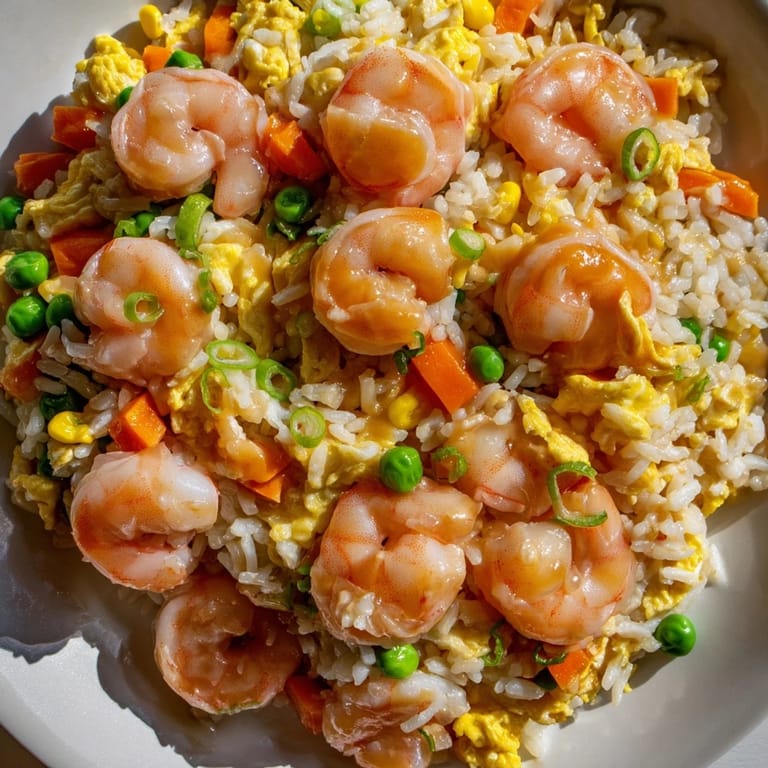
 There's something magical about watching all these separate components transform into one cohesive dish in the span of ten minutes—it feels like a small kitchen miracle every single time. That moment when you fold in the scallions and the whole pan smells like sesame and soy is when this stops being a weeknight hack and becomes something you actually want to eat.
Why Cold Rice Changes Everything
When you use leftover rice straight from the fridge, the grains are firm and separate instead of soft and clumpy, which means they fry instead of steam. I learned this the hard way by trying to make fried rice with warm rice, and the result was more rice porridge than fried rice. Now I actually plan ahead and leave rice in the fridge overnight specifically for this dish, and it makes all the difference in texture and taste.
The Shrimp Timing Secret
Medium shrimp are the Goldilocks of this recipe—small ones disappear, and large ones can be rubbery if you're not watching them. The key is knowing that shrimp continue cooking slightly after you remove them from heat, so pulling them out when they're just turning pink means they'll be perfectly cooked when they go back in. I used to overcook them until a friend pointed out that the carryover heat in the pan finishes the job, and that one shift in thinking completely changed my fried rice game.
Flavor Layering and What Makes It Pop
The reason this tastes restaurant-quality has everything to do with timing and order—you're not just dumping everything in and hoping for the best. The vegetables hit the pan while it's still screaming hot so they get a little caramelization, the rice gets toasted for a second before the sauce goes in, and the scallions go in at the very end so they stay bright and fresh. This isn't magic, it's just respecting each ingredient enough to give it its moment. Some nights I add a dash of chili sauce for heat, or a squeeze of lime juice for brightness, and every single version works because the foundation is solid.
- Taste as you go and adjust seasoning—what works for your palate might be different from mine.
- If the pan ever feels dry, add a tiny splash more soy sauce or sesame oil to keep everything gliding smoothly.
- Serve immediately while it's hot and the textures are at their best.
 Save to Pinterest
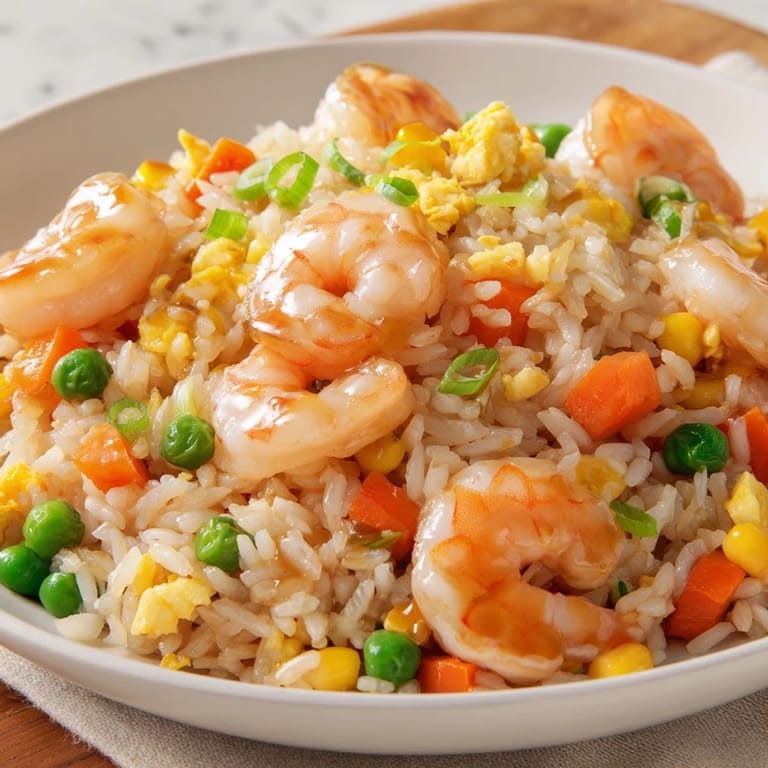
 This is the recipe I come back to when I'm tired and hungry and have no patience for complicated cooking. It's become shorthand in my kitchen for saying yes to dinner when everything feels rushed, and somehow it always feels like enough.