 Save to Pinterest
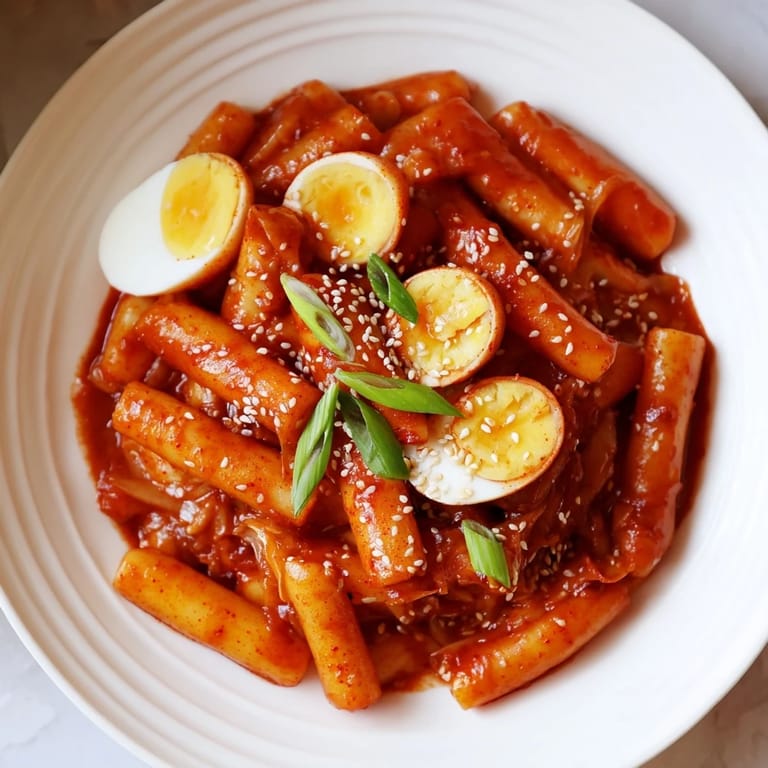
 The first time I watched street food vendors in Seoul stirring massive pots of tteokbokki, I was mesmerized by the chaos of it all—the steam rising, the chewy rice cakes tumbling in that deep red sauce, the way people would grab a skewer and eat standing up, eyes watering happily. Years later, I finally made it at home on a quiet Sunday when the kitchen felt too quiet, and suddenly everything clicked: the gochujang hitting hot broth, the eggs sinking in, that unmistakable smell of toasted sesame flooding the air. It's become my go-to when I want something bold and comforting without pretending to be fancy.
I made this for my friend who claimed they couldn't handle spice, and I deliberately added less gochugaru than usual—then watched them ask for seconds and steal spoonfuls from the pot. That's when I realized tteokbokki isn't about proving how much heat you can handle; it's about finding that sweet spot where flavor and warmth make you feel alive in your mouth.
Ingredients
- Korean cylindrical rice cakes (tteok), 500 g: These are the backbone of the dish—they should be chewy, not mushy, which is why soaking matters.
- Large eggs, 4: The creaminess cuts through the spice and adds protein to make this feel like a real meal.
- Gochujang (Korean chili paste), 3 tablespoons: This is fermented depth, not just heat—it's the soul of the sauce.
- Gochugaru (Korean chili flakes), 2 tablespoons: Coarser texture than the paste, adds a different kind of heat and visual appeal.
- Soy sauce, 2 tablespoons: Brings umami and salt to balance the sweetness and spice.
- Sugar and honey, 1 tablespoon each: Sugar dissolves quick, but honey adds subtle caramel notes that gochujang loves.
- Garlic, 2 cloves minced: Raw garlic stirred in at the end gives brightness that cooked garlic can't replicate.
- Toasted sesame oil, 1 teaspoon: A little goes a long way—this is nutty, aromatic liquid gold.
- Water, 3 cups: This becomes your broth base and cooks the rice cakes.
- Dried kelp (kombu), 1 piece (10x10 cm): Kombu infuses delicate umami without overpowering the dish.
- Dried anchovies, 8 (heads and guts removed): Vegetarians can skip these, but they add savory depth that's hard to replicate.
- Onion, 1 small sliced: Gets soft in the sauce and adds gentle sweetness.
- Green onion, 1 sliced: Sprinkled on top for fresh bite that cuts the richness.
- Fish cake, 1 sheet sliced (optional): Adds chewiness and umami if you can find it—skip without regret.
- Toasted sesame seeds, 1 tablespoon: The final garnish that says you know what you're doing.
Tired of Takeout? 🥡
Get 10 meals you can make faster than delivery arrives. Seriously.
One email. No spam. Unsubscribe anytime.
Instructions
- Soak the rice cakes:
- If your tteok feels hard or came from the fridge, warm water for 10 minutes is non-negotiable—this prevents them from staying tough in the sauce.
- Build your broth:
- Add water, kombu, and anchovies to a saucepan and bring to a gentle boil, then simmer 10 minutes. You'll smell the ocean and umami colliding—that's exactly right.
- Strain and reserve:
- Remove the kombu and anchovies once the broth tastes savory and clean, leaving you with liquid gold.
- Boil your eggs:
- While the broth simmers, boil eggs for 8–9 minutes depending on your stove and how runny you like the yolk. Cool them in cold water and peel carefully.
- Mix the sauce:
- Add gochujang, gochugaru, soy sauce, sugar, honey, minced garlic, and sesame oil directly to the hot broth. Stir until everything dissolves and you have a glossy red sauce.
- Cook the tteok:
- Add your soaked rice cakes, sliced onion, and fish cake (if using) to the sauce. Stir occasionally over medium heat for 10–12 minutes—you're looking for the rice cakes to soften and the sauce to thicken until it barely coats a spoon.
- Add the eggs:
- Gently nestle the peeled eggs into the sauce and let them warm through for 2–3 minutes.
- Finish and serve:
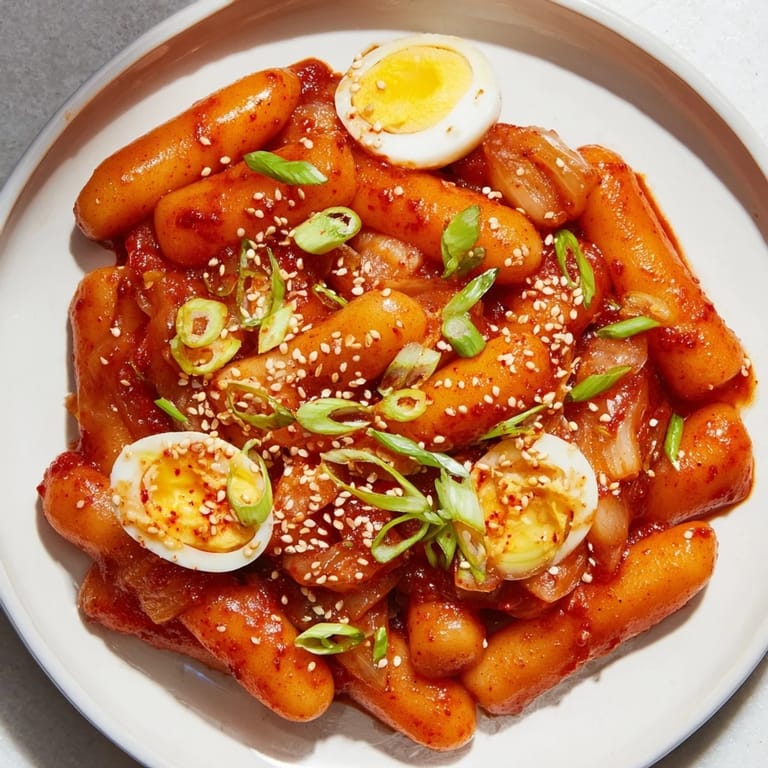
- Top with sliced green onion and a generous sprinkle of sesame seeds, then serve immediately in bowls while everything is still hot.
 Save to Pinterest
 There was a night I made this for my roommate who was homesick, and halfway through eating they got quiet—the kind of quiet that means food did what it's supposed to do and transported someone back to a place they missed. That's when I understood tteokbokki is less about the recipe and more about the moment it creates.
The Spice Question
Everyone asks how hot this is, and the honest answer is that it depends entirely on you. The gochujang gives warmth and complexity, while gochugaru brings sharper heat—I've learned to add one tablespoon of gochugaru and let people adjust from there rather than commit fully. If you're timid about spice, start with 1 tablespoon gochujang and 1 tablespoon gochugaru, then taste and add more; you can't take it back once it's in.
Why This Works as a Meal
On paper, tteokbokki sounds like it shouldn't be filling—chewy rice cakes in sauce, right?—but there's protein from the eggs and broth, carbs from the cakes, and fat from the sesame oil that keeps you satisfied for hours. I've served this as a light lunch, a late-night snack, and even the opening course to a Korean dinner, and it works in every context because it's humble enough to not pretend to be more than it is.
Making It Your Own
The vegetarian version is genuinely delicious if you use a good vegetable broth instead of the anchovy one—it's not a compromise, just a different direction. I've added ramen noodles at the end, thrown in halved shiitake mushrooms, stirred in a handful of spinach, even added a slice of American cheese once out of curiosity and honestly? It worked.
- Cabbage and carrots add crunch and sweetness that plays against the spice beautifully.
- Ramen noodles make this more of a one-bowl meal and add another texture layer.
- A raw egg cracked into the hot sauce at the end creates pockets of creaminess if you're brave.
 Save to Pinterest
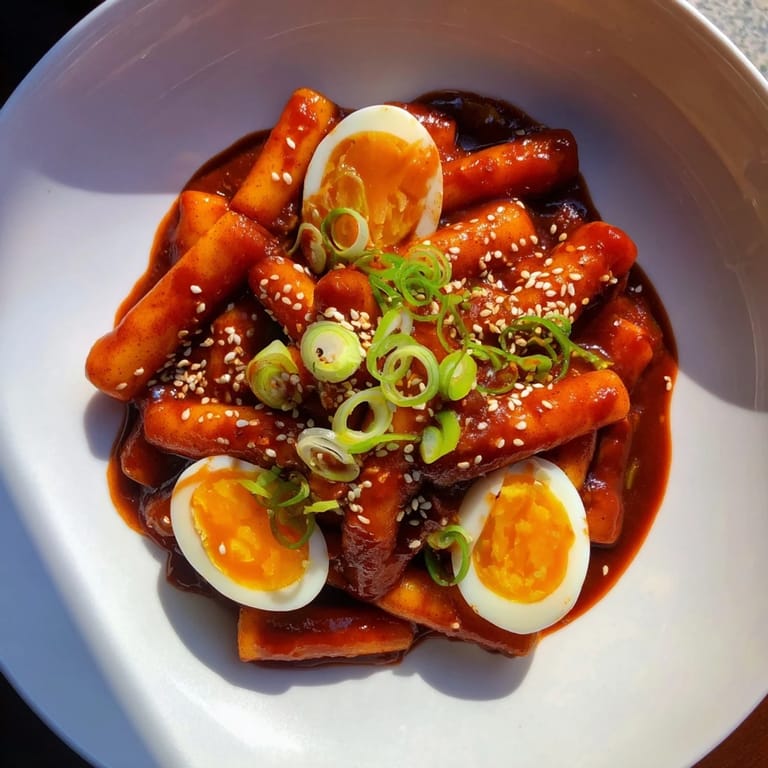
 This recipe has become my answer to 'I don't know what to cook' because it's quick, honest, and somehow makes an ordinary evening feel a little bit braver. Once you make it once, you'll understand why people stand in the rain for street food.
Recipe Questions & Answers
- → How do I soften the rice cakes before cooking?
Soak the rice cakes in warm water for 10 minutes if they are hard or refrigerated to soften them before cooking.
- → Can I make this without anchovies for a vegetarian option?
Yes, omit anchovies and fish cake, and use vegetable broth to maintain flavor while keeping it vegetarian-friendly.
- → What level of spiciness does gochujang add?
Gochujang provides a bold spicy heat balanced with sweetness, which can be adjusted by altering the amount used.
- → How are the boiled eggs prepared for this dish?
Boil the eggs for 8–9 minutes, cool in cold water, then peel and add them near the end of cooking to warm through.
- → What garnishes enhance the final presentation?
Fresh green onions and toasted sesame seeds add color, texture, and a nutty aroma to finish the dish.