 Save to Pinterest
 Last August, I was standing in my kitchen on the hottest day of the year, staring at a massive pile of watermelon I'd bought without thinking, when my neighbor knocked on the door with a handful of mint from her garden. She'd seen me lugging groceries inside and knew exactly what I needed. That afternoon, we threw together this gazpacho on a whim, and it became the thing I'd make every single summer since. It's the kind of soup that tastes like sunshine and friendship in a bowl.
I made this for a dinner party once where half the guests were vegan and I was frankly panicking about keeping everyone happy. The gazpacho was so refreshing and unexpected that it became the thing everyone talked about for weeks—not because it was fancy, but because it felt like eating pure summer. That's when I realized it wasn't about impressing anyone; it was just about sharing something that made people feel good on a hot night.
Ingredients
- Fresh watermelon, cubed (5 cups): The sweeter the melon, the better—look for one that feels heavy for its size and smells fragrant at the stem end, and don't stress about the seedless varieties because they're honestly just easier to work with.
- Cucumber, peeled and chopped (1 large, about 1½ cups): English cucumbers work beautifully here since they're less watery than regular ones, and peeling them gives you a silkier texture in the final soup.
- Red bell pepper, chopped (1 medium): This adds a subtle sweetness and beautiful color; I've found red peppers are less bitter than green ones and they blend more smoothly.
- Red onion, chopped (½ small): Use red instead of yellow because it blends more seamlessly and doesn't leave harsh chunks, plus the color is prettier.
- Fresh mint leaves (¼ cup, plus extra for garnish): Pick the tender leaves from the top of the plant because they're more delicate and fragrant than the older, tougher leaves lower down.
- Fresh cilantro leaves (2 tablespoons, optional): This is totally optional and honestly depends on whether you're one of those people who loves cilantro or thinks it tastes like soap—no judgment either way.
- Lime zest and juice (2 limes): Don't skip the zest because that's where the actual flavor lives; zest first, then juice the same lime.
- Extra-virgin olive oil (2 tablespoons): A good quality oil matters here since you're not cooking it, and the fruity notes make a real difference in the final bowl.
- Sea salt and freshly ground black pepper (½ teaspoon salt, ¼ teaspoon pepper): These are just starting points; taste as you go because the natural sweetness of the watermelon means you might need more salt than you'd expect.
Tired of Takeout? 🥡
Get 10 meals you can make faster than delivery arrives. Seriously.
One email. No spam. Unsubscribe anytime.
Instructions
- Gather and prep your produce:
- Cut your watermelon into chunks, peel and chop the cucumber, dice the bell pepper and red onion, and pull the mint leaves from their stems. Having everything ready before you touch the blender makes the whole process feel effortless.
- Blend the main mixture:
- Throw the watermelon, cucumber, bell pepper, onion, mint, cilantro if you're using it, lime zest, and lime juice into your blender and blend until completely smooth—this should take about a minute or so. You want no chunks, but don't over-blend until it's warm; just until silky.
- Add the finishing touches:
- Pour in the olive oil, add your salt and pepper, and blend one more time until everything's fully incorporated. The olive oil emulsifies slightly and makes the whole thing feel luxurious.
- Taste and adjust:
- This is crucial—dip a spoon in and taste it. You might want more lime, more salt, or a touch more mint; trust what your mouth tells you, not what the recipe says. If it feels too thick, add cold water a tablespoon at a time until it reaches the consistency you like.
- Chill for flavor melding:
- Pour everything into a bowl or pitcher, cover it, and let it sit in the fridge for at least two hours. This isn't just about temperature; it's about the flavors getting to know each other and mellowing into something more complex than when you first made it.
- Serve with style:
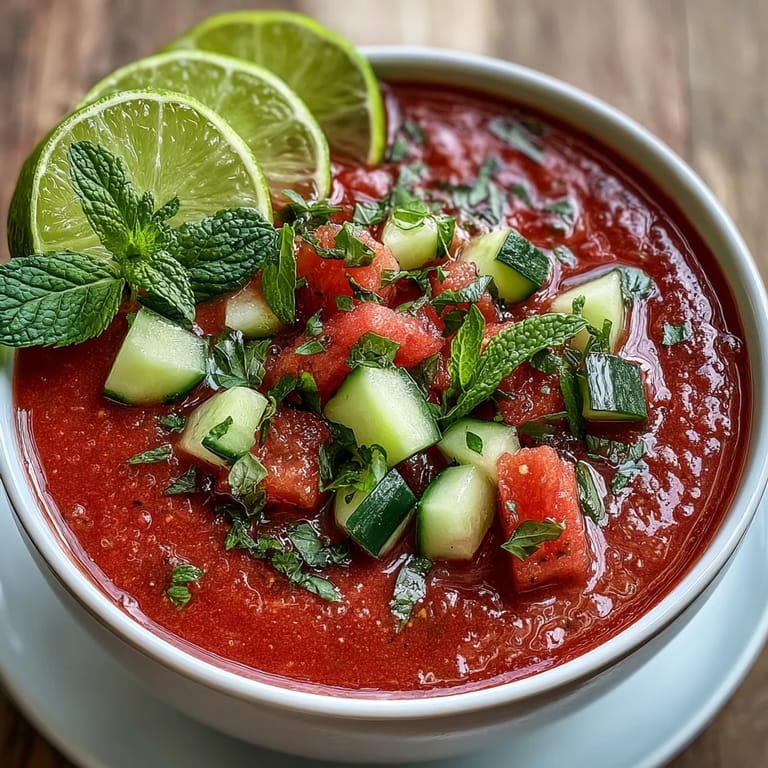
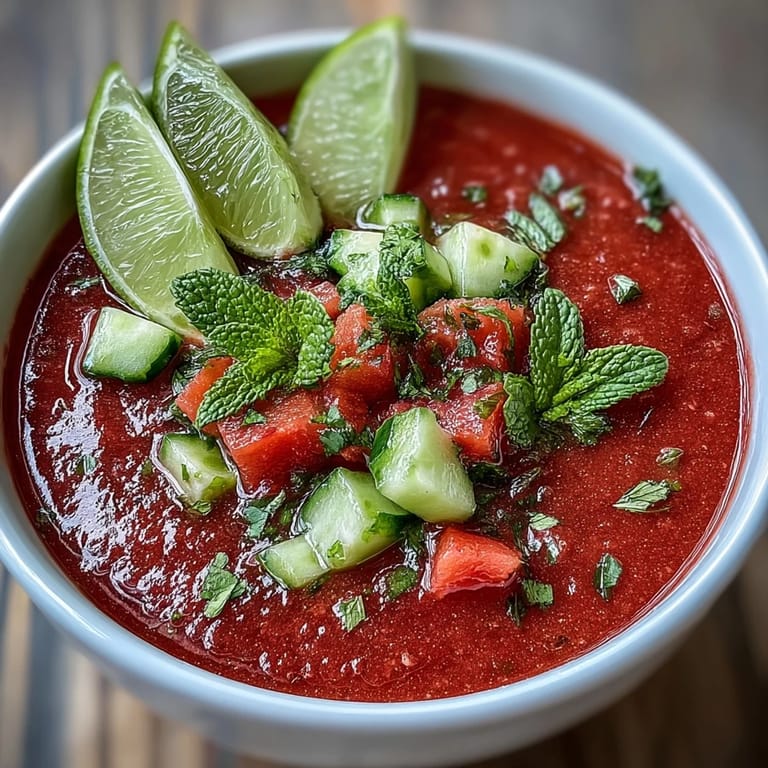
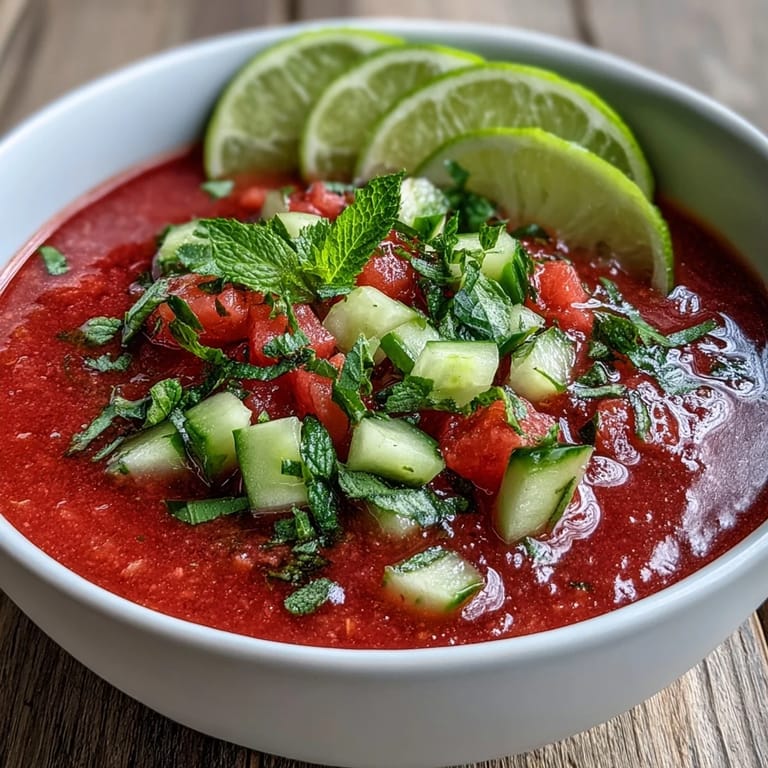
- Stir well, pour into bowls, and top with diced cucumber, watermelon, and fresh mint so every spoonful has that textural surprise.
 Save to Pinterest
 A while back, I served this to my sister who'd been sick and couldn't eat much, and watching her have a whole bowl without complaint was quietly one of my favorite moments in the kitchen. It wasn't about fancy technique or restaurant plating; it was just knowing I'd made something that felt good going down and tasted like care.
The Secret to Silky Texture
The trick nobody talks about is that the oil isn't just flavor—it's actually what makes the texture feel luxurious instead of watery. When you blend it in separately after the vegetables, it creates this silken mouthfeel that makes you want another spoonful immediately. I learned this by accident when I added oil too early once and ended up with a broken, curdled mess; now I add it at the end, and the difference is night and day.
Playing with Heat and Spice
This soup is naturally sweet and refreshing, but if you're someone who craves a little kick, a seeded jalapeño half blended in gives you this gentle warmth that doesn't overpower the delicate flavors. I've also tried a pinch of cayenne, and it works beautifully—just go slow because heat sneaks up on you in cold soups.
Serving and Pairing Ideas
Serve this as a first course at a summer dinner party, or honestly just drink it straight from a cup on the porch on a hot afternoon. The diced garnish isn't just decoration; those little bursts of fresh texture make every spoonful interesting. For drinks, a crisp Sauvignon Blanc is perfect, or just serve it alongside sparkling water with extra lime.
- Pre-chill your serving bowls by sticking them in the freezer for ten minutes before service.
- You can make this up to two days ahead, though the mint flavor will fade slightly by day two, so save some fresh mint to stir in just before serving.
- If you end up with leftovers, they actually work beautifully as a popsicle base—freeze them in a popsicle mold for a fun afternoon treat.
 Save to Pinterest
 This gazpacho has become my answer to every hot summer day and every moment when I need to feel like I've made something special without spending hours in the kitchen. It's proof that the best recipes aren't always the most complicated ones.
Recipe Questions & Answers
- → How long should I chill the gazpacho before serving?
Refrigerate for at least 2 hours to allow flavors to meld properly. For optimal enjoyment, chill your serving bowls beforehand and serve extra cold.
- → Can I make this gazpacho ahead of time?
Yes, this actually tastes better when made ahead. Store covered in the refrigerator for up to 2 days. Stir well before serving as separation may occur.
- → What can I use instead of cilantro?
Fresh basil works beautifully as a substitute, offering a different herbal note. You can also increase the mint or simply omit the cilantro entirely.
- → How do I add spice to this gazpacho?
Blend in half a seeded jalapeño pepper for moderate heat, or add a pinch of cayenne for a subtle kick. Adjust according to your spice preference.
- → What should I serve with watermelon gazpacho?
Pairs wonderfully with crisp Sauvignon Blanc, sparkling water with lime, or light crusty bread. It also complements grilled vegetables or fresh salads perfectly.
- → Can I adjust the consistency?
Absolutely. For a thinner consistency, add a few tablespoons of cold water and blend again. The base should be silky and pourable but not watery.