 Save to Pinterest
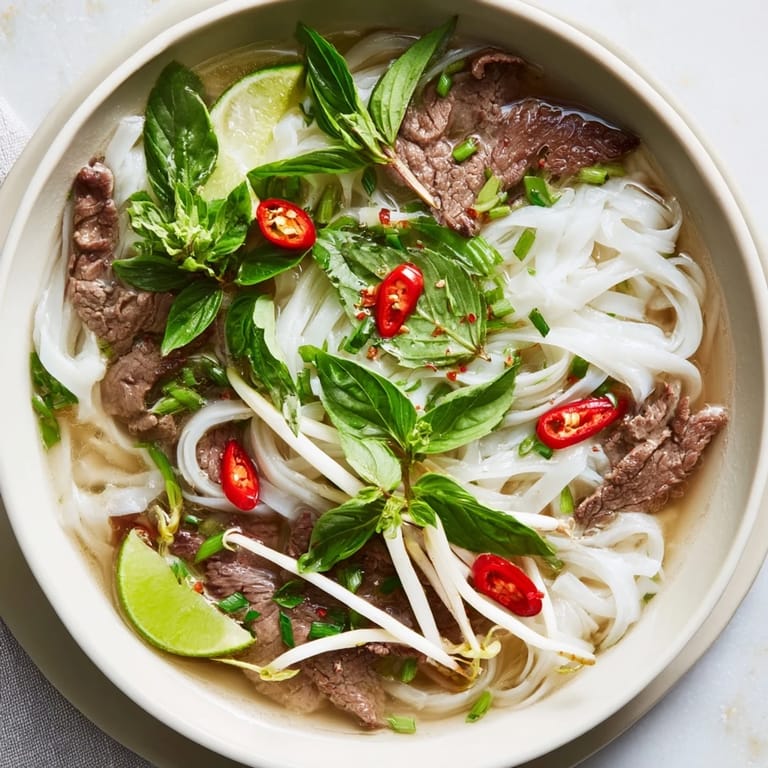
 The first time I made pho at home, I was chasing that exact moment when you pour steaming broth over paper-thin beef and watch it turn from raw to perfectly cooked in seconds. No fancy equipment needed—just a big pot and patience. That revelation changed how I approached quick weeknight dinners, turning what seemed like restaurant magic into something I could recreate in my own kitchen. This Vietnamese Pho Express became my answer to those nights when I wanted something deeply satisfying but didn't have hours to spend hovering over the stove.
I remember making this for friends who were skeptical that real pho could happen on a Tuesday night. The smell of star anise and cinnamon filling the kitchen converted them before the first spoonful. Watching them squeeze lime into their bowls and adjust the heat with sriracha reminded me that the best meals aren't always the most complicated ones—sometimes they're the ones where everyone gets to make it exactly theirs.
Ingredients
- Low-sodium beef or chicken broth: Use 8 cups as your liquid foundation—it matters more than you'd think, since everything depends on its quality and allows the spices to shine without being overpowered.
- Fresh ginger and onion: These two are the soul of the broth; charring them slightly deepens the flavor in ways that feel almost like cooking magic.
- Star anise, cinnamon stick, and cloves: This trio creates that signature warmth; don't skip any of them, as each brings something irreplaceable to the blend.
- Fish sauce and soy sauce: The umami backbone that makes people ask what your secret ingredient is without realizing these two humble bottles are doing all the heavy lifting.
- Beef sirloin or eye round: Slice it thin enough that it becomes tender in the hot broth; this is where the texture magic happens.
- Fresh rice noodles: Use bánh phở if you can find it; they cook faster and feel more delicate than dried versions.
- Bean sprouts, Thai basil, cilantro, and scallions: These aren't just garnishes—they're flavor layers you add yourself, making each bowl feel personalized and alive.
- Lime, hoisin sauce, and sriracha: Leave these at the table so guests can build their own heat and brightness.
Tired of Takeout? 🥡
Get 10 meals you can make faster than delivery arrives. Seriously.
One email. No spam. Unsubscribe anytime.
Instructions
- Build your aromatic base:
- Combine broth, halved onion, sliced ginger, and the whole spices in a large pot. Bring everything to a boil, then lower the heat and let it simmer uncovered for 20 minutes—the kitchen will smell incredible, and you'll know the spices are melting into the liquid.
- Season the broth:
- Stir in fish sauce, soy sauce, sugar, and salt, then simmer for 5 more minutes. Strain out all the solids through a fine-mesh strainer and keep the clear, aromatic broth hot on low heat.
- Prepare your noodles:
- While the broth simmers, cook the rice noodles exactly according to package directions—overcooked noodles disappear into the broth, which isn't what we want. Drain them and divide among four bowls.
- Layer the beef:
- Arrange your thin-sliced raw beef directly over the warm noodles in each bowl, spreading it out so every piece gets maximum exposure to the hot broth.
- The moment of truth:
- Ladle the hot broth carefully over the beef and noodles, watching the meat transform from red to cooked as the heat reaches it. This is where the alchemy happens.
- Finish with freshness:
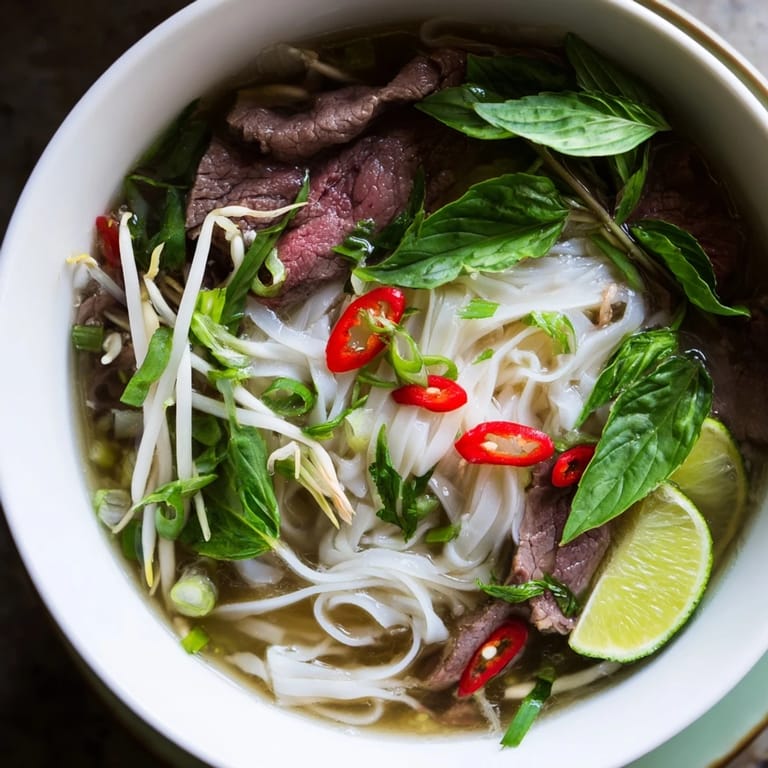
- Top each bowl with bean sprouts, basil, cilantro, scallions, and chili. Serve with lime wedges and let everyone adjust the heat and brightness to taste.
 Save to Pinterest
 There's something about pho that makes people linger at the table longer than they planned. Maybe it's the ritual of customizing each spoonful, or how the warmth settles into you. Either way, this quick version proved to me that slowing down doesn't require slowing down your cooking.
Why This Works on Any Night
This recipe lives in that sweet spot between authentic flavor and actual weeknight feasibility. The spices do the heavy lifting in just 20 minutes of simmering, so you're not sacrificing depth for speed. I've learned that good cooking isn't always about time—it's about choosing ingredients and techniques that work efficiently, and this pho is proof of that philosophy.
The Art of the Garnish
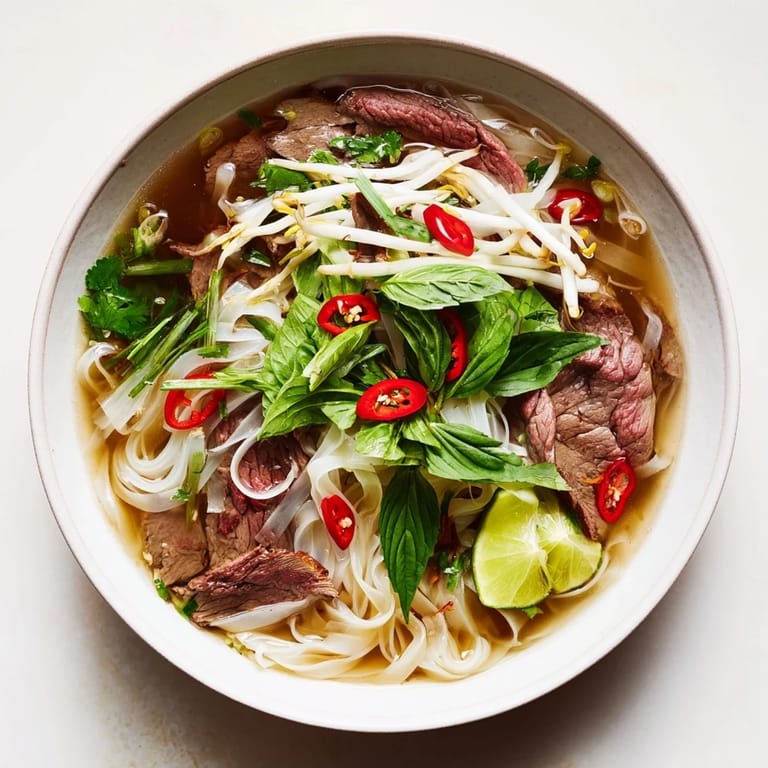
The herbs and fresh toppings aren't afterthoughts here; they're where the bowl transforms. Fresh Thai basil brings an anise-like sweetness, cilantro adds brightness, and that squeeze of lime ties everything together. The first time I realized that letting guests build their own topping experience made the meal feel less like serving dinner and more like collaborating on something delicious, I never went back to fully assembled bowls.
Making It Your Own
This is where pho becomes personal—swap the herbs if you prefer mint, add crispy fried shallots for texture, or use chicken instead of beef if that's what you have. The broth stays the same, but everything else is up to you. I've made this with vegetable broth and tofu on nights when I wanted something lighter, and somehow it tasted just as complete.
- Char the onion and ginger slightly in a dry pan before adding them to deepen the broth's complexity.
- Keep the broth hot the entire time so the beef cooks properly and everything stays warm through to the end.
- Don't be shy with the lime—that acid is what makes the flavors pop and feel alive.
 Save to Pinterest
 Quick pho has become one of those recipes I make when I want to prove to myself that restaurant-quality food doesn't need a restaurant-sized effort. Every time someone tries it, I see that same surprise I felt the first time—this is possible at home, and it tastes like love.
Recipe Questions & Answers
- → What broth works best for this dish?
Low-sodium beef or chicken broth infused with spices like star anise and cinnamon provides a light, aromatic base.
- → Can I substitute the meat for a vegetarian option?
Yes, using tofu along with vegetable broth offers a flavorful vegetarian version without losing richness.
- → How do I cook the noodles properly?
Cook rice noodles according to package instructions until tender, then drain before assembling.
- → What fresh herbs complement this dish?
Thai basil, cilantro, scallions, and bean sprouts add fresh, bright flavors and textural contrast.
- → How can I add extra flavor to the broth?
Lightly charring onion and ginger before simmering deepens the broth’s aroma and taste.