 Save to Pinterest
 I stumbled onto the waterfall grazing board concept at a dinner party where someone had arranged a spread so generously that it literally tumbled off the table. Instead of looking like a disaster, it felt intentional, abundant, and impossible to resist. The moment guests arrived and saw ingredients cascading down like a delicious avalanche, the entire energy shifted—everyone gravitated toward it, laughing and reaching for pieces that had "fallen." That single moment showed me that food doesn't always have to be perfectly contained to be perfectly appealing. Since then, I've made this dramatic centerpiece for nearly every gathering, and it never fails to spark conversation before anyone even takes a bite.
My sister's wedding reception needed something to bridge the cocktail hour and dinner, and I volunteered this board without fully thinking through the logistics. What I didn't expect was watching an entire room of strangers become a community around it, sharing bites and recommendations with each other like old friends. Someone's aunt discovered she loved goat cheese that day because of how I'd paired it with fresh pear, and that small moment—that recommendation and light bulb—reminded me why I love feeding people.
Ingredients
- Brie, sliced (150 g): Soft, creamy, and elegant—it's your anchor for drama since it spreads beautifully when someone reaches for it, encouraging that cascading aesthetic.
- Aged Cheddar, cubed (150 g): The sharp bite that makes fruit and honey make sense; choose a really good one because it speaks for itself.
- Blue cheese, crumbled (100 g): Pungent and polarizing, but it signals sophistication and gives adventurous eaters something to seek out.
- Goat cheese, sliced (100 g): Tangy and delicate, it's the bridge between savory and the sweetness of figs and honey.
- Prosciutto (100 g): Paper-thin slices catch the light and drape like silk—this is half taste, half visual magic.
- Salami, sliced (100 g): A salty, meaty anchor that plays beautifully against fruit and cheese.
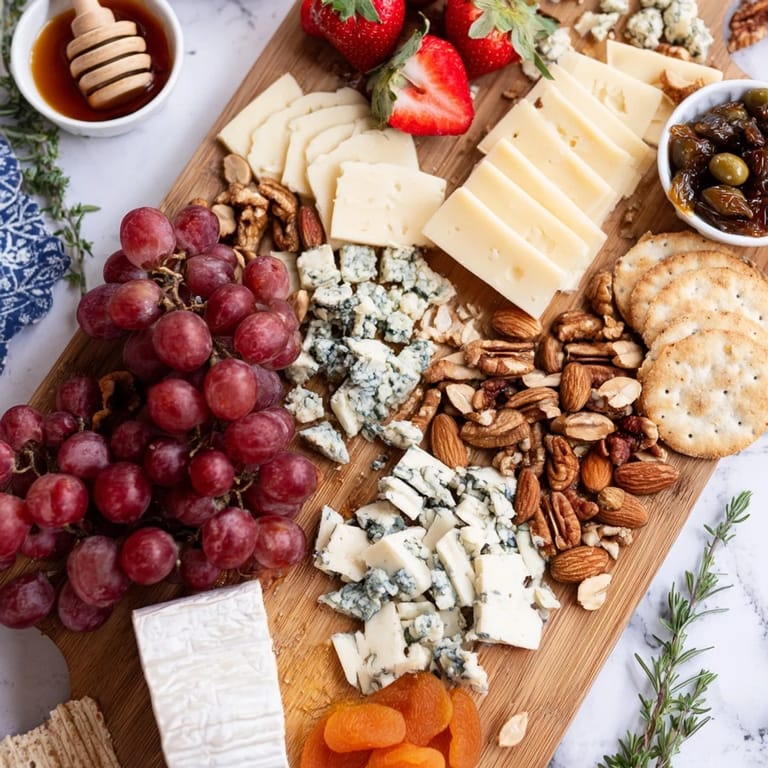
- Red grapes, small clusters (1 cup): Cut into pairs or small clusters so they're easy to grab and look abundant without rolling everywhere.
- Strawberries, halved (1 cup): Their bright red is non-negotiable for visual impact, plus they're one of those items people reach for without thinking.
- Blueberries (1/2 cup): They nestle into crevices and add depth of color; place them where you want to draw the eye downward.
- Pear, thinly sliced: Slice just before serving so it doesn't brown—the delicate slices add a refined touch and pair magically with aged cheese.
- Dried apricots (1/2 cup): Chewy sweetness that lingers; arrange some so they peek out from under cheese.
- Dried figs, halved (1/2 cup): More sophisticated than you'd think, especially when paired with blue cheese or goat cheese.
- Almonds (1/3 cup): Toast them lightly if you want to wake up their flavor—it makes a quiet difference.
- Walnuts (1/3 cup): Earthier than almonds; they ground the sweetness.
- Baguette, sliced and toasted: Toast yours 10 minutes before serving so it stays crisp; warm bread is half the appeal.
- Assorted crackers (150 g): Mix textures—some thin and delicate, some sturdy enough to hold cheese and charcuterie without breaking.
- Honey (1/4 cup): Keep it in a shallow bowl; watching people drizzle honey over aged cheddar never gets old.
- Fig jam (1/4 cup): A sweetness that deepens savory elements; it's the closer to a salty bite.
- Mixed olives (1/4 cup): Scattered or in a bowl—they're a palate cleanser and look jewel-like in certain light.
- Fresh herbs—rosemary and thyme: A small sprig tucked here and there smells incredible and signals care.
Tired of Takeout? 🥡
Get 10 meals you can make faster than delivery arrives. Seriously.
One email. No spam. Unsubscribe anytime.
Instructions
- Choose Your Stage:
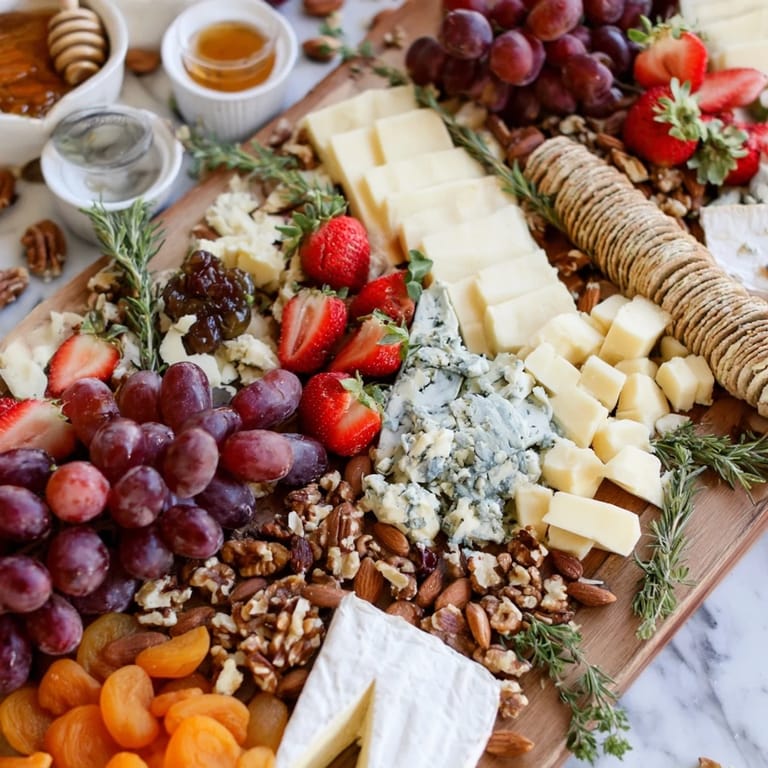
- Find a large wooden or marble board (at least 18 inches) and position it so one long edge can hang slightly over your table or serving surface, leaving room for the cascade. This isn't just function—it sets the entire visual intention.
- Start with Cheese as Your Anchor:
- Arrange the sliced Brie and cubed Cheddar in overlapping layers near the board's edge, letting pieces intentionally extend past the boundary so they catch the eye immediately. This isn't accident, it's choreography—position your showiest cheese first.
- Layer in the Cured Meats:
- Fold the prosciutto in gentle waves beside and over the cheese, letting it drape toward the table like fabric. Scatter salami slices so they overlap slightly, creating movement and the impression of abundance.
- Cascade the Fresh Fruit:
- Nestle grape clusters and strawberry halves so some tumble onto the table below, enhancing the waterfall effect naturally. Position pear slices vertically so they fan slightly—they should look like they might slip off any second.
- Tuck and Scatter the Dry Elements:
- Arrange dried apricots, figs, almonds, and walnuts in pockets and crevices, with some trailing onto the table surface. These fill gaps while adding color and texture that makes the board feel lived-in rather than sterile.
- Position Crackers and Toast for Drama:
- Stand some toast slices vertically, stack others at angles, and let a few lean as though they're about to topple. Lean crackers against cheese or fruit—this tilted, dynamic arrangement is what makes it feel intentional rather than accident.
- Add Your Condiments Strategically:
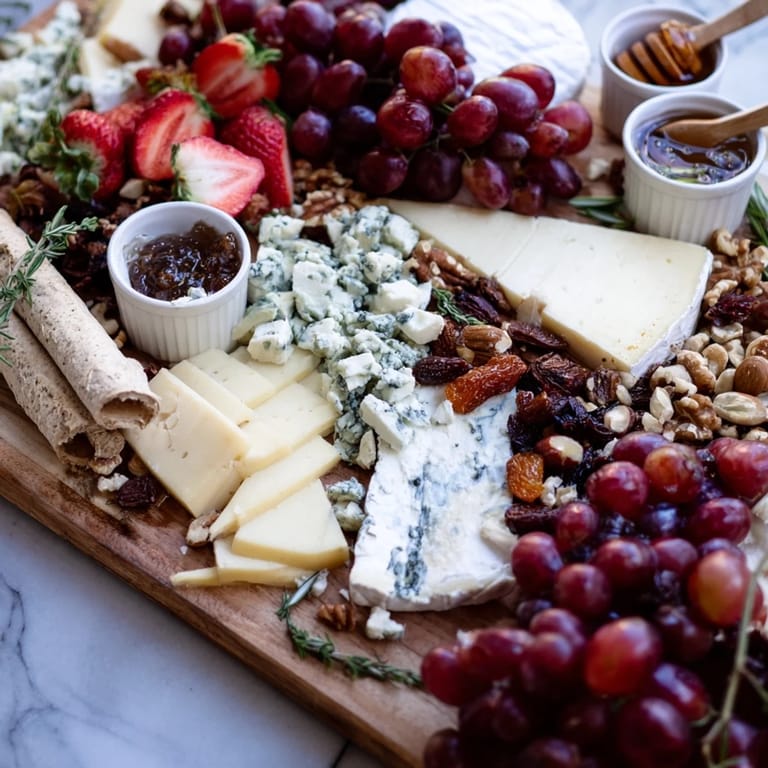
- Place small bowls of honey, jam, and olives on the board, positioning them off-center so they don't look static. Drizzle a tiny bit of honey near the board's edge and scatter a few olives below—these finishing touches signal that the cascade is deliberate.
- Finish with Herbs and Fragrance:
- Tuck sprigs of fresh rosemary and thyme throughout the arrangement, paying attention to where they add color and where they'll release scent when people reach near them. A kitchen filled with herb fragrance changes the entire mood.
- Serve with Intention:
- Step back and admire what you've made—then invite people to scoop from both the board and the fallen elements on the table, celebrating the abundance you've created.
 Save to Pinterest
 I once made this board for a friend who was going through a quiet, lonely season, and she texted me a photo an hour before guests arrived saying she'd already eaten half of it alone, standing in her kitchen. She said the abundance made her feel less alone, like someone had poured generosity directly onto her table. That's when I realized this isn't just about feeding people—it's about saying, without words, that they're worth the effort, the creativity, the careful arrangement.
The Psychology of Abundance
Grazing boards work because of how they make people feel before they even taste anything. There's something primal about seeing more than enough, about permission to take what you want without someone portioning it out. I've noticed that the moment people see this board, they relax—their shoulders drop, they smile. It's not the ingredients themselves; it's the visual promise that there's plenty for everyone, that you've thought about their comfort, that you've made something that invites rather than intimidates.
Building Flavor Combinations That Matter
The real magic happens when someone discovers an unexpected pairing—blue cheese with fig, aged cheddar with honey, prosciutto with strawberry. These combinations aren't accidental; they're the slow-building wisdom of knowing what speaks to what. Pay attention to your own surprising favorites as you build the board, because those moments of discovery are what you're giving your guests. When you place items intentionally, you're not just serving food—you're curating an experience that teaches people how flavors can surprise them.
Making It Your Own
Once you've made this board once, you'll know exactly where you want to improvise. Maybe you'll add candied nuts for sweetness, or swap in a smoked cheddar for something unexpected, or forage local cheeses that tell a story about where you live. This template is a beginning, not a boundary—it's permission to build something that reflects what you love and what your people deserve.
- For a vegan version, seek out plant-based cheeses that hold up well and don't taste like cardboard—your guests deserve better, and so does the presentation.
- Consider the season: in spring, add fresh peas and thin asparagus slices; in fall, swap in apple slices and candied pecans.
- If you're feeding people with dietary needs, keep those elements distinct and clearly marked so everyone feels thought of, not accommodated as an afterthought.
 Save to Pinterest
 This board has become my quiet rebellion against perfectionism in entertaining. It says yes to mess, to abundance, to things being exactly as beautiful as they are broken. Every time someone reaches for something that's tumbled off the edge, they're choosing generosity over control, and that's the whole point.
Recipe Questions & Answers
- → How do I create the cascading waterfall effect?
Arrange ingredients in overlapping layers near the edge of a large board, letting some elements spill slightly over the edge to mimic a waterfall’s flow.
- → Can this board be adapted for vegetarians or vegans?
Yes, omit cured meats and substitute with plant-based cheeses or additional fresh fruits and nuts to suit dietary needs.
- → What are good accompaniments to include?
Honey, fig jam, olives, and fresh herbs like rosemary or thyme enhance flavors and add variety to the board.
- → How should I prepare the board for serving?
Use a large wooden or marble board placed near the table edge. Consider using parchment under the spill zone for easy cleanup.
- → What tools are helpful for assembling this board?
Cheese knives, serving tongs, and small bowls or ramekins help arrange and present ingredients neatly.
- → What pairings work well with this grazing board?
Crisp white wines or sparkling rosés complement the mix of cheeses, fruits, and nuts perfectly for festive occasions.