 Save to Pinterest
 I discovered this dish not in a recipe book but in a moment of quiet frustration. I had invited friends over on short notice and found myself standing in my kitchen with half the ingredients I needed, staring at a beautiful wooden board that had been gathering dust. Instead of panicking, I started arranging what I had—slices of cucumber, a wedge of goat cheese, some almonds—almost like I was composing a painting. The more I stepped back to look at it, the more I realized that sometimes the most elegant meals aren't about complexity, they're about intention.
The first time I served this to someone, I watched them hesitate before eating it—like they weren't sure if they were supposed to admire it or devour it. That pause meant everything. It turned out my friend had been having a chaotic week, and this simple act of creating something so deliberately beautiful was exactly what the evening needed. We ended up sitting together for nearly two hours, talking slowly, eating slowly, and I realized that sometimes what people hunger for isn't fancy food but permission to slow down.
Ingredients
- Fresh cucumbers: Slice them thin and uniform—the geometry matters here, and thin slices photograph better and feel more delicate on the palate.
- Baby carrots: Their natural sweetness provides a gentle contrast, and I always choose organic ones because they taste noticeably brighter.
- Radishes: These are your textural wild card; halved, they add a peppery snap that wakes up your mouth.
- Goat cheese: Shape it into small rounds using a melon baller or two spoons—the act of shaping it is meditative, and the uniform shapes are essential to the visual balance.
- Gluten-free crackers: Pick ones that hold their texture and aren't too crumbly; they're structural anchors for the arrangement.
- Roasted almonds: Their earthiness grounds the platter, and roasted ones have more presence than raw.
- Seedless red grapes: They catch the light and add visual drama—never underestimate how much the eye eats first.
- Fresh herbs: Chives or dill aren't just garnish; they're the final note that says someone cared enough to finish the thought.
Tired of Takeout? 🥡
Get 10 meals you can make faster than delivery arrives. Seriously.
One email. No spam. Unsubscribe anytime.
Instructions
- Choose Your Stage:
- Select a long wooden or slate board that feels substantial in your hands—at least 60 centimeters if you can manage it. The material matters because wood and slate ground the food in a way that ceramic or glass can't quite achieve.
- Build One Side:
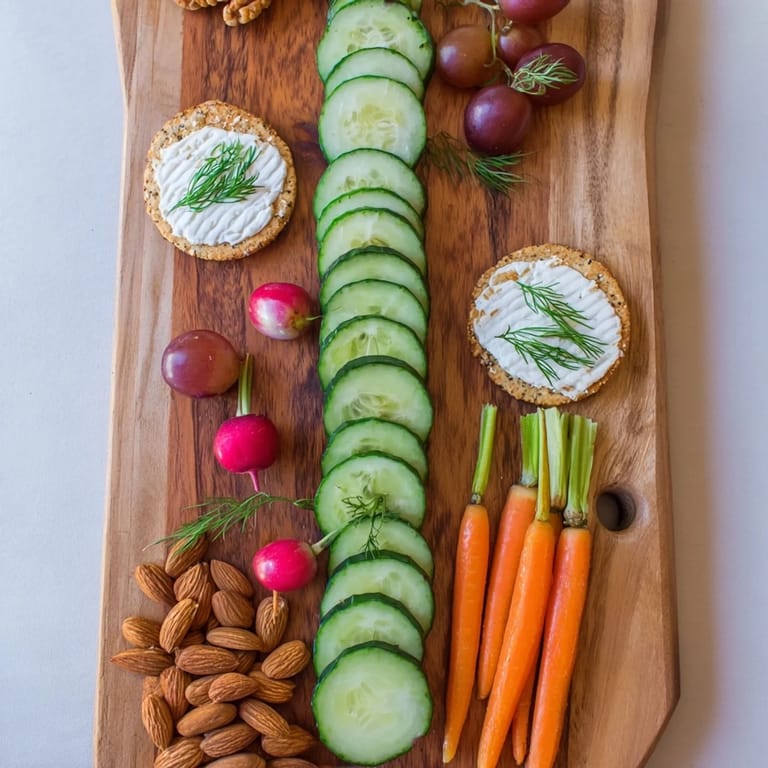
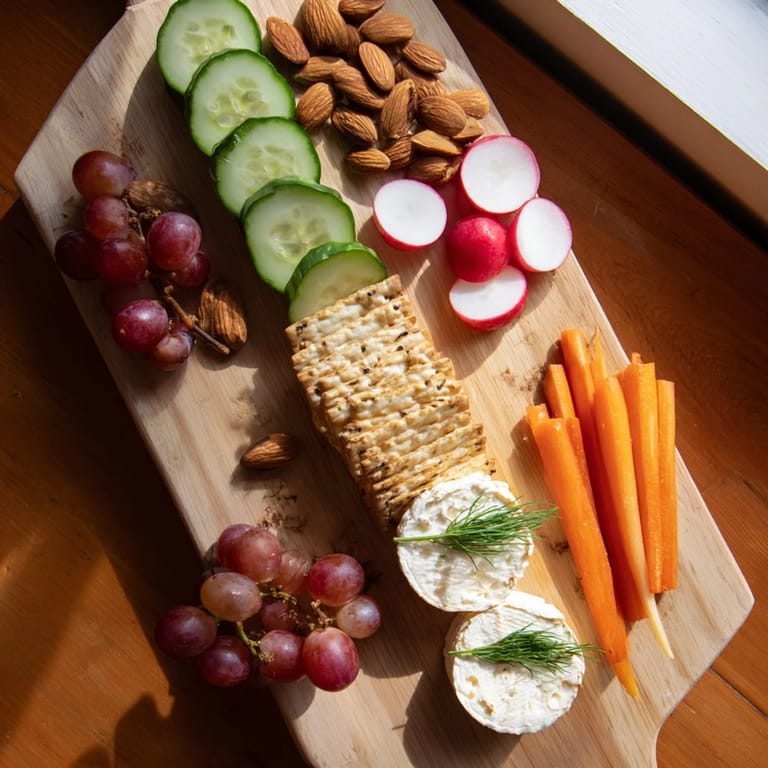
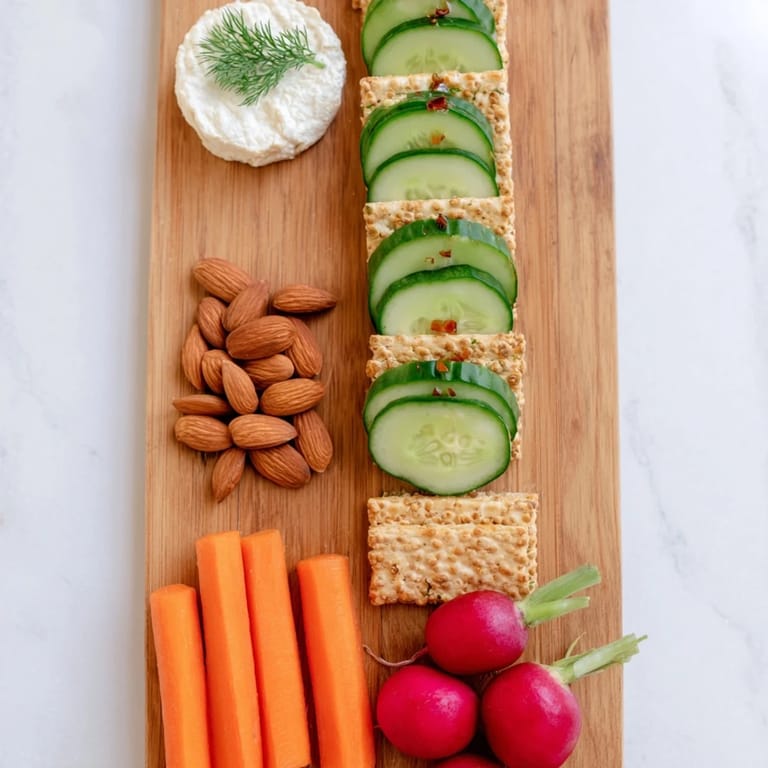
- At one end, begin laying down cucumber slices in a loose, overlapping pattern like roof shingles. This becomes your foundation, and everything else builds on top of it—crackers next, then the carrots standing up proud, radishes nestled between, and finally a small mound of goat cheese in the center with almonds scattered around.
- Mirror the Other Side:
- Move to the opposite end and repeat exactly, using your remaining ingredients to create a perfect twin. This symmetry is the whole point; it's what makes people stop and notice before they eat.
- Frame with Herbs:
- Tuck a few sprigs of chives or dill into each arrangement—herbs are your punctuation mark, the thing that transforms a neat platter into something intentional.
- Embrace the Empty Space:
- Leave the center of the board absolutely bare. That emptiness is not a mistake; it's the breathing room that makes the whole composition work.
 Save to Pinterest
 There's a moment when you step back and look at what you've created, and if you've done it right, you'll feel a small rush of quiet pride. It's not about being fancy or performing for anyone; it's about saying with your hands and your ingredients that this moment, these people, are worth the attention. I've learned that food arranged with care tastes different—not because the flavors change, but because people eat it differently when they know someone thought about them.
The Philosophy of Empty Space
In my early cooking days, I filled every inch of every board, worried that bare space looked unfinished. Then a chef friend asked me, 'Why are you afraid of white space?' That question changed everything. The emptiness in the center of this board is intentional; it's what allows each carefully arranged pile to have weight and presence. When you stop trying to fill every gap, suddenly what you do place becomes more significant.
Playing with Seasons
This platter is infinitely adaptable, which is partly why I keep making it. In spring, I swap in fresh peas and thin asparagus. Summer brings cherry tomatoes and stone fruit. Autumn gets roasted beets and toasted walnuts. Winter is when I bring out pomegranate seeds and persimmons. The structure stays the same, but the ingredients speak to what's alive and good right now, which is the most honest way to eat.
The Ritual of Slow Eating
This dish works best when you serve it with intention and ask your guests to pause before eating. Mindful eating isn't trendy jargon here; it's the actual point. When people slow down and really taste cucumber and good goat cheese and a single roasted almond, they often tell me afterward that they tasted things they've eaten a thousand times but never actually noticed before. That shift in attention is the real gift.
- Pair this with a crisp white wine like Sauvignon Blanc or a sparkling water with fresh lemon to cleanse your palate between bites.
- Eat without your phone; the visual beauty is part of the nourishment, so let yourself actually see what you're eating.
- If you're serving this to someone you want to impress, remember that restraint and care will move them more than abundance ever could.
 Save to Pinterest
 This isn't a dish you'll make when you're rushed or distracted. It's for moments when you want to say something without words—when you want to show up for someone with time and thought and a beautiful board. Make it when you have fifteen minutes and a clear mind, and watch how people respond to being seen.
Recipe Questions & Answers
- → How should the ingredients be arranged on the board?
Arrange half of each ingredient neatly at one end of a long serving board, then mirror the arrangement exactly at the opposite end, leaving the center empty.
- → Can this dish be made vegan?
Yes, substitute the goat cheese with plant-based cheese to make the platter suitable for vegans.
- → What type of serving board is recommended?
A clean wooden or slate board at least 60 cm long works best to emphasize the contrast and balance.
- → Which fresh herbs are best for garnishing?
Chives and dill are ideal for adding color and a mild aroma without overpowering the other ingredients.
- → What drink pairs well with this platter?
A crisp white wine, such as Sauvignon Blanc, complements the fresh, light flavors beautifully.
- → Is this dish suitable for gluten-free diets?
Yes, using certified gluten-free crackers ensures the platter remains gluten-free.