 Save to Pinterest
 The first autumn chill hit our little townhouse, and I found myself rummaging through the produce drawer with cold fingers. That butternut squash had been sitting there all week, along with some slightly wilted kale, and suddenly it clicked – fall minestrone. My grandmother never called it that, she just called it her harvest soup, but the ritual of chopping vegetables while steam slowly fogged our kitchen windows became my own autumn tradition.
Last October, my sister arrived unexpectedly with her kids after a soccer game cancellation due to rain. They tumbled in, damp and hungry, just as I was ladling this minestrone into bowls. My nephew, who declares war on anything green, somehow managed three servings, clutching his spoon with small cold hands and asking if the kale was a special kind of spinach. Sometimes a steaming bowl of soup creates more warmth than just the temperature of the broth.
Ingredients
- Pancetta: Those little cubes of salty pork create the foundation of flavor, rendering down to release a richness that coats every vegetable.
- Butternut Squash: Look for one with a matte skin rather than glossy, which usually indicates its been harvested at perfect ripeness.
- Kale: Remove those woody stems completely or youll be chewing them long after the soup is gone.
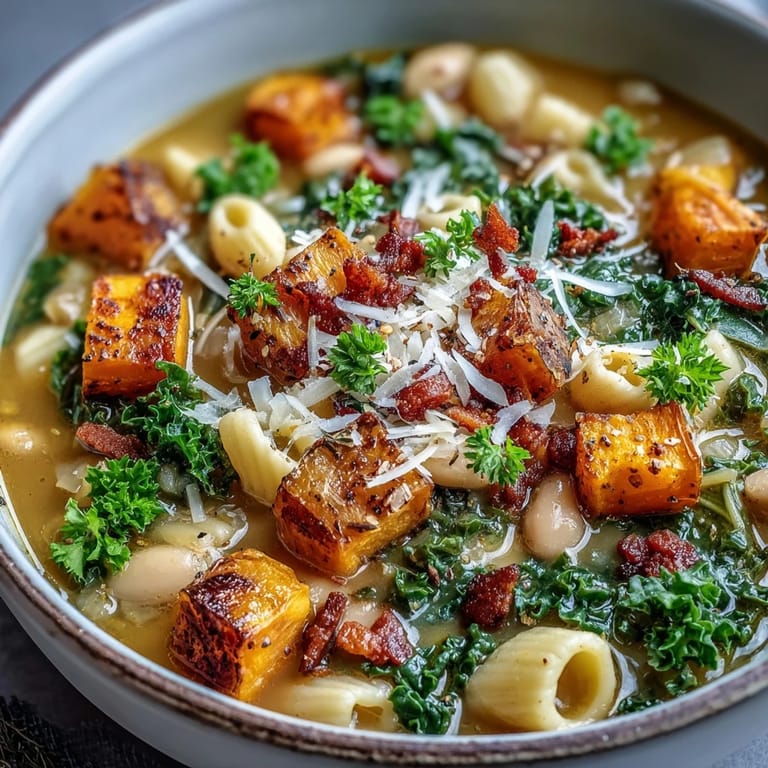
- Ditalini Pasta: These tiny tubes capture broth inside, creating little flavor bombs with each bite.
- White Beans: They break down slightly to give the broth a subtle creaminess without adding any dairy.
Tired of Takeout? 🥡
Get 10 meals you can make faster than delivery arrives. Seriously.
One email. No spam. Unsubscribe anytime.
Instructions
- Crisp the Pancetta:
- Heat olive oil in your Dutch oven until it shimmers, then watch as the pancetta transforms from soft pink cubes to crispy brown morsels. That sizzling sound is pure kitchen music.
- Build the Flavor Base:
- The holy trinity of onion, carrot and celery goes in next, softening in the pancetta fat until the onions turn translucent and sweet. Your kitchen should smell like comfort already.
- Add the Squash Symphony:
- When the butternut squash hits the pot, it begins to caramelize slightly at the edges, intensifying its natural sweetness. The garlic joining the party will make your neighbors wonder whats cooking.
- Create the Broth:
- As you pour in the tomatoes and broth, use your wooden spoon to scrape up any browned bits from the bottom of the pot. Those tiny caramelized pieces are concentrated flavor waiting to be released.
- Simmer to Perfection:
- During the covered simmer, resist the urge to keep lifting the lid, as each peek releases precious steam and flavors. Trust the process and let the squash become fork-tender in its own time.
- Add the Finishers:
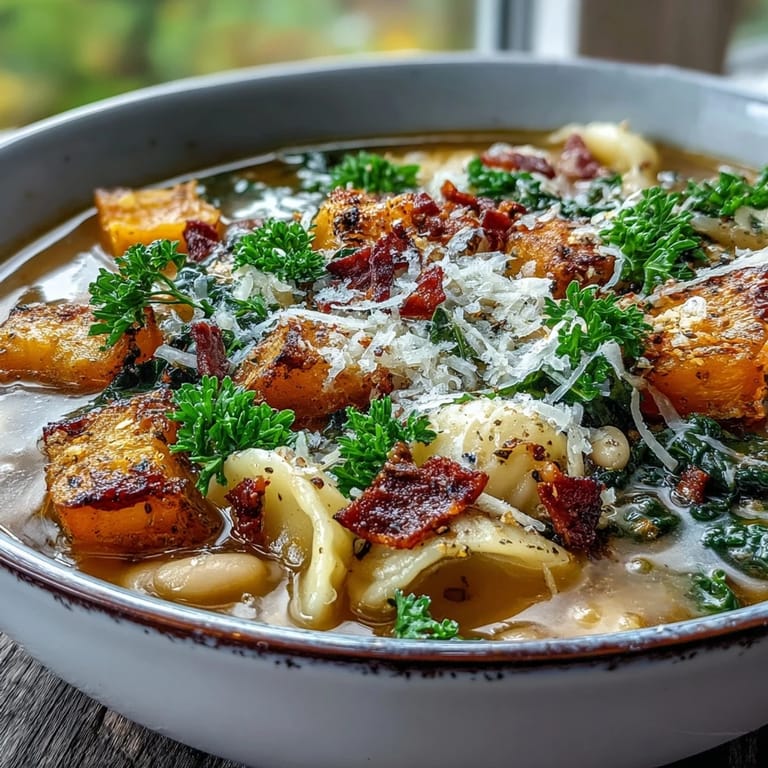
- When the kale hits the hot soup, it brightens to a vivid green before softening into the broth. The pasta will drink up some liquid as it cooks, so dont worry if things look a bit brothy at first.
- Garnish and Serve:
- That reserved pancetta sprinkled on top provides textural contrast to the soft vegetables and beans. A snowfall of Parmesan creates little melty pools on the surface that are too good to miss.
 Save to Pinterest
 On a particularly rough Tuesday last fall, when deadlines loomed and the washing machine flooded, I abandoned all responsibilities and made this minestrone instead. Something about the methodical chopping, the gradual building of flavors, brought me back to center. We ate by candlelight that night, not for romance but because Id forgotten to pay the electric bill, and somehow that soup tasted even better in the soft golden light, steam rising from our bowls like a promise that tomorrow would be easier.
Seasonal Adaptations
This minestrone flexes with the seasons more beautifully than any soup I know. Spring brings tender asparagus and peas in place of squash, summer allows for sweet corn and zucchini, while winter welcomes heartier root vegetables like turnips and parsnips. The soul of the soup remains unchanged, just dressed differently for the weather, like we all do.
Make-Ahead Magic
If youre making this soup ahead, consider keeping the pasta separate until serving time. I learned this lesson after a Sunday batch prep left me with pasta that had absorbed nearly all the broth by Tuesday lunch. Now I cook and store the pasta separately in a little olive oil, adding it to each reheated portion, which preserves both the pasta texture and the soupy goodness.
Serving Suggestions
While this minestrone stands proudly on its own, a few thoughtful accompaniments can elevate the meal from satisfying to sublime. My father-in-law, who rarely compliments anything, once asked for the recipe after I served it with a rustic sourdough rubbed with garlic and grilled Parmesan crostini alongside a simple arugula salad dressed with lemon and good olive oil.
- For a complete Italian-inspired meal, serve with focaccia and a small antipasto plate of olives and roasted peppers.
- A glass of Chianti or Sangiovese brings out the tomato notes in the soup without overwhelming the delicate vegetable flavors.
- Keep extra grated Parmesan in a small bowl at the table for those who like to add more as they eat.
 Save to Pinterest
 This fall minestrone isnt just food; its a reminder that good things come from gathering humble ingredients together with care. As seasons change and kitchens fill with different aromas, this soup remains my constant, adaptable friend, ready to comfort and nourish whoever gathers around my table.
Recipe Questions & Answers
- → Can I make this vegetarian?
Absolutely. Simply omit the pancetta and use vegetable broth instead of chicken broth. Add a pinch of smoked paprika to maintain that savory depth of flavor.
- → What other pasta shapes work well?
Small pasta shapes like shells, small macaroni, or orzo work beautifully. Just adjust cooking time according to package instructions to achieve perfect al dente texture.
- → How do I store leftovers?
Cool completely and refrigerate in an airtight container for up to 4 days. The pasta will absorb more broth over time, so you may need to add extra liquid when reheating.
- → Can I freeze this soup?
For best results, freeze without the pasta. Cook pasta separately when reheating. Alternatively, freeze individual portions and enjoy within 3 months for optimal flavor and texture.
- → What can I substitute for kale?
Spinach, Swiss chard, or chopped escarole work wonderfully. Add these tender greens during the last 3-4 minutes of simmering to prevent overcooking.