 Save to Pinterest
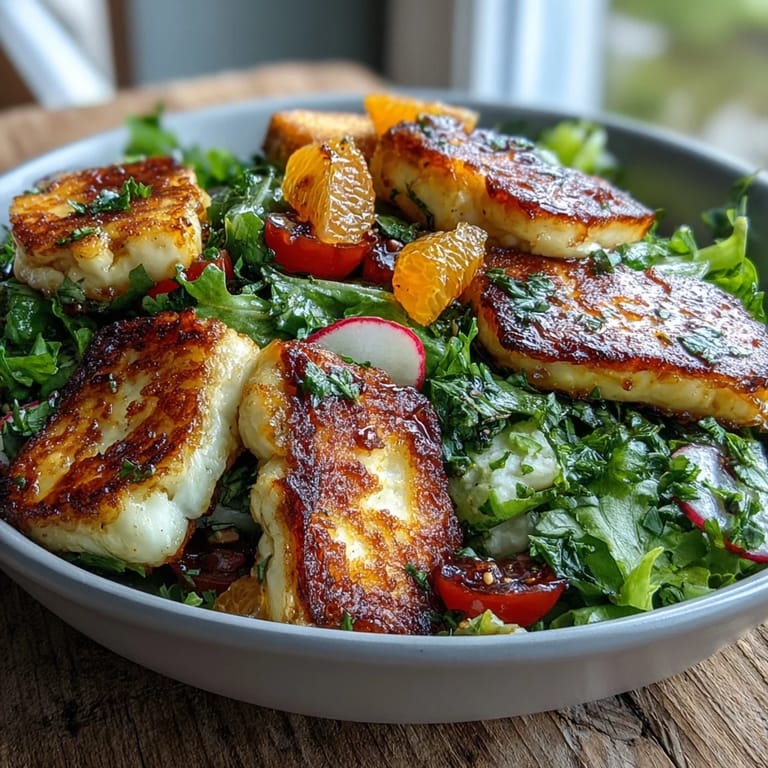
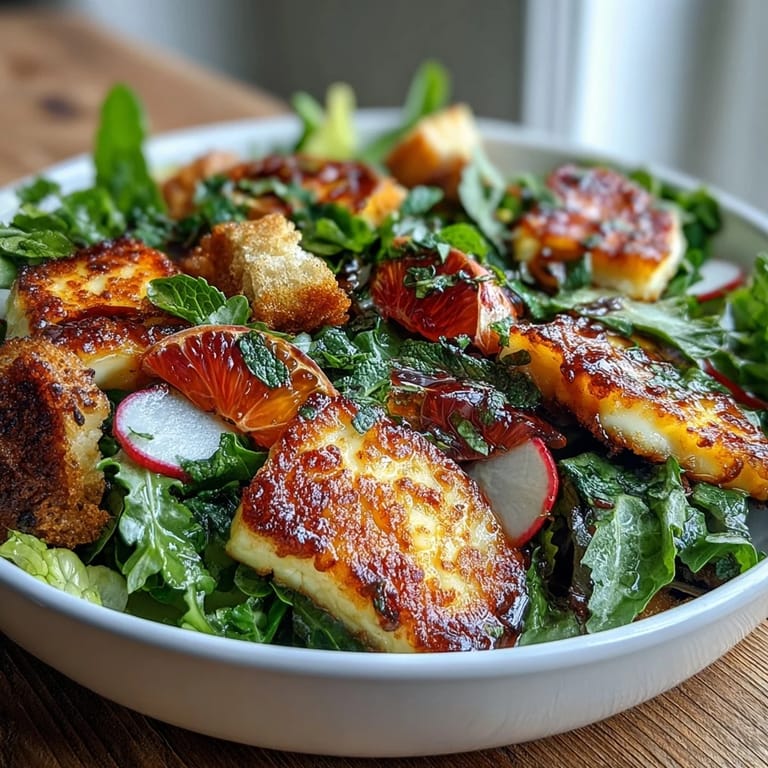
 There's something about the moment halloumi hits a hot skillet that makes you pause and pay attention. The cheese squeaks against the pan, butter pooling around golden edges, and suddenly you're standing in a tiny kitchen in Cyprus, or at least your taste buds are. When I first combined that salty squeak with blood orange segments and crispy sourdough, I realized I'd been eating salads all wrong. This dish became my answer to the question: what happens when you give a salad permission to be bold, warm, and unapologetically indulgent?
I made this for a dinner party where someone had just returned from Lebanon, and watching their face light up when they tasted the pomegranate molasses and sumac combination told me everything. They started talking about their grandmother's kitchen, the smell of fresh herbs, and suddenly we weren't just eating salad anymore. That's when I understood this recipe wasn't just about delicious food, it was about opening a door to somewhere else, somewhere warmer.
Ingredients
- Halloumi cheese, sliced into 1 cm thick pieces: This is the star, and thickness matters because you want it to get golden and crispy on the outside while staying firm inside, not melting into oblivion.
- Blood oranges, peeled and segmented: The jewel tones and tartness make a difference that regular oranges won't quite match, but they'll work in a pinch.
- Mixed salad greens: A combination of romaine, arugula, parsley, and mint gives you texture and flavor layers that keep things interesting.
- Cucumber, diced: This adds cooling crunch and lets the other flavors breathe a little.
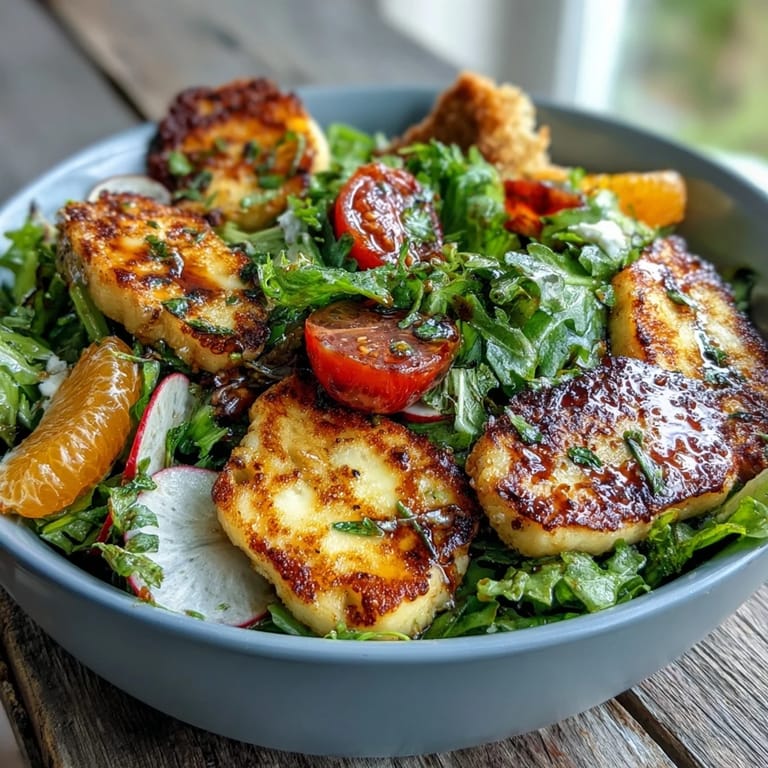
- Cherry tomatoes, halved: Sweet, bursting, and they look beautiful scattered across everything else.
- Red onion, thinly sliced: Sharp and peppery, this brings backbone to the salad without overwhelming it.
- Radishes, thinly sliced: They maintain their crisp snap and add a gentle spiciness that plays nicely with the citrus.
- Sourdough bread, cut into cubes: The tang of sourdough is essential here, pairing beautifully with the sumac dressing in ways other bread won't.
- Olive oil for croutons: Good quality oil makes the croutons taste intentional rather than accidental.
- Extra virgin olive oil for dressing: Taste it before you use it, because this is where quality actually matters in the final dish.
- Fresh lemon juice: Freshly squeezed, never bottled, because the brightness makes everything else sing louder.
- Pomegranate molasses: This tangy concentrate is the secret that makes people ask what that flavor is, and when you tell them they'll hunt for it at specialty shops.
- Sumac: Lemony and complex, it's the flavor that makes this Middle Eastern rather than just any salad with fancy ingredients.
- Ground black pepper and sea salt: These seem simple until you realize they're the bridge between all the other elements.
Tired of Takeout? 🥡
Get 10 meals you can make faster than delivery arrives. Seriously.
One email. No spam. Unsubscribe anytime.
Instructions
- Toast your croutons:
- Preheat your oven to 200°C and toss those sourdough cubes with olive oil and a pinch of sea salt, spreading them across a baking tray. Watch them for 8 to 10 minutes until they're golden and crispy, because the difference between perfect and burnt happens in about thirty seconds.
- Fry the halloumi:
- Get a non-stick skillet over medium heat and listen for that satisfying squeak as each slice touches down. After 2 to 3 minutes per side, you'll have golden-brown cheese that's crispy outside and still holding its shape, then drain it briefly on paper towels.
- Build your salad base:
- In a large bowl, combine your greens, cucumber, tomatoes, red onion, radishes, and blood orange segments, letting them nestle together without crushing anything.
- Mix the dressing:
- In a small bowl, whisk together olive oil, lemon juice, pomegranate molasses, sumac, pepper, and salt until everything is emulsified and tastes like you've somehow captured the essence of a Mediterranean afternoon.
- Bring it together:
- Add the warm halloumi and crispy croutons to the salad, drizzle with dressing, and toss gently so you don't bruise the leaves or break the cheese into pieces.
- Serve right away:
- This salad demands to be eaten while the halloumi is still warm and the croutons haven't had time to soften.
 Save to Pinterest
 There was an afternoon when a friend took one bite and just closed their eyes, and in that moment I understood why people get so emotional about food. It's because it carries memory and place and intention all at once.
The Halloumi Question
Halloumi is unusual because it actually needs heat to become itself, unlike most cheeses that want to stay cool and quiet. When you fry it, you're not destroying it, you're activating it, giving it permission to develop a golden crust while the inside stays firm enough to hold its shape. The high melting point is what makes this work, and why halloumi is more pizza topping than brie.
Citrus and Salt: A Conversation
Blood oranges have this deep, almost wine-like complexity that regular oranges don't quite achieve, but they're also temperamental and seasonal. When you can't find them, grapefruit segments work in a different way, bringing bitter brightness instead of sweet tartness. What matters is that you're adding citrus to cut through the richness of the cheese and remind your palate that this is ultimately a salad, not just warm cheese on a plate.
Building Flavor Layers
This salad works because every element is doing something different, and nothing is trying to be the only voice in the room. The sumac brings lemony earthiness, the pomegranate molasses adds tangy depth, the fresh herbs keep everything bright, and the warm cheese brings richness that anchors everything else. When people ask how to make salads more interesting, the answer is often just remembering that flavors have conversations, and you're the one arranging who gets to sit next to whom.
- Toast your nuts separately if you're adding pistachios or walnuts, so they stay crispy and don't compete for attention.
- Make the dressing in advance but don't dress the salad until the very last moment before serving.
- If you're cooking for someone with a gluten allergy, swap the sourdough for crispy chickpeas or toasted nuts.
 Save to Pinterest
 This is the salad I make when I want to feel generous without spending hours in the kitchen, and it never fails to turn an ordinary Wednesday into something worth talking about. Serve it with crisp white wine and watch what happens when warmth and brightness and crunch all decide to show up at the same time.
Recipe Questions & Answers
- → Can I prepare halloumi ahead of time?
Halloumi is best served warm after frying. You can slice and refrigerate it up to 24 hours in advance, then fry just before serving. The dressing can be made 2 days ahead and stored in the refrigerator.
- → What can I substitute for blood oranges?
Regular oranges, pink grapefruit, or even segmented mandarins work beautifully. The key is having that bright citrus element to balance the rich halloumi.
- → How do I keep croutons crispy?
Ensure your sourdough cubes are completely cooled before tossing with the salad. Store them in an airtight container if making ahead, and add just before serving.
- → Is there a gluten-free option?
Use gluten-free bread for croutons or substitute with toasted nuts like pistachios or walnuts for added crunch without the gluten.
- → Can I grill the halloumi instead of frying?
Absolutely. Grill halloumi slices for 2-3 minutes per side until you achieve beautiful char marks. This adds a lovely smoky dimension to the final dish.
- → What makes sumac special in this dish?
Sumac provides a tart, lemony flavor with a beautiful deep red color. It's a staple Middle Eastern spice that brightens the dressing and complements the blood oranges perfectly.