 Save to Pinterest
 The first time the air turned crisp in my new apartment the kitchen felt too quiet. I decided to chop every vegetable I had to fill the space with sound and scent. As the carrots hit the hot oil the sizzle felt like a tiny celebration of the seasons changing. This soup was not planned but it became a permanent fixture for chilly Sunday afternoons.
I once invited a group of friends over during a sudden thunderstorm and realized I only had half a bag of ditalini and some wilted kale. We sat on the floor with steaming bowls listening to the rain hammer against the glass while the soup warmed our hands. There is something about a big pot of beans and greens that makes a small room feel like a palace. It taught me that a good broth can fix almost any bad mood.
Ingredients
- 2 tablespoons olive oil: Use high quality extra virgin oil because it carries the flavor of the aromatics.
- 1 large onion: Dicing it finely ensures it melts into the background of the broth.
- 2 carrots: These provide a natural sweetness that balances the acidic tomatoes.
- 2 celery stalks: This adds a subtle savory note that is essential for a traditional base.
- 2 cloves garlic: Freshly minced cloves provide a sharp bite that softens as it simmers.
- 1 medium zucchini: These little green coins add a lovely texture and soak up the broth perfectly.
- 1 cup green beans: Fresh snaps offer a bright crunch that prevents the soup from feeling heavy.
- 2 cups chopped spinach or kale: These leafy greens add a vibrant pop of color right at the finish line.
- 14 oz can diced tomatoes: They provide the necessary acidity to balance the earthy beans.
- 6 cups vegetable broth: A high quality broth makes all the difference in the final depth of flavor.
- 1 teaspoon dried oregano: This herb brings that classic Mediterranean garden aroma to the pot.
- 1 teaspoon dried basil: It adds a subtle sweetness that pairs perfectly with the tomato base.
- 0.5 teaspoon dried thyme: A little bit goes a long way in adding an earthy depth.
- 1 bay leaf: This single leaf adds a subtle woody note that you would miss if it was gone.
- Salt and pepper: Seasoning as you go is the secret to a well balanced soup.
- 0.75 cup small pasta: Ditalini or shells are perfect for catching little pockets of soup in every bite.
- 15 oz can cannellini beans: These beans provide a wonderful creaminess to every spoonful.
- 15 oz can red kidney beans: These add a beautiful color and a firm bite to the mix.
- Fresh Parmesan cheese: A dusting of salty cheese at the end ties all the flavors together.
- Fresh parsley: This garnish adds a final hit of freshness that wakes up the cooked vegetables.
Tired of Takeout? 🥡
Get 10 meals you can make faster than delivery arrives. Seriously.
One email. No spam. Unsubscribe anytime.
Instructions
- Softening the aromatics:
- Warm the oil and let the onions carrots and celery dance until they are tender. You want them to release their sweetness without browning too much.
- Awakening the garden:
- Stir in the garlic zucchini and green beans to let them get acquainted with the oil. The kitchen will start to smell like a fresh summer garden.
- Building the base:
- Pour in the tomatoes and broth then toss in your herbs and seasonings before bringing it to a boil. This is where the magic begins as the scents fill your home.
- Infusing the flavors:
- Cover the pot and let those vegetables get to know each other for fifteen minutes. This short rest allows the broth to darken and deepen in character.
- Adding the heart:
- Tip in the pasta and both types of beans to let them soak up the savory liquid. Keep the lid off so the pasta cooks perfectly while the broth thickens slightly.
- The green finish:
- Toss in your leafy greens and watch them wilt into the hot soup in just a few minutes. Do not forget to fish out that bay leaf before you start serving.
- Final adjustments:
- Give the soup one last taste to see if it needs an extra pinch of salt. Serve it steaming hot with a dusting of cheese and a final drizzle of oil.
 Save to Pinterest
 My grandmother used to say that a minestrone is never the same twice because it depends on what the garden gives you. I remember her standing over a steaming pot with a wooden spoon insisting that the secret was always in the ratio of beans to greens. Now when I cook this I feel her presence in the rhythmic chopping and the steam rising from the bowl.
Seasonal Substitutions
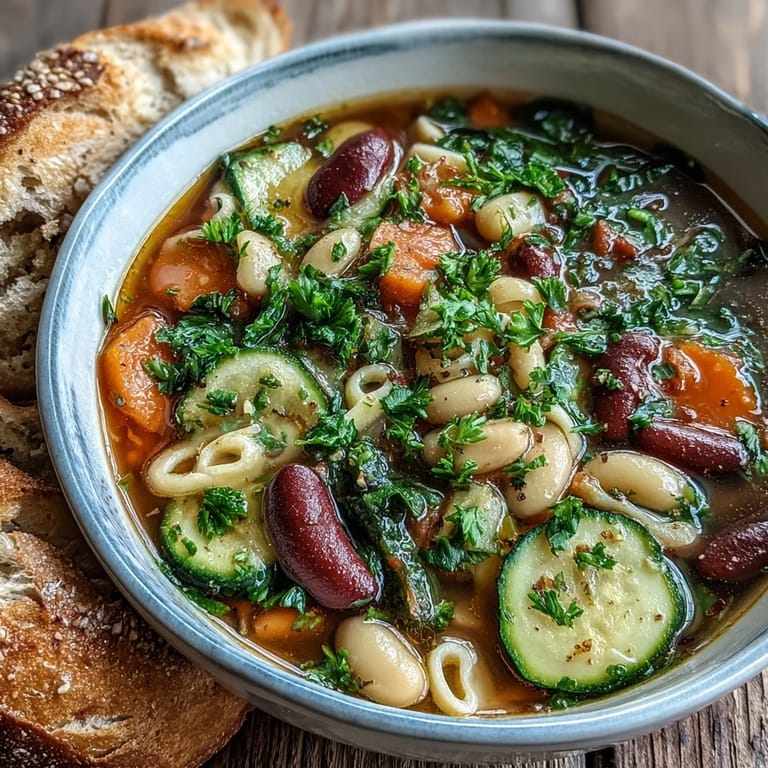
You can treat this recipe like a revolving door for whatever is fresh at the market. In the autumn I often swap the zucchini for cubed butternut squash or even a handful of chopped cabbage. It turns the soup into something entirely new without losing that core comfort factor.
The Perfect Side
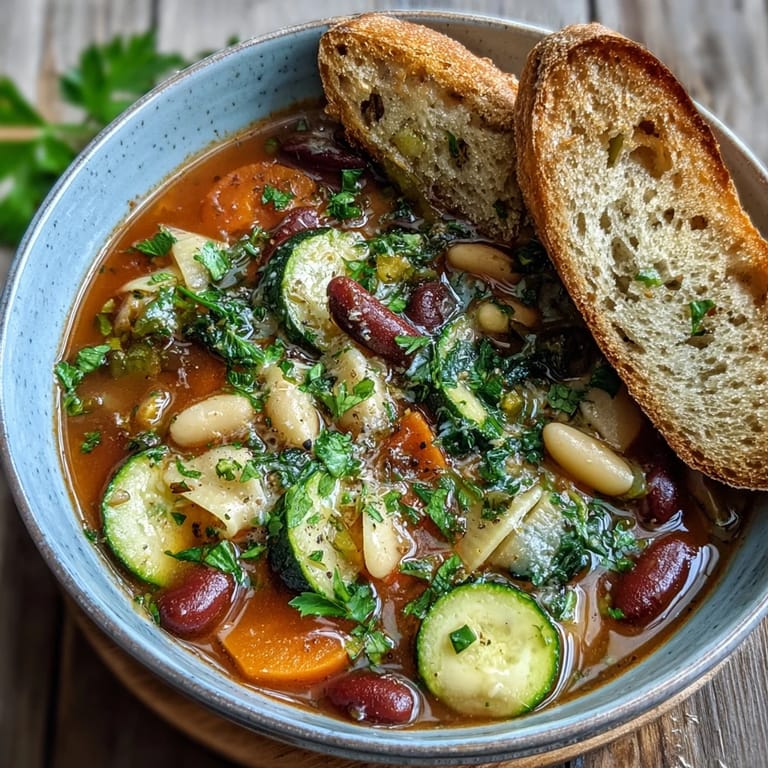
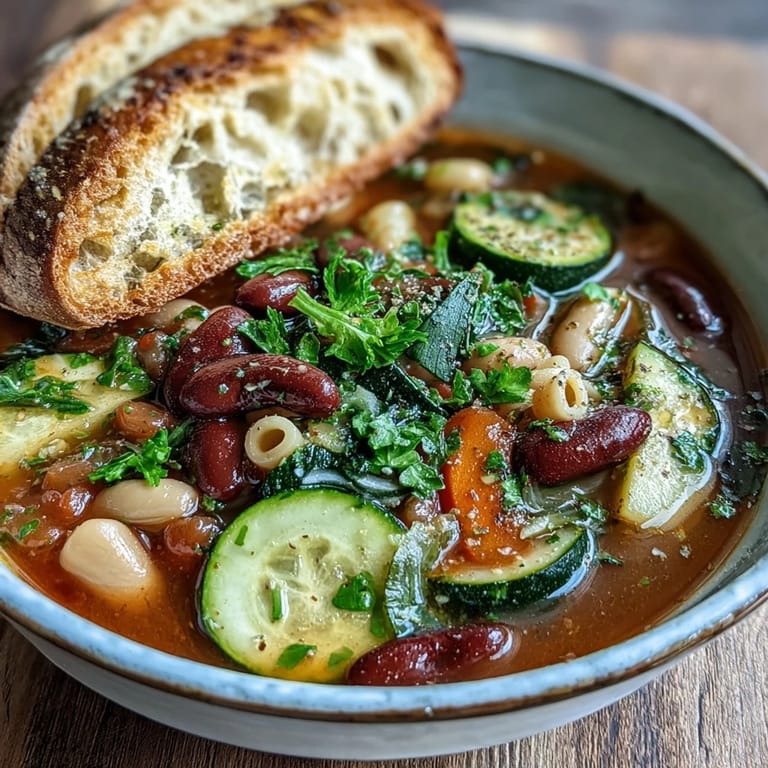
No bowl of this soup is truly complete without a thick slice of sourdough to mop up the bottom. I like to rub a raw garlic clove over toasted bread before dipping it straight into the tomato broth. It adds an extra layer of crunch that contrasts beautifully with the soft beans.
Customizing Your Bowl
This is the kind of cooking where your intuition should lead the way instead of a strict set of rules. If you find the soup is too thick simply splash in a little more broth or even some water from the kettle. There are no mistakes here only personal preferences that make the dish uniquely yours.
- Keep an extra carton of broth nearby for reheating leftovers the next day.
- Swap the Parmesan for nutritional yeast to keep it completely plant based.
- Try adding a rind of Parmesan directly into the simmering broth for extra umami.
 Save to Pinterest
 This soup is a reminder that the simplest ingredients often create the most lasting memories. I hope a bowl of this brings as much warmth to your table as it does to mine.
Recipe Questions & Answers
- → What makes minestrone authentic?
Authentic minestrone features a sofritto base of onion, carrot, and celery, seasonal vegetables, beans, and small pasta in tomato broth. The key is using fresh, seasonal produce and allowing flavors to meld through slow simmering.
- → Can I freeze minestrone?
Yes, minestrone freezes beautifully for up to 3 months. For best results, freeze without the pasta and add fresh pasta when reheating to prevent it from becoming mushy.
- → What vegetables work best?
Traditional options include zucchini, green beans, spinach, kale, tomatoes, carrots, and celery. You can also add potatoes, cabbage, or peas based on seasonality and preference.
- → How do I prevent mushy pasta?
Cook pasta separately until al dente, then add it to the soup just before serving. Alternatively, simmer pasta directly in the broth but remove from heat immediately once tender.
- → Is minestrone gluten-free?
Traditional minestrone contains pasta with gluten. To make it gluten-free, substitute with rice, gluten-free pasta, or additional beans and vegetables instead.
- → What pairs well with minestrone?
Crusty Italian bread focaccia, or garlic bread make perfect accompaniments. A light red wine like Chianti or a crisp white wine complements the flavors beautifully.