 Save to Pinterest
 The first time I tasted laksa, I was sitting in a cramped food court in Kuala Lumpur, sweat dripping down my temple from both the heat and the spices. A woman next to me caught me struggling with the noodles and smiled, sliding over a lime wedge without saying a word. That squeeze of lime into the creamy, fiery broth changed everything—suddenly it all made sense, the way each component sang together. Years later, I recreated that moment in my own kitchen, and now whenever I simmer this broth, I can almost hear the clatter of that busy market around me.
I made this for my sister's dinner party, and she watched me assemble the bowls with such focus that I knew this dish was going to land. The moment everyone took their first spoonful and then instinctively reached for the lime, I saw their faces shift—that recognition that something had just made them happy. She's asked me to make it every time she visits now, and I don't mind one bit.
Ingredients
- Vegetable oil: Use neutral oil with a high smoke point; coconut oil adds authenticity but can overshadow the laksa paste.
- Onion, garlic, ginger, and lemongrass: These four create the aromatic foundation—don't rush this step, let them perfume the oil fully.
- Laksa paste: This is where the soul lives; store-bought works beautifully, but check the label for hidden shrimp paste if you're vegetarian.
- Coconut milk: Full-fat is non-negotiable here; the richness balances the heat and spices.
- Vegetable broth: Use quality broth; weak broth means a weak laksa.
- Rice noodles: Thick noodles hold the broth better than vermicelli, though both work.
- Firm tofu: Pressing it gently before frying helps it develop a golden crust instead of absorbing excess water.
- Fresh vegetables: Bell pepper, carrots, and snow peas bring crunch and color; add them just before serving to preserve their texture.
- Lime and cilantro: These aren't garnish—they're essential adjustments that brighten everything.
Tired of Takeout? 🥡
Get 10 meals you can make faster than delivery arrives. Seriously.
One email. No spam. Unsubscribe anytime.
Instructions
- Build your flavor base:
- Heat oil in a large pot and sauté the onion, garlic, ginger, and lemongrass until the kitchen smells like a spice market—about 3 to 4 minutes. You'll know it's right when the onions are soft and the aromatics are hitting your nose in waves.
- Deepen the paste:
- Stir in the laksa paste and let it toast in the oil for 2 minutes, breaking it up as it cooks. This small step transforms the paste from a condiment into a rich, caramelized base.
- Create the broth:
- Pour in the coconut milk and vegetable broth, stirring well so the paste dissolves completely. Bring it to a gentle simmer—you want the surface to shimmer, not aggressively bubble.
- Season and simmer:
- Add soy sauce, sugar, and salt, then let it bubble softly for 10 minutes uncovered. The flavors will marry and deepen, and the broth will take on a glossy, unified appearance.
- Prepare your noodles and tofu:
- While the broth simmers, cook or soak the rice noodles according to package directions and drain them well. In a separate nonstick skillet, fry the tofu cubes until they're golden and crispy on most sides—this takes about 5 minutes total.
- Add the vegetables:
- Slide the carrot, bell pepper, and snow peas into the simmering broth and cook for 3 to 4 minutes. They should be tender-crisp, not soft.
- Assemble like an artist:
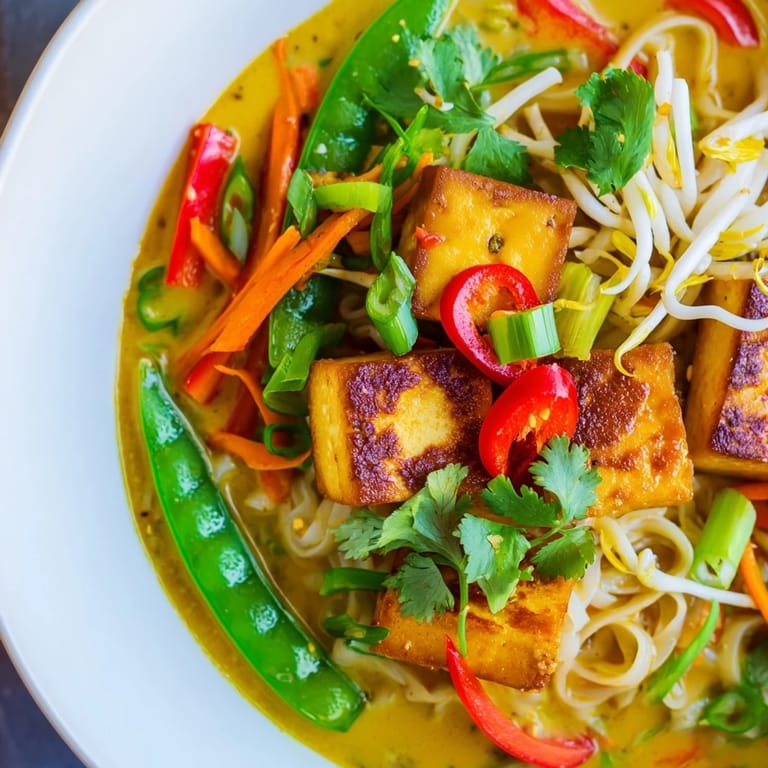
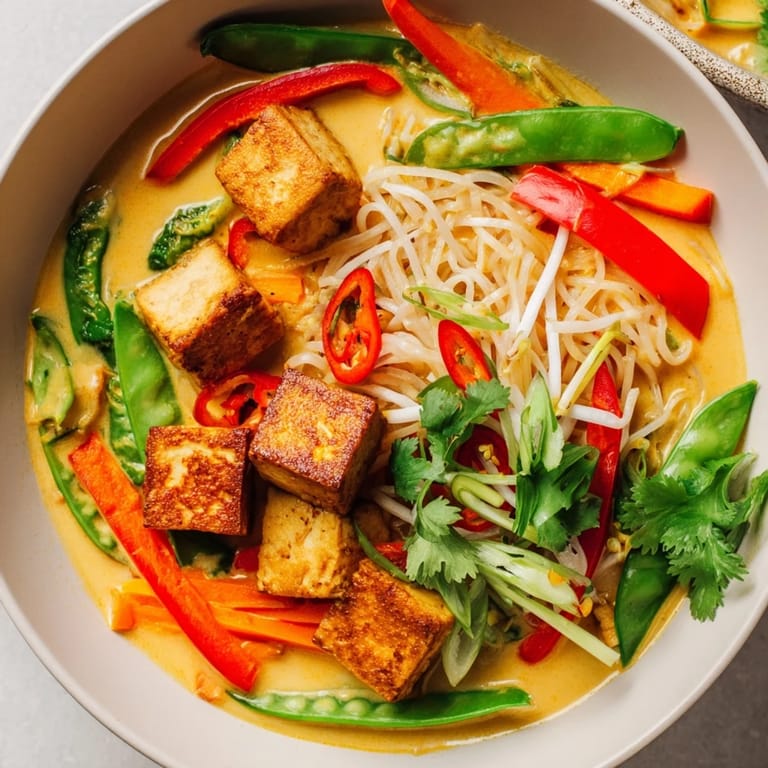
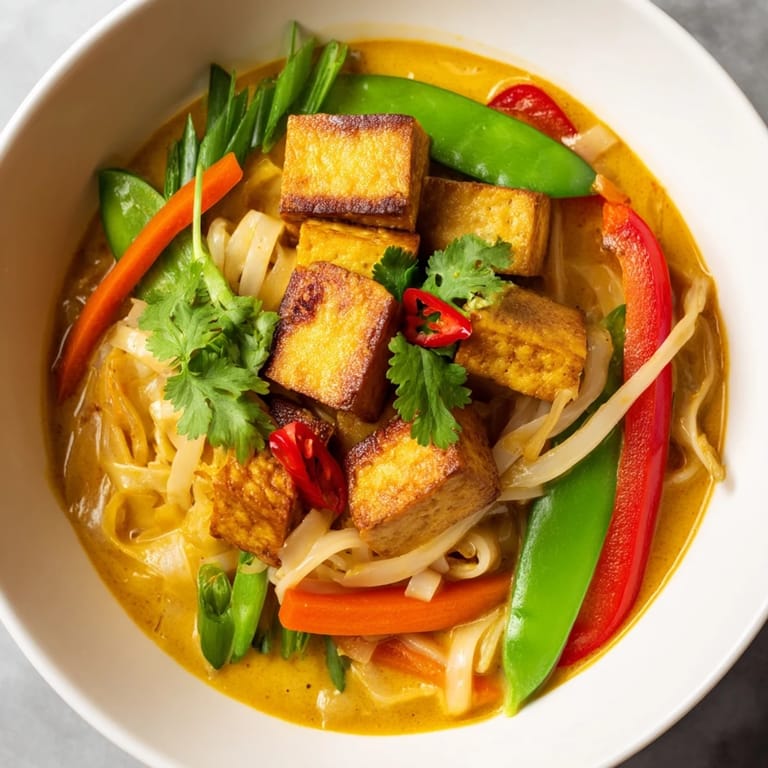
- Divide the noodles among bowls, then ladle the hot broth and vegetables over them. Top each bowl with fried tofu, a handful of bean sprouts, sliced spring onions, fresh cilantro, and chili slices. Serve with lime wedges on the side and let people squeeze them in to taste.
 Save to Pinterest
 I remember my neighbor leaning over the fence one evening when the broth was simmering, asking what that incredible smell was. I invited her in without hesitation, and we ended up talking for hours over steaming bowls while the rain started outside. Food has a way of becoming an invitation, doesn't it?
Customizing Your Laksa
This recipe is a canvas, not a contract. Some nights I add a handful of mushrooms or bok choy for earthiness, other times I'll throw in baby corn if I'm cooking for someone who prefers milder vegetables. I've even stirred in a spoonful of peanut butter once when I was out of coconut milk—it shouldn't have worked, but it created a nutty depth that was oddly beautiful. The point is, laksa welcomes improvisation as long as you honor the broth and the spice balance.
Making It Your Own
If you want to make the laksa paste from scratch, it's worth the effort, though store-bought is genuinely respectable. I've done both, and the homemade version gives you control over heat level and freshness, but it requires a food processor and about 15 extra minutes. If you're vegan, double-check your laksa paste label—many contain shrimp paste or fish sauce, so seek out a certified vegan option or make your own. For a non-vegetarian spin, top bowls with a halved hard-boiled egg or crispy shallots instead of tofu.
Serving and Pairing
Laksa is best served immediately while the broth is hot and the fresh toppings are still cool and crisp. The textural contrast—soft noodles, silky broth, crunchy vegetables—is part of the magic. A crisp white wine like Riesling or a cold, slightly sweet Thai iced tea both complement the heat and richness beautifully.
- Prep your toppings before you start cooking; assembly happens fast once the broth is ready.
- If making ahead, store the broth separately from noodles and vegetables, then reheat gently before serving.
- Taste and adjust seasoning just before serving—salt and lime are your best friends for balance.
 Save to Pinterest
 Every time I make this, I'm transported back to that food court, to that stranger's quiet kindness. That's what laksa does—it wraps you in warmth and makes you want to share it with someone who matters.
Recipe Questions & Answers
- → What type of noodles work best with Malaysian laksa?
Thick rice noodles or vermicelli are ideal as they absorb the flavorful broth while maintaining a pleasant texture.
- → Can I prepare the laksa paste from scratch?
Yes, laksa paste combines spices like chili, garlic, ginger, and lemongrass, but store-bought options offer convenience without sacrificing flavor.
- → How can I make this dish vegan-friendly?
Ensure the laksa paste contains no shrimp or fish ingredients, and rely on vegetable broth and tofu for protein and depth.
- → What vegetables complement the laksa curry broth?
Carrots, bell peppers, snow peas, bean sprouts, and fresh cilantro add freshness and textural contrast to the creamy broth.
- → Is it possible to add protein other than tofu?
Yes, hard-boiled eggs can be served alongside for added protein, or mushrooms for a more umami depth.