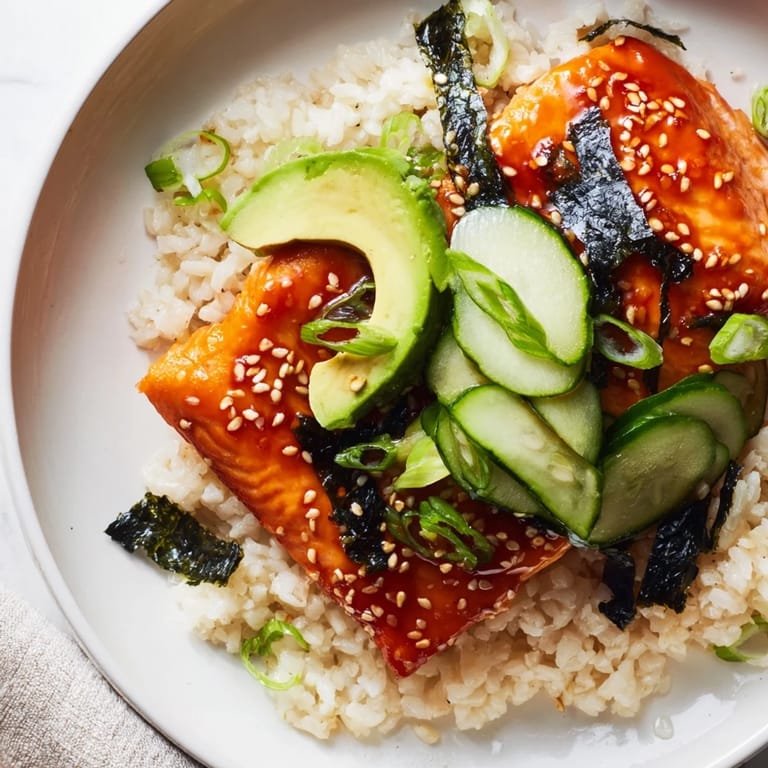
 Save to Pinterest
 I discovered this bowl on a Tuesday afternoon while scrolling through videos at my desk, and something about the way the salmon glistened under kitchen light made me stop everything to cook it. The combination of gochujang's fermented heat with bright orange juice felt like a conversation between two cuisines I loved, and I had to know if it would actually work together. Twenty minutes later, I was plating it with the kind of focus I usually reserve for things that matter, and one bite told me I'd found something special.
My roommate came home to the smell of ginger and toasted sesame filling the entire apartment, and before I'd even finished assembling the first bowl, she was asking if there was enough for two. Watching her reaction when she took that first bite—the way her eyes widened at the balance of heat and citrus—made me realize this wasn't just good, it was the kind of dish that makes people actually pause and taste their food.
Ingredients
- Salmon fillets (150g each), skin removed: Choose thick, evenly-sized pieces so they cook at the same rate; if you can find wild-caught, it has a richer flavor that stands up beautifully to bold glazes.
- Gochujang (Korean chili paste): This fermented paste is the backbone of the entire glaze, bringing depth and umami that regular hot sauce simply cannot match; keep it in the fridge after opening.
- Fresh orange juice: Squeeze it yourself if you can—the difference between bottled and fresh is the difference between good and unforgettable in this particular sauce.
- Soy sauce: Use regular or tamari if you need gluten-free; it's the salt and savory anchor that keeps the sweet and spicy in balance.
- Honey: Just a tablespoon cuts the heat and adds shine; it also caramelizes slightly under the broiler for that sticky finish.
- Rice vinegar: A small amount keeps everything bright and prevents the sauce from feeling heavy or cloying.
- Toasted sesame oil: This is nutty and potent, so measure carefully; it's the difference between a glaze and an experience.
- Fresh ginger and garlic: Never skip these; they add warmth and complexity that bottled versions simply cannot deliver.
- Short-grain rice: Warm, freshly cooked rice will absorb the glaze's flavors as you eat; jasmine works beautifully too if that's what you have.
- Cucumber, avocado, nori, sesame seeds, scallions: These aren't just toppings—they're the textural and flavor contrast that makes every bite interesting and prevents the bowl from feeling monotonous.
Tired of Takeout? 🥡
Get 10 meals you can make faster than delivery arrives. Seriously.
One email. No spam. Unsubscribe anytime.
Instructions
- Heat your oven and prepare your space:
- Preheat to 200°C (400°F) and line your tray with parchment paper so the salmon doesn't stick and the cleanup is effortless. This setup takes two minutes but saves you from scraping and scrubbing later.
- Season the salmon generously:
- Both sides get salt and pepper—don't be shy, as it seasons from the inside out as the fish cooks. Place the fillets skin-side down on the prepared tray with a little space between them so heat circulates evenly.
- Build the glaze in one bowl:
- Whisk gochujang, orange juice, soy sauce, honey, rice vinegar, sesame oil, ginger, and garlic together until completely smooth with no lumps. Taste a tiny bit on a clean finger; it should feel balanced between sweet, salty, spicy, and tangy—if it's too intense, add a splash more orange juice.
- Brush and bake the salmon:
- Use about half the glaze on top of each fillet, coating them evenly with your brush. Slide into the oven for 12–14 minutes; the salmon is ready when it flakes easily with a fork but still looks slightly moist in the center, which means it will be perfectly tender.
- Prepare your toppings while the salmon cooks:
- Slice your cucumber thinly, cut your avocado into neat pieces, toast your sesame seeds in a dry pan for 30 seconds to unlock their flavor, and slice your scallions on a bias. This way everything is ready the moment the salmon comes out.
- Apply the broiler finish (the secret step):
- Brush the remaining glaze over the hot salmon and slide it under the broiler for 1–2 minutes to get that sticky, slightly caramelized coating that makes people ask for the recipe. Watch closely so it doesn't burn; you want glossy, not blackened.
- Assemble with intention:
- Divide warm rice between two bowls, top each with a salmon fillet, then arrange cucumber, avocado, nori strips, sesame seeds, and scallions around it like you're plating for someone you want to impress.
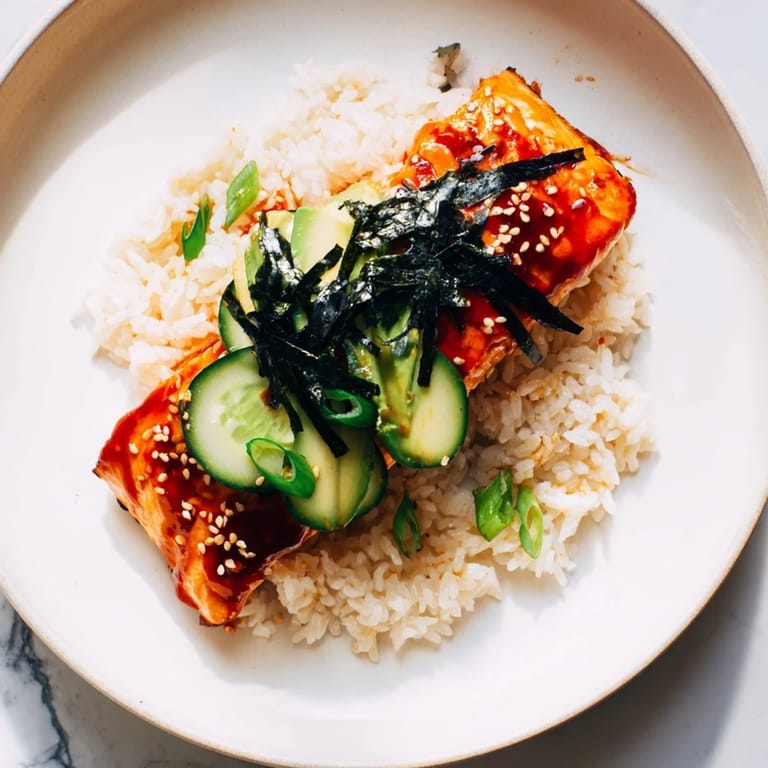 Save to Pinterest
 I made this for someone I was trying to impress without being obvious about it, and the way they asked for seconds before finishing their first bowl—casually, like it wasn't a big deal—meant everything. That's when I knew this recipe wasn't just delicious; it was the kind of thing that could become a regular habit.
Why This Combination Works
Gochujang and orange are an unexpectedly perfect pairing because the citrus cuts through the fermented heat of the chili paste without erasing it, while sesame oil and ginger create a foundation that feels sophisticated without being fussy. The glaze coats the salmon completely, so every bite tastes intentional and balanced, and the cold, fresh toppings prevent it from feeling heavy even though the flavors are bold. This is the kind of dish where Korean, Japanese, and citrus flavors collide and somehow create something that feels whole and complete.
Making It Your Own
I've made this bowl roughly fifteen times now, and it's never exactly the same twice, which is partly the point. Some weeks I add pickled ginger for extra tang, other times I throw in shredded carrots or edamame if I'm in the mood for more crunch and color. The salmon and glaze are non-negotiable, but the supporting cast can change based on what's in your fridge or what you're craving that particular day.
Pairing and Serving Ideas
This bowl pairs beautifully with crisp white wines like Sauvignon Blanc or even a light Japanese lager if you're in that mood. It's equally good served immediately while everything is still warm and the contrasts are sharpest, or even as a composed lunch bowl the next day when the flavors have melded slightly and the rice has absorbed some of the glaze.
- For a vegetarian version, press and pan-fry tofu until golden, then glaze it the exact same way and watch it become equally addictive.
- Make the glaze in advance and store it in the fridge for up to five days, so assembly becomes even faster on busy nights.
- Double the glaze recipe if you like extra sauce to drizzle over everything, because honestly, more is rarely wrong here.
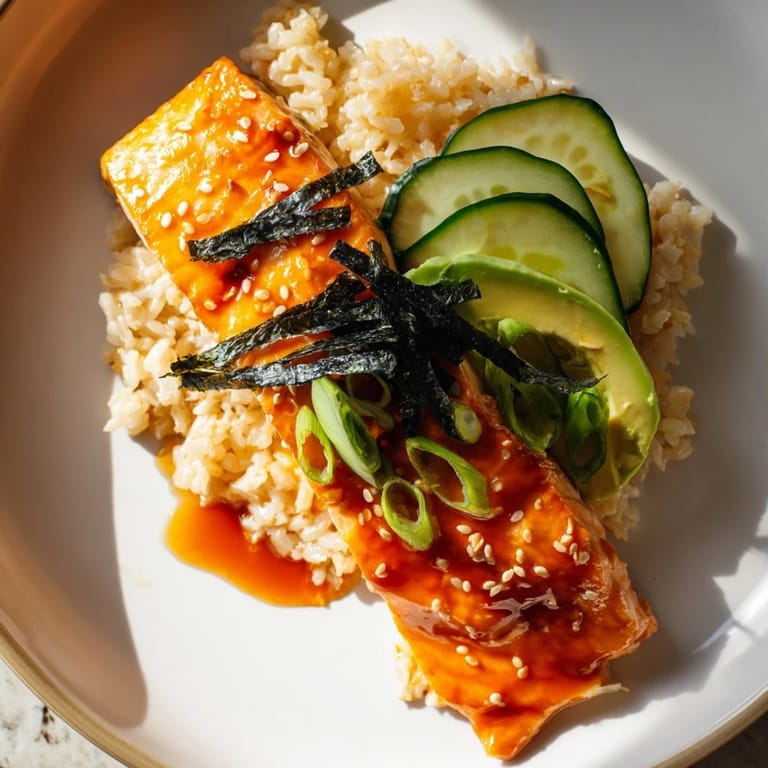 Save to Pinterest
 This is the kind of recipe that makes you feel capable in the kitchen while tasting like someone else made it for you. Once you've made it once, it becomes the bowl you reach for on nights when you want to eat something that feels both nourishing and exciting.
Recipe Questions & Answers
- → What type of salmon is best for this dish?
Skinless salmon fillets around 150 g each work best, providing tender, flaky texture and even cooking.
- → Can the glaze be adjusted for spice level?
Yes, reduce or increase the gochujang amount to control the glaze's heat according to your preference.
- → Is broiling necessary after baking the salmon?
Broiling for 1–2 minutes is optional but adds a sticky, caramelized finish to the glaze.
- → What are good alternatives to salmon in this bowl?
Tofu can replace salmon for a vegetarian option, absorbing the glaze flavors well.
- → How can I ensure the rice stays warm and fluffy?
Use freshly cooked short-grain rice and keep it covered to maintain heat and moisture before assembling.