 Save to Pinterest
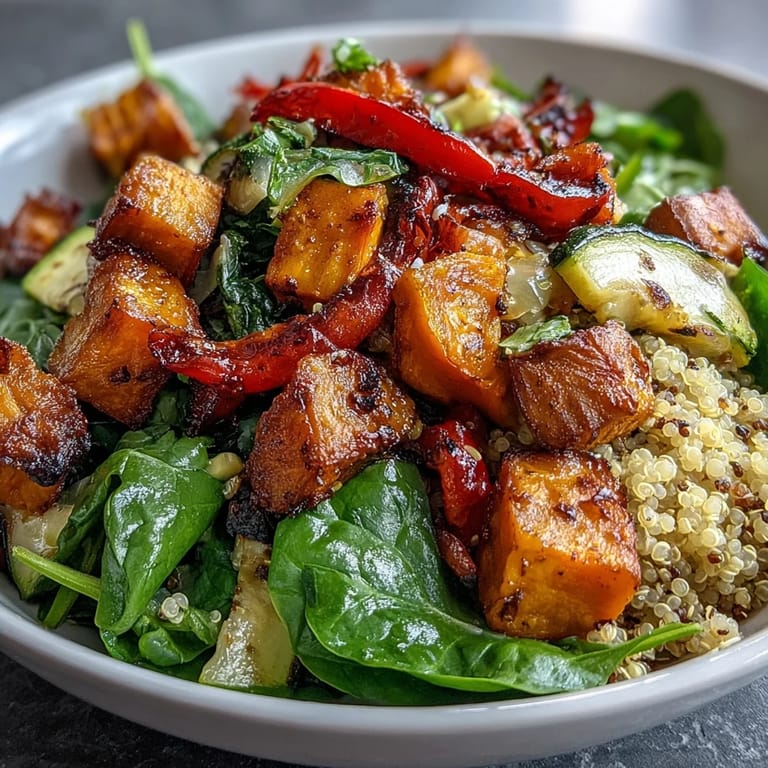
 There's something about the sound of vegetables hitting a hot baking sheet that signals the start of something good. I discovered this warm salad bowl on a chilly afternoon when I wanted something that felt both nourishing and effortless, without the heaviness of a typical cooked meal. The magic happens when you combine still-warm grains and roasted vegetables with tender greens that wilt just enough from a gentle vinaigrette, creating layers of texture and temperature that somehow feel more satisfying than the sum of their parts. It became my go-to lunch when I needed to feel grounded but not sluggish. Now it's what I make when friends drop by and I want to serve something that looks intentional without feeling fussy.
I remember bringing this to a work lunch and watching how people reacted to the temperature contrast—warm grains, wilted greens, still-tender roasted vegetables all coming together. A colleague asked why salads suddenly felt substantial enough for dinner, and I realized it was because nothing about it felt like restraint or deprivation. It tasted like abundance, which might be the secret to actually wanting to eat vegetables regularly.
Ingredients
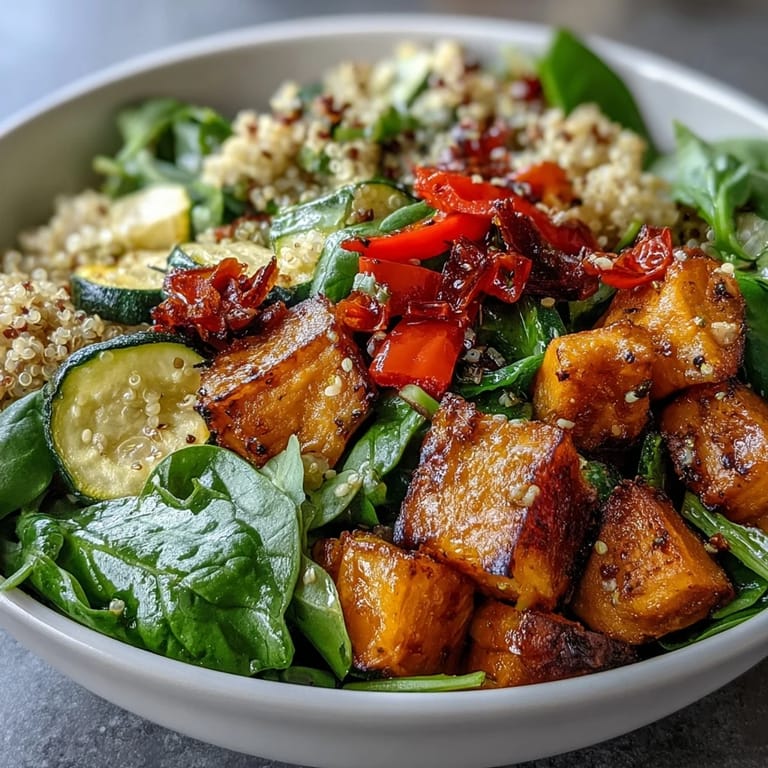
- Quinoa or brown rice: The foundation that keeps you satisfied; I rinse quinoa to remove bitterness and prefer broth over water for deeper flavor that doesn't require extra seasoning.
- Sweet potato: Caramelizes beautifully when cubed uniformly, creating tender interiors with slightly crispy edges that add natural sweetness without any added sugar.
- Red bell pepper: Adds brightness and a subtle sweetness that balances the earthiness of the other vegetables; cut into strips so they roast quickly.
- Red onion: Sliced thin so it softens into the bowl rather than staying aggressively crunchy, and the color bleeds slightly into everything, which looks beautiful.
- Zucchini: Slice into half-moons so it cooks evenly; it absorbs the paprika seasoning and becomes almost buttery when roasted properly.
- Smoked paprika: This is where the depth comes from—it's not spicy but adds a subtle smokiness that makes vegetables taste intentional rather than plain.
- Baby spinach or kale: Use kale if you have time to massage it slightly, but spinach wilts more gently and feels less aggressive when warm vinaigrette hits it.
- Olive oil, apple cider vinegar, Dijon mustard: The warm vinaigrette trio that emulsifies just enough to coat everything without breaking; mustard acts as an invisible anchor keeping flavors from separating.
- Honey or maple syrup: A small amount rounds out the acidity and adds a whisper of sweetness that makes the vinaigrette taste sophisticated rather than sharp.
- Garlic: One minced clove warmed gently rather than raw; cooking it briefly mellows the bite and lets it meld into the oil rather than shouting at you.
- Optional toppings: Feta adds creamy tang, seeds provide crunch and earthiness, and fresh herbs brighten the entire bowl with their fragrance.
Tired of Takeout? 🥡
Get 10 meals you can make faster than delivery arrives. Seriously.
One email. No spam. Unsubscribe anytime.
Instructions
- Heat your oven and prepare:
- Set the oven to 425°F and line your sheet with parchment paper so cleanup becomes almost ceremonial rather than a chore. This temperature is hot enough to caramelize vegetables without drying them out.
- Season and roast the vegetables:
- Toss your cut vegetables with olive oil, smoked paprika, salt, and pepper until everything is evenly coated, then spread them in a single layer and let them roast for 25 to 30 minutes, stirring halfway through. You'll know they're ready when the edges are golden and they yield easily to a fork but still hold their shape.
- Cook your grains simultaneously:
- While vegetables roast, bring water or broth to a boil in a covered saucepan, add your rinsed grains, and reduce the heat to low. Cooking them together means everything finishes around the same time, and fluffing with a fork once they're done prevents mushiness.
- Make the warm vinaigrette:
- In a small pan over low heat, whisk together olive oil, apple cider vinegar, Dijon mustard, honey, and minced garlic for just a minute or two until everything is warm and slightly emulsified. The warmth helps it coat the greens without breaking them down; you want them tender, not cooked.
- Wilt the greens gently:
- Transfer your spinach or kale to a large bowl and drizzle with half the warm vinaigrette, tossing gently so the greens soften without turning to mush. The residual heat does the work here, not aggressive mixing.
- Assemble your bowls:
- Divide the cooked grains among four bowls, top with wilted greens, then scatter roasted vegetables around, and finish with a drizzle of remaining vinaigrette. Add cheese, seeds, and fresh herbs if using, then serve immediately while everything is still warm.
 Save to Pinterest
 There's a moment after you've assembled everything when you take that first bite and realize you're eating an entire season of farmers market abundance in one bowl. What started as a practical lunch idea became something I crave when I want to feel nourished without feeling like I've restricted myself.
Why Temperature and Timing Transform This Dish
The temperature interplay is what makes this bowl feel special rather than routine. Warm grains create a foundation that's forgiving enough to accept everything piled on top, roasted vegetables stay tender because they finished just before serving, and that warm vinaigrette does the crucial work of softening greens without murdering them. Cold vinaigrette would leave the leaves rigid; hot would turn them to sludge. Warm is the Goldilocks zone where everything becomes greater than itself. I learned this by accident the first time I made it and discovered that waiting even five minutes for the vinaigrette to cool compromised the entire experience.
Building Flavor Without Heaviness
The secret to this bowl tasting indulgent without feeling indulgent is the smoked paprika and the Dijon mustard working invisibly in the background. You don't taste either one explicitly, but they create a savory depth that makes vegetables taste like they've been tended to rather than just thrown together. The honey in the vinaigrette isn't sweetness for sweetness's sake; it's a small counterpoint that prevents acidity from dominating. Every ingredient earned its place through testing and conversation with people who wanted vegetables to feel like a choice rather than an obligation.
Make It Your Own
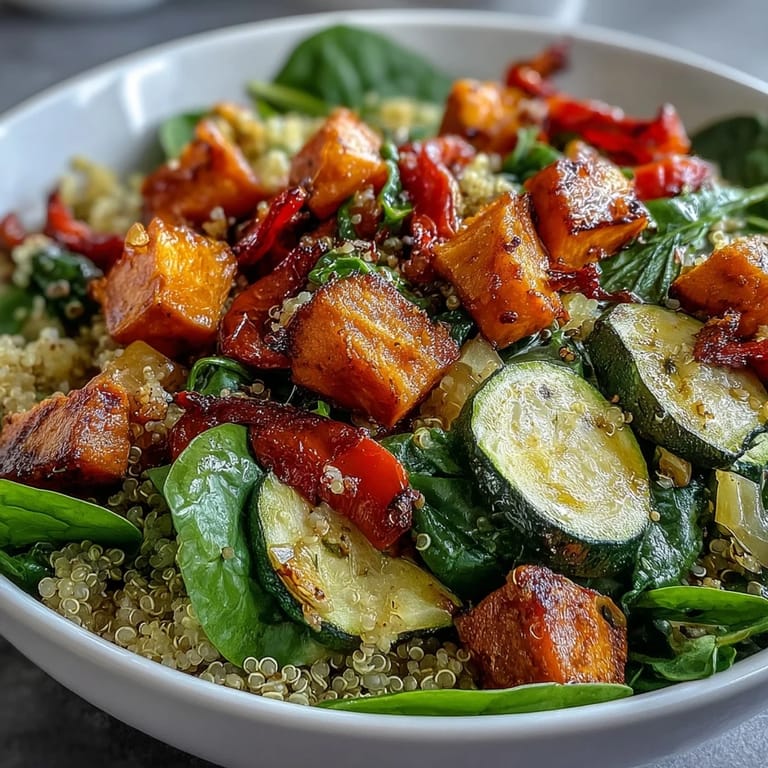
This recipe is a template designed to flex with your preferences and your pantry. Swap the grains for farro if you want nuttiness or millet for something lighter; add roasted chickpeas if you need more protein or want the bowl to feel more substantive. I've made this with Brussels sprouts in fall, asparagus in spring, and summer squash at the height of August heat, and it transforms slightly each time while remaining fundamentally itself. The structure stays the same: warm grain base, roasted vegetables, tender greens, warm vinaigrette, optional toppings.
- Try massaging kale with a pinch of salt before adding the warm vinaigrette to develop its texture and make it less assertive.
- Experiment with different vinegars—sherry vinegar brings elegance, red wine vinegar adds depth, and white wine vinegar feels lighter and brighter.
- Cheese is optional but transforms the bowl entirely, so even a small amount of something sharp like aged goat cheese or feta shifts everything upward.
 Save to Pinterest
 This warm salad bowl became part of my regular rotation not because it's revolutionary but because it proves that vegetables can be genuinely craveable without apology or pretense. Make it this week and notice how satisfying it feels.
Recipe Questions & Answers
- → Can I make this bowl ahead of time?
Yes, prepare the grains and roasted vegetables up to 3 days in advance. Store separately in airtight containers and reheat gently before assembling. Make the vinaigrette fresh for best flavor.
- → What other grains work well in this bowl?
Farro, millet, bulgur, or barley all make excellent substitutes for quinoa or brown rice. Adjust cooking times according to package directions for your chosen grain.
- → How can I add more protein?
Roasted chickpeas, grilled tofu, shredded chicken, or a poached egg all complement these flavors beautifully. You can also increase the protein portion with beans or lentils.
- → Can I use different vegetables?
Absolutely. Brussels sprouts, carrots, parsnips, butternut squash, or cauliflower all roast beautifully. Use whatever seasonal vegetables you have on hand.
- → Is the warm vinaigrette necessary?
The warmth helps wilt the greens slightly and enhances flavor absorption. If preferred, a room temperature vinaigrette works, though the texture will be slightly different.