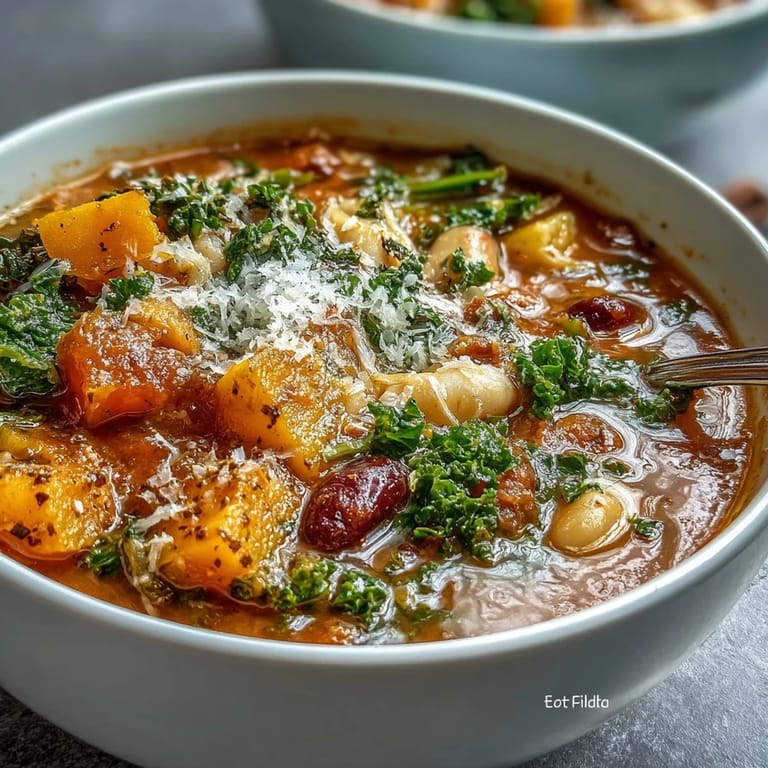
 Save to Pinterest
 The first snowfall had just started dusting the windowsills when my grandmother handed me a knife and a butternut squash. She never measured anything, just taught me to listen for the sizzle and watch for the color change. That afternoon, standing on a step stool to reach the stove, I learned that minestrone isn't really about following a recipe at all. It's about using what you have and letting it simmer until the house smells like comfort. Now whenever winter arrives, I find myself reaching for the soup pot without even thinking about it.
Last January, my friend showed up at my door shivering after her car broke down. I didn't have much in the fridge, but I always keep the makings for minestrone on hand. We sat at my kitchen table watching steam rise from our bowls while she warmed her hands on the ceramic mug. She asked for the recipe before she left, and now she texts me every time she makes it, usually with some variation she discovered.
Ingredients
- Olive oil: This creates the foundation for sautéing your vegetables, so use something decent quality if you can
- Yellow onion, carrots, celery: The classic mirepoix base that builds layers of flavor from the very start
- Garlic: Fresh garlic makes such a difference here, don't skip it or use garlic powder
- Butternut squash: This is the star that adds sweetness and makes the soup feel substantial
- Zucchini: Adds texture and soaks up the tomato broth beautifully
- Kale: Hold onto your heart because it holds up better than spinach and gets more tender as it simmers
- Diced tomatoes: The juices are crucial for body, so don't drain the can
- Cannellini beans: Creamy white beans that practically melt into the soup
- Small pasta: Ditalini is traditional but anything small works, just don't break long pasta
- Vegetable broth: Homemade is lovely but a good quality boxed broth works perfectly fine
- Dried oregano, thyme, rosemary: This trio gives it that unmistakable Italian soul
- Red pepper flakes: Just enough warmth to make you notice, optional but lovely
- Fresh parsley: Stir this in at the very end for a bright, fresh finish
- Parmesan cheese: Even if you're dairy-free elsewhere, a little sprinkle on top transforms everything
Tired of Takeout? 🥡
Get 10 meals you can make faster than delivery arrives. Seriously.
One email. No spam. Unsubscribe anytime.
Instructions
- Build your flavor foundation:
- Warm the olive oil in your large pot over medium heat, then add your onion, carrots, and celery. Let them soften and become fragrant, about 5 to 6 minutes, stirring occasionally so nothing browns too quickly.
- Wake up the garlic:
- Stir in the minced garlic and cook for just 1 minute until you can really smell it, being careful not to let it burn or turn bitter.
- Add the hearty vegetables:
- Toss in the butternut squash and zucchini, cooking for 4 to 5 minutes while stirring now and then. This step helps start the cooking process so they don't need as much simmering time later.
- Create the soup base:
- Pour in the diced tomatoes with all their juices, the vegetable broth, and the water. Bring everything to a gentle boil, watching the pot transform into a rich, reddish broth.
- Season and simmer:
- Stir in the oregano, thyme, rosemary, and red pepper flakes if you're using them. Reduce the heat to low and let it simmer uncovered for about 15 minutes, giving the flavors time to become friends.
- Add the pasta and beans:
- Drop in the cannellini beans and pasta, continuing to simmer for another 8 to 10 minutes. You'll know it's done when the pasta is tender and the squash yields easily when pierced with a fork.
- Wilt the kale:
- Stir in the chopped kale and cook for 2 to 3 minutes until it's softened and turned a darker green. Taste now and adjust the salt and pepper as needed.
- Finish with freshness:
- Remove the pot from heat and stir in the fresh parsley. Let it rest for a few minutes before serving to let the flavors settle.
- Serve it up:
- Ladle the hot soup into bowls and add a generous sprinkling of grated Parmesan if you're using it. Watch it melt into the hot broth and breathe in the steam.
 Save to Pinterest
 My sister was skeptical about the squash in minestrone until she took her first bite at our winter solstice dinner. She sat quietly for a moment, spoon paused halfway to her mouth, and then went back for seconds without saying a word. That's become our shorthand for a recipe success in this family.
Making It Your Own
I've learned that minestrone is beautifully forgiving and adapts to whatever's in your crisper drawer. Sometimes I add diced potatoes or swap the kale for spinach when that's what I have on hand. The magic happens when you trust your instincts more than the ingredient list.
The Bread Situation
Don't even pretend you're going to eat this without crusty bread. A sourdough boule torn into chunks is ideal, but any sturdy bread will do the job of soaking up that last bit of broth at the bottom of your bowl.
Freezing And Storing
This soup freezes beautifully, though I'd leave out the pasta if you plan to freeze it for more than a week. The pasta can get mushy in the freezer, so just cook fresh pasta when you reheat and you'll never know the difference.
- Cool completely before transferring to freezer-safe containers
- Leave about an inch of space at the top since liquids expand when frozen
- Label with the date because frozen soup all starts to look the same after a while
 Save to Pinterest
 There's something deeply satisfying about a pot of soup that can feed you through a whole week of winter weather. Stay warm, and keep that soup ladle handy.
Recipe Questions & Answers
- → How long does winter minestrone keep in the refrigerator?
Stored in an airtight container, this minestrone keeps well for 4-5 days in the refrigerator. The flavors often deepen and improve after a day or two.
- → Can I freeze this butternut squash minestrone?
Yes, freeze for up to 3 months. Consider cooking pasta separately and adding it when reheating to prevent it from becoming mushy.
- → What pasta works best in minestrone?
Small shapes like ditalini, elbow macaroni, or shells work well. They spoon easily and hold up nicely in the broth.
- → How do I make this minestrone vegan?
Skip the Parmesan cheese or use a dairy-free alternative. The rest of the ingredients are naturally plant-based.
- → Can I use other vegetables in this soup?
Absolutely. Spinach, Swiss chard, or diced sweet potatoes make excellent additions or substitutions based on what you have available.
- → What's the best way to add more protein?
Add extra beans, incorporate diced tofu, or serve with a side of crusty bread topped with nut butter or hummus.