 Save to Pinterest
 The first time I made winter minestrone, snowflakes were dancing outside my kitchen window, transforming the world into a quiet wonderland. My fingers were cold despite the heating, and I craved something that would warm me from the inside out. There's something magical about the way the kitchen fills with the earthy aroma of herbs and vegetables simmering together. That day, this soup became my personal remedy against winter's chill, a tradition I've maintained ever since.
Last December, when my neighbor was recovering from surgery, I brought over a pot of this minestrone. Standing in her doorway with steam rising from the container, I watched her face light up at the first spoonful. She called three days later asking for the recipe, saying it was the only thing that had truly restored her appetite. That moment reminded me how food connects us, especially during challenging times.
Ingredients
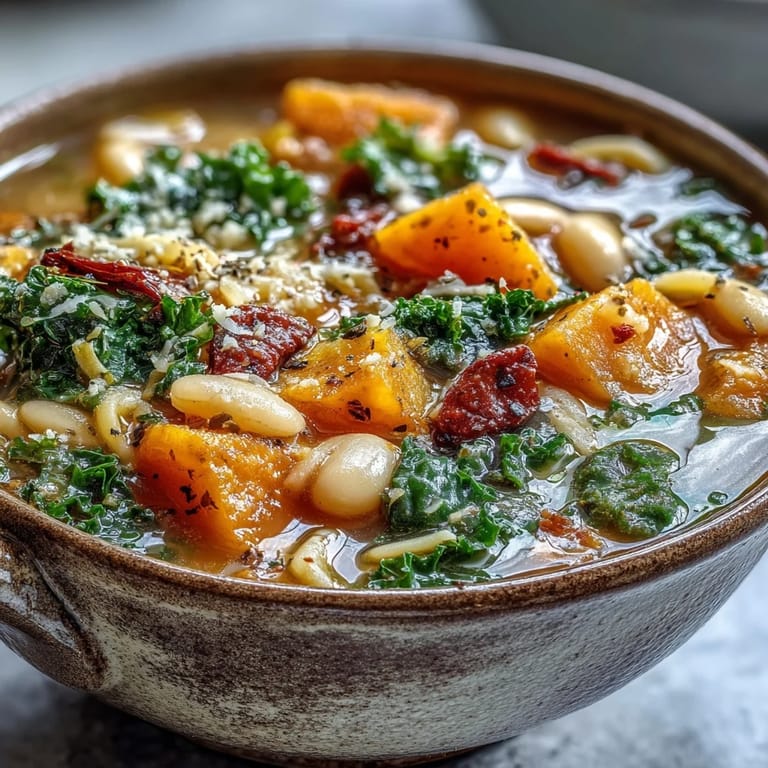
- Butternut Squash: The natural sweetness balances the savory elements, and I've found that roasting it separately for 10 minutes before adding to the soup intensifies the flavor wonderfully.
- Cannellini Beans: These creamy white beans add protein and a silky texture to the broth, and I always keep the liquid from one can to add extra body.
- Kale: Strip the leaves from the tough stems before chopping, and add them later in the cooking process to preserve their vibrant color and nutritional benefits.
- Small Pasta: The pasta absorbs the flavors of the broth as it cooks, but I learned to either undercook it slightly or add it separately if planning for leftovers.
- Herbs: The combination of oregano, thyme and rosemary creates the quintessential Italian flavor profile that makes this soup sing.
Tired of Takeout? 🥡
Get 10 meals you can make faster than delivery arrives. Seriously.
One email. No spam. Unsubscribe anytime.
Instructions
- Create Your Flavor Base:
- Heat olive oil in a large pot until it shimmers, then add your diced onion, carrots, and celery. Watch them slowly soften and release their aromas, stirring occasionally until they become translucent but not browned.
- Build Layers of Flavor:
- Stir in the minced garlic just until you catch that first whiff of its pungent sweetness. Then add your butternut squash and zucchini, giving them a chance to absorb all those aromatics before moving forward.
- Create the Broth:
- Pour in the diced tomatoes and vegetable broth, watching as the pot transforms into a rich, colorful liquid. Drop in your bay leaf and dried herbs, letting them infuse the broth as it comes to a gentle boil.
- Simmer to Perfection:
- Reduce to a simmer and partially cover the pot, allowing the vegetables to become tender while the flavors meld together. The kitchen will fill with a comforting aroma that signals good things are happening.
- Bring It All Together:
- Add the beans, pasta, and kale, then let everything simmer uncovered until the pasta is al dente and the kale has softened but still maintains its vibrant green color. Season thoughtfully with salt and pepper, tasting as you go.
 Save to Pinterest
 My daughter once claimed she hated soup until a particularly frosty evening when she reluctantly tried this minestrone. She ate in silence for a moment, then looked up with surprise in her eyes. What followed was a conversation about comfort foods and family traditions that lasted well into the evening. Now she requests this soup whenever life feels especially challenging, calling it her reset button in a bowl.
Seasonal Adaptations
While this recipe shines brightest in winter, I've adapted it through the seasons with wonderful results. In spring, I swap butternut for asparagus and early peas. Summer versions welcome fresh corn and garden tomatoes instead of canned. Fall brings possibilities for wild mushrooms and leeks that add earthiness. These seasonal shifts keep the recipe fresh year-round while honoring what nature provides at its peak.
Make-Ahead and Storage
The flavors in this minestrone actually deepen and intensify overnight, making it an excellent candidate for meal prep. I often make a double batch on Sunday afternoons, portioning some into freezer containers for future meals. The soup keeps beautifully in the refrigerator for up to four days, and freezes well for about three months without the pasta, which can be added fresh when reheating.
Serving Suggestions
While this minestrone stands proudly on its own, pairing it thoughtfully elevates the entire meal. A crusty loaf of sourdough or garlic-rubbed ciabatta creates the perfect vehicle for sopping up every last drop of broth. For a complete dinner, I sometimes add a simple side salad dressed with lemon and olive oil to brighten the richness of the soup.
- Toast thin slices of baguette with olive oil and rub with garlic for homemade croutons to float on top.
- A squeeze of fresh lemon juice just before serving adds a surprising brightness that wakes up all the flavors.
- For non-vegetarians, a sprinkle of crispy pancetta or bacon makes an indulgent garnish that adds another dimension of flavor.
 Save to Pinterest
 This winter minestrone isn't just a recipe in my collection, it's a tradition that marks the changing seasons and brings comfort to my table. I hope it brings the same warmth and nourishment to yours.
Recipe Questions & Answers
- → Can I make this ahead of time?
Absolutely. This tastes even better the next day as flavors have time to develop. Store in the refrigerator for up to 4 days.
- → What pasta works best?
Small shapes like ditalini, elbow macaroni, or shells hold up well in the broth. For gluten-free options, use rice-based pasta or increase the beans.
- → Can I freeze this?
Yes, though the pasta may soften slightly. For best results, freeze without the pasta and add freshly cooked pasta when reheating.
- → What greens can I substitute for kale?
Spinach, Swiss chard, or chopped escarole all work beautifully. Add them in the last few minutes to avoid overcooking.
- → How can I add more protein?
Add extra beans, incorporate shredded chicken during the last 10 minutes, or serve with a side of Italian sausage.